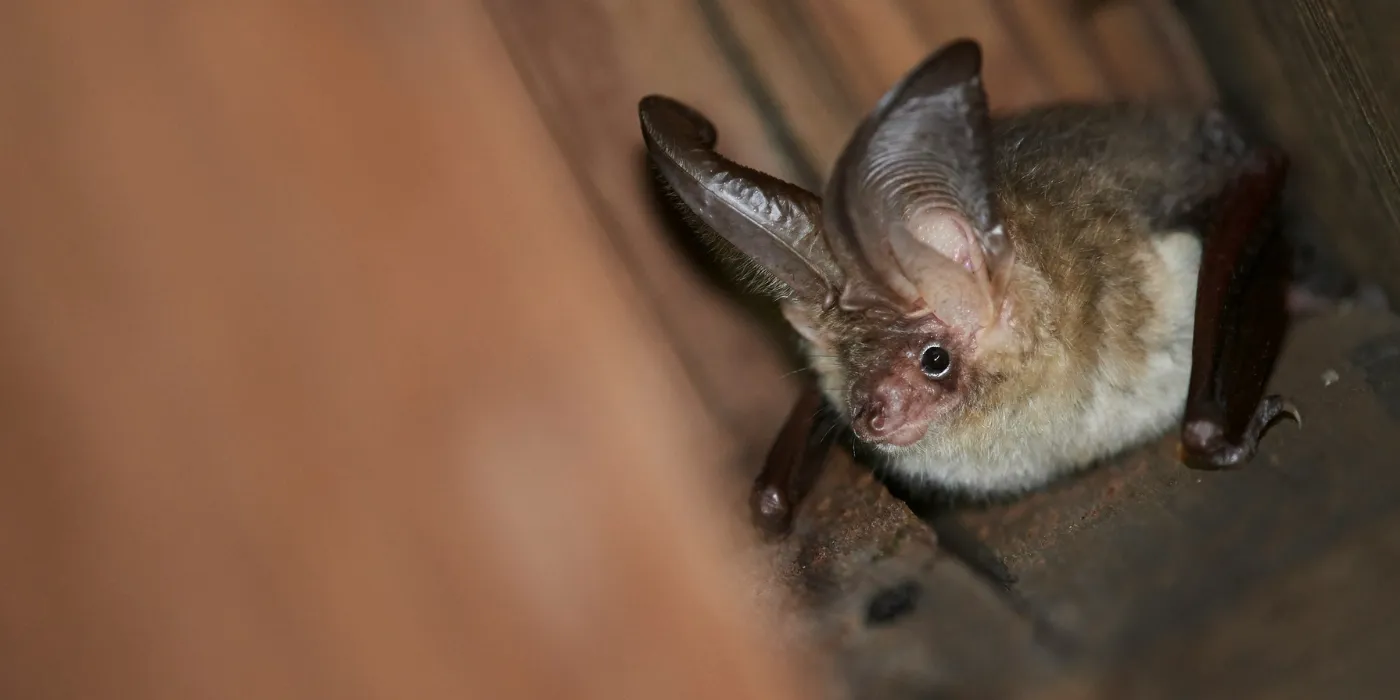
Bat in the House? Here’s Exactly What to Do (And What Not to Do)
- Give A Shit About Nature
- May 5, 2026
- Wildlife
- 0 Comments
Finding a bat flying around your living room at midnight is alarming, and the instinct to panic is understandable. But bats that end up inside are generally not there on purpose. They came in through an open window, a gap in a screen, or a crack around a pipe, got disoriented, and are now flying frantic laps trying to find a way out. They want to leave about as much as you want them to.
The good news is that most indoor bat encounters resolve without much drama if you handle them correctly. The less good news is that the specific circumstances of the encounter determine what you need to do next, and getting that assessment wrong is where people run into trouble.
First: Don’t Chase It, Don’t Swat at It
The single most counterproductive thing you can do is try to knock the bat down or chase it from room to room. A bat in flight is navigating by echolocation and can find its way out of a room fairly well on its own if you give it the chance. Chasing it stresses the animal, risks injuring it against walls or furniture, and increases the likelihood that a panicked bat comes into direct contact with a person.
The U.S. Fish and Wildlife Service advises approaching the situation slowly and without sudden movement. If the bat is flying, confine it to one room by closing interior doors, then open a window or exterior door and turn on the lights. Bats often find their way out within 15 to 30 minutes if given a clear exit and not harassed. Ceiling fans should be turned off, as rotating blades are a real hazard to a bat in flight.
If the bat is still flying after some time, wait. Bats tire quickly and will eventually land on a curtain, wall, or piece of furniture. Once it lands, it’s much easier to deal with.
How to Safely Capture a Bat That Won’t Leave
If the bat has landed and needs to be captured, the method is the same one you’d use for a spider in a glass, just scaled up slightly. Bat Conservation International recommends wearing leather gloves (not fabric, which bat claws can puncture), placing a container like a shoebox or coffee can over the bat once it’s landed, and then carefully sliding a piece of cardboard between the container and the surface to trap the bat inside. Tape the cardboard securely, punch a few small holes for ventilation, and leave the container in a quiet spot until dark before releasing.
Bats should not be released during the day, as they’re vulnerable to predators in daylight and most can’t launch themselves from the ground. According to Bat Conservation International, most bats need to drop into flight from an elevated position, so placing the container on its side against a tree or elevated surface at dusk gives the bat the best chance of a clean exit.
Do not use bare hands. Ever. This is the one firm rule in all of this.
The Rabies Question: What Actually Constitutes a Risk
Here’s where the calm assessment matters. Rabies is a real concern with bats, and it needs to be taken seriously. What it doesn’t need is panic that leads to releasing a bat before the situation is properly evaluated.
The CDC is explicit: if you find a bat in your home, contact animal control or your local health department before releasing it. They can advise on whether testing is warranted. Whether the bat needs to be tested for rabies depends on the circumstances of the encounter.
Testing is typically recommended when a bat has been in a room with a sleeping person, an unattended child, a person who is intoxicated, or anyone who cannot confirm with certainty that no contact occurred. The reason is that bat bites are small, often don’t bleed visibly, and can go unnoticed. Fairfax County Health Department notes that a possible rabies exposure cannot be ruled out in those scenarios, even without an obvious bite mark.
If you were awake and alert and can confirm no direct contact with the bat, and the bat was not found with a child or sleeping person, the risk profile is substantially lower. Your local health department can walk you through an assessment.
If there’s any chance of direct contact, don’t release the bat. Keep it contained and call your health department immediately.
Testing matters because, if the bat tests negative, nobody needs treatment. If it tests positive, the people exposed will need post-exposure prophylaxis (PEP), a series of shots that are highly effective when given promptly. We’ve covered bat rabies risk and the broader context of bats as wildlife in more detail, but the core message is the same: the risk is real but specific, and the response should match the actual exposure.
If You Have Bats Regularly, the Entry Point Is the Real Issue
A single bat that wandered in once is a curiosity. A bat that appears two or three nights in a row, or bats found repeatedly in the same room, usually means there’s a colony somewhere in the structure and young or wayward individuals are finding their way into living spaces.
This is a different problem from a single lost bat, and it calls for a professional assessment rather than repeated captures. Bat Conservation International’s guidance on exclusion outlines the basic approach: identify all potential entry points on the exterior, seal off secondary openings completely, and install one-way exclusion devices over the primary exit points so bats can leave but not return. The CDC’s guidance on bat-proofing notes that bats can fit through openings as small as a quarter inch, so sealing requires more thoroughness than most people expect.
Critically, exclusion should not be done between May and August, when mothers are raising pups that can’t yet fly. Sealing an entry point during maternity season traps flightless young inside, which is both inhumane and creates a much larger problem. The right windows for exclusion are late summer after pups are flying, or fall and winter.
Bats in an attic that are not entering living spaces can often simply be left alone until the exclusion window opens. They’re doing considerable ecological work while they’re there. A single bat can consume hundreds of insects in a night, and a healthy bat colony in a neighborhood provides meaningful pest suppression. This doesn’t mean you have to share your attic indefinitely, but it’s worth knowing what you’re working with before treating the situation as an emergency.
The Part People Often Get Wrong
The most common mistake in a bat encounter isn’t panicking, exactly. It’s releasing the bat outdoors before the situation has been assessed, which eliminates the option of rabies testing and leaves the exposure question permanently unanswered.
If the bat made contact with anyone in the house, or if there’s any doubt about contact, keep it contained and call the health department. That single step is what allows the right decision to be made, rather than forcing everyone to assume the worst.
If you’re confident no contact occurred and the encounter was just a bat making an unexpected house call, the practical path is containment, a quick call to confirm you don’t need testing, and release at dusk from an elevated point away from your home. Done. The bat flies off, presumably annoyed by the whole experience, and your evening can resume.
FAQ
How did the bat get in? Bats can squeeze through gaps as small as a quarter inch. Common entry points include gaps around pipe penetrations, loose soffit boards, cracks in fascia or siding, and unscreened attic vents. A single bat that appears once may have simply slipped in through an open window or door.
Do I need a rabies shot just because a bat was in my house? Not automatically. Whether post-exposure prophylaxis is needed depends on whether direct contact occurred or cannot be ruled out. If you were awake and present and can confirm no contact with the bat, the exposure risk is substantially different than if you woke up to find a bat in the room. Contact your local health department to assess the specific situation.
Can I release the bat outside right away? If you’re certain no contact occurred with any person or pet in the home, your local health department can advise release. The CDC recommends not releasing the bat until you’ve spoken with a public health authority. Keeping it contained is a small inconvenience that preserves your options.
Are bats protected by law? Many bat species have protected status at the state or federal level. This is one reason why poisoning or killing bats to remove them from a home is not a legal or recommended option in most jurisdictions. Exclusion is both the humane and legal approach.
When is the right time to bat-proof a house? Late summer (after August, once young are flying) through early spring before maternity season begins is the recommended window. Mid-May through August is maternity season for most North American bat species, and exclusion during this period risks trapping flightless pups inside.