Stop Putting Eggshells in Your Garden
- Give A Shit About Nature
- May 5, 2026
- Backyard Habitat, Sustainable Living
- 0 Comments
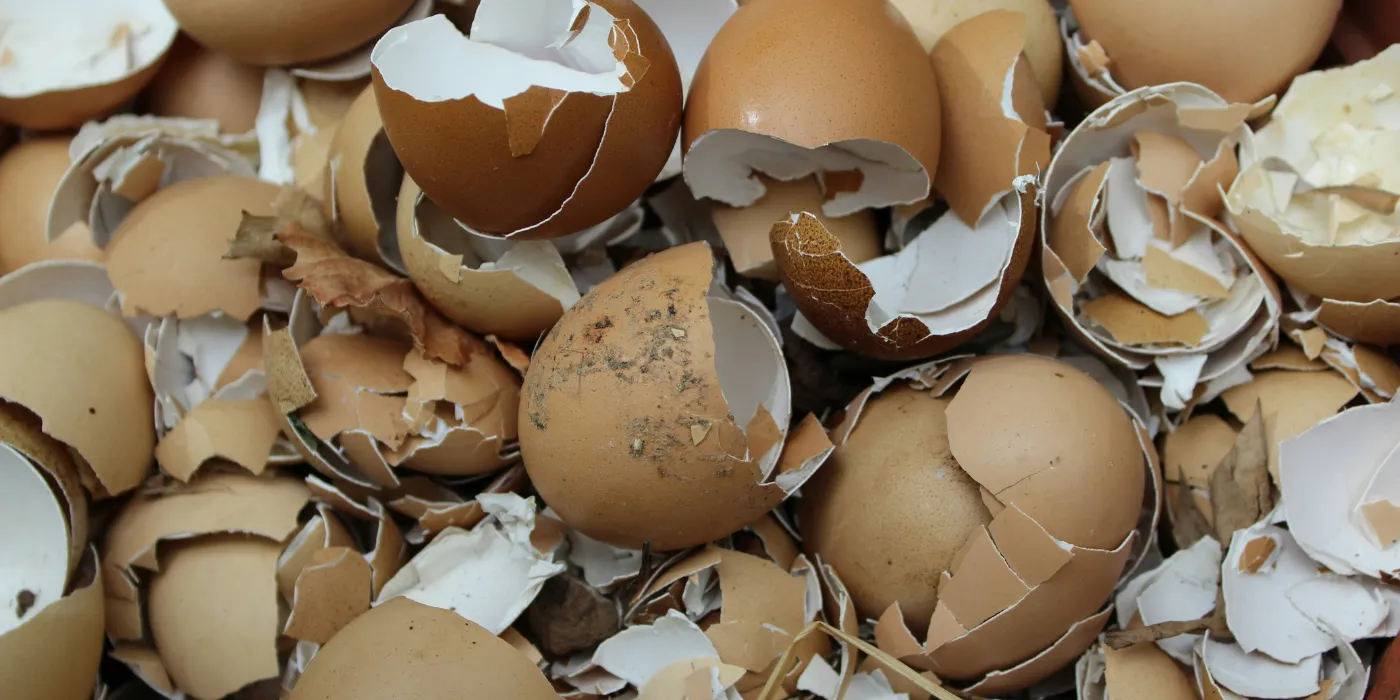
Every spring, the gardening internet fills up with the same advice: crush your eggshells and work them into your soil. It’s one of those tips that sounds so sensible that almost nobody questions it. You’re adding calcium. You’re recycling kitchen scraps. You’re doing something. What’s not to like?
Here’s the thing: the evidence that it actually works is pretty thin, and the reasons people give for using eggshells often don’t hold up to much scrutiny.
The Calcium Myth
Let’s start with the calcium argument, since that’s the main one. Eggshells are mostly calcium carbonate, and calcium is a genuine plant nutrient. The logic seems airtight. Except that calcium carbonate is essentially insoluble in soil that isn’t highly acidic, and most garden soils aren’t.
Research out of Washington State University found that crushed eggshells decompose extremely slowly under normal garden conditions, meaning the calcium they contain largely stays locked up and unavailable to plants. You’d need to grind them into a fine powder and have soil acidic enough to facilitate breakdown before they’d contribute anything meaningful to plant nutrition.
And if your soil actually is calcium-deficient? Agricultural lime does the same job faster, cheaper, and in a form plants can actually use. A soil test from your local extension service tells you whether you even have a calcium problem in the first place, which most garden soils don’t.
The Slug Myth
Then there’s the slug deterrent claim, which is probably the most widespread eggshell myth of all. The theory is that slugs won’t cross crushed shells because the sharp edges cut them. It’s a vivid mental image. It’s also not well-supported.
A study published in the journal Hortscience tested eggshells alongside other popular slug deterrents and found they were among the least effective. Slugs crossed the shells without apparent difficulty. Anyone who’s watched a slug navigate gravel, rough bark, or the edge of a terracotta pot might not be surprised by this. These are animals that produce their own mucus specifically for navigating hostile surfaces.
If slugs are genuinely destroying your plants, there are options that actually work: copper tape creates a mild electrochemical reaction that slugs avoid, iron phosphate pellets are effective and safe for wildlife, and trapping with shallow containers of beer is low-tech and surprisingly reliable. Eggshells are not in that category.
The Eco-Friendly Solution For Eggshells
The one place I’ll give eggshells partial credit: compost. Ground fine enough, they can contribute calcium to a compost pile over time as organic acids from decomposing material help break them down. But that’s a very different claim than sprinkling them around your tomatoes and expecting results. And even in compost, you’d need a lot of them to move the needle on anything measurable.
The reason this bothers me isn’t that eggshells are harmful. They’re not. It’s that gardening is already full of confident advice that doesn’t work, and new gardeners especially deserve better than a hobby built on myths recycled from post to post because they feel true. If you’re spending time crushing eggshells under the impression you’re preventing blossom end rot or building healthier soil, that time could go toward something with actual evidence behind it.
What About Blossom End Rot?
Blossom end rot on tomatoes and peppers, incidentally, is almost never caused by calcium deficiency in the soil. It’s usually a calcium uptake problem caused by inconsistent watering, which prevents the plant from moving calcium from roots to fruit regardless of how much is available. Adding eggshells to the soil doesn’t fix that. Consistent moisture does.
If you want to do something useful with kitchen scraps, composting them correctly and returning finished compost to your beds will improve soil structure, biology, and nutrient availability in ways that matter. That’s not as satisfying a tip as “save your eggshells,” but it’s what actually works.
Keep the eggshells if you want. Grind them very fine, put them in the compost bin, and call it a day. Just stop expecting them to do the things the internet keeps promising they’ll do.