If you want hummingbirds in your yard, the instinct is to look up a list of plants, buy whatever’s available at the garden center, and call it done. That approach can work fine, but it skips over some things worth knowing — like the fact that the shape of a flower matters more than its color, that native plants do something non-native ones usually can’t, and that a yard full of nectar sources still might not support nesting hummingbirds if it’s missing one key thing.
We’ll get to that. First, the flowers.
What Hummingbirds Are Actually Looking For
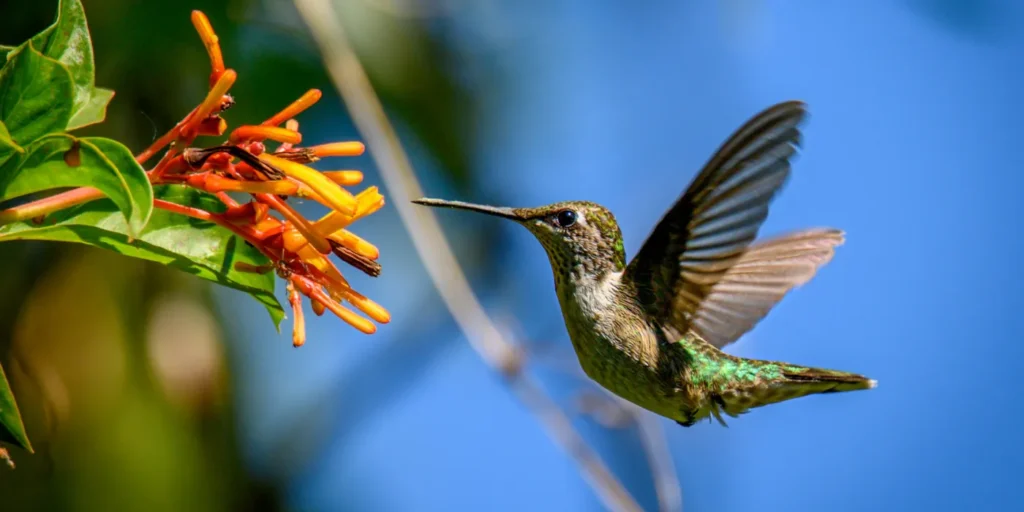
Hummingbirds feed by hovering in front of a flower and pushing their long bill into it to reach nectar. This creates a strong preference for tubular flowers — ones shaped roughly like a tube or trumpet, where a hovering bird can access nectar without having to land. Flat, open blooms like sunflowers or daisies are structurally awkward for hummingbirds. The nectar may technically be there, but the geometry isn’t in their favor.
Color matters too, though it’s often overstated. Hummingbirds show a general preference for red, orange, and pink flowers in many situations, which is why you’ll see red listed in nearly every hummingbird guide. But they also visit blue, purple, and white flowers regularly — particularly when the nectar is plentiful and the flower shape is right. Color is a signal that helps them spot a flower from a distance. Once they’ve learned a specific plant produces good nectar, color becomes less of a factor.
Nectar concentration matters more than most people realize. Some flowers are beautiful and red and tubular and still don’t attract many hummingbirds, because the nectar isn’t rich enough or plentiful enough to make the trip worthwhile.
The Flowers Worth Planting
Cardinal flower (Lobelia cardinalis) is about as close to a guaranteed hummingbird plant as you’ll find in the eastern U.S. Its brilliant red tubular blooms are so perfectly suited to hummingbird bills that UF/IFAS Extension notes the plant is almost entirely dependent on hummingbirds for pollination. Plant it near water — it tolerates moist or wet soil very well — and it will bloom mid-summer into fall when migration is in full swing.
Native coral honeysuckle (Lonicera sempervirens) is a climbing vine that produces clusters of orange-red tubular flowers over a long season. Unlike the invasive Japanese honeysuckle that has spread across much of the eastern U.S., coral honeysuckle is native and well-behaved. It’s one of the plants repeatedly recommended by Audubon across regional guides, and for good reason.
Bee balm / Wild bergamot (Monarda spp.) produces shaggy, spider-like flower heads in red, pink, or purple that hummingbirds and bees both visit heavily. Native to North America, it blooms in midsummer, attracts a remarkable range of pollinators, and spreads readily once established. It can get powdery mildew in humid conditions — give it good air circulation and it stays healthier. The red varieties tend to draw the most hummingbird attention, though the purple and pink forms get visits too.
Native salvias are worth singling out because there are many of them, most are excellent hummingbird plants, and they’re often overlooked in favor of showier options. Salvia coccinea (tropical sage), Salvia splendens cultivars, and many western salvias all produce the tubular, nectar-rich blooms hummingbirds favor. They tend to bloom over a long period and tolerate heat well.
Penstemon (Penstemon spp.) is a large genus of mostly North American natives with tubular flowers in pink, red, purple, and white. The specific species that works best depends entirely on your region — there are penstemons for the hot, dry West, the humid Southeast, and the cool North. Most do best in well-drained soil and full sun. They’re underused compared to their value, and hummingbirds find them reliably.
Trumpet vine (Campsis radicans) is a hard-working hummingbird plant with large orange-red tubular flowers produced in abundance. Fair warning: it spreads aggressively by root runners and can be difficult to control once established. If you have a fence or large structure it can climb, it will cover it thoroughly. If containment matters to you, plant it somewhere you’re prepared to manage it.
Agastache (hummingbird mint) is drought-tolerant, long-blooming, and produces upright spikes of tubular flowers that hummingbirds and bees both work heavily. Native species vary by region, and there are also many cultivated varieties. The flowers run from orange and red to purple and blue.
Columbine (Aquilegia spp.) is one of the earliest hummingbird flowers of the season — it blooms in spring when migrating hummingbirds are arriving and other nectar sources may be limited. Native columbines (Aquilegia canadensis in the East, various western species in the West) have backward-pointing spurs filled with nectar that hummingbirds access from behind the flower. It’s a distinctive feeding approach and genuinely worth watching.
The Flowers That Often Disappoint
This section tends to ruffle feathers slightly, because many of these are beautiful, beloved garden plants. That’s fine — plant them if you love them. Just know they may not do much for hummingbirds.
Roses are a classic example of flowers that look hummingbird-friendly but often aren’t. They don’t produce much nectar, their openings can be too wide for efficient hummingbird feeding, and many cultivated varieties offer so little reward that hummingbirds tend to pass them by. A hummingbird may investigate a rose once and then ignore that plant for the rest of the season.
Double-flowered varieties of anything. This is the underlying issue with many garden plants that underperform for hummingbirds. Plant breeders have spent decades selecting for more and bigger petals — which often means less nectar and harder-to-access flower structures. Double petunias, double marigolds, double begonias — the extra petals may be visually impressive, but they can block the nectar and make the flower useless to a hummingbird. If you’re choosing between a single-flowered and double-flowered variety of the same plant with the goal of attracting hummingbirds, the single-flowered version is generally the better pick.
Marigolds (in most common garden forms) are often planted near hummingbird feeders without much effect. The typical double-petal garden marigold doesn’t produce nectar in a form hummingbirds can easily access. Single-petal varieties do somewhat better, but if your goal is hummingbirds, marigolds are a low-priority choice.
Irises can occasionally get hummingbird visits, but they’re generally not a reliable attractor. Their structure isn’t ideally suited to hummingbird feeding, and their blue-purple color range is less immediately visible to hummingbirds than red and orange.
Daffodils — popular, cheerful, and almost completely uninteresting to hummingbirds. Breeding has reduced their nectar production, and their cup-shaped structure doesn’t particularly suit hummingbird feeding. They’re also toxic to many animals.
Gardenias smell wonderful and have almost no hummingbird value. Their nectar profile doesn’t offer what hummingbirds need, and their white color is less visible to hummingbirds at a distance than warmer tones.
The Thing Most Flower Lists Miss
Here’s the detail that often gets left out of hummingbird gardening advice: according to entomologist Doug Tallamy, insects and spiders make up the majority of what hummingbirds actually eat. Nectar provides energy, but protein and fat — which hummingbirds need for muscle development, feather production, and raising young — come from tiny insects and spiders.
A yard built around feeders and a few nectar plants but lacking insect habitat may attract visiting hummingbirds without ever supporting nesting ones.
This is where native plants do something non-native ornamentals generally can’t: they support the insect communities that hummingbirds hunt. A native wildflower patch doesn’t just offer nectar — it attracts the tiny gnats, aphids, and caterpillars that hummingbirds and their nestlings depend on for protein. Non-native ornamentals are often insect deserts by comparison.
This also means that avoiding pesticides is genuinely important in a hummingbird garden. Broad-spectrum insecticides eliminate the small insects hummingbirds hunt. A garden that’s chemically managed for a pest-free appearance is working against the hummingbirds it’s nominally trying to attract.
The full picture looks like this: tubular, nectar-rich native flowers for energy; insect-supporting native plants and shrubs for protein; no pesticides; a water source; and perches nearby. We’ve written about timing feeders correctly — that matters too — but feeders supplement rather than replace a good native planting.
A Practical Starting Point
If you’re starting a hummingbird garden from scratch, the simplest approach is this: find out which native salvias, penstemons, and Monarda species are suited to your region, add a cardinal flower near any wet area you have, and plant something that blooms in spring (columbine), something that blooms in midsummer (bee balm, native salvia), and something that blooms late (cardinal flower, agastache). You’ll have covered the hummingbird season from arrival to migration.
Leave the double-petaled begonias and roses for their own reasons — they’re lovely. Just don’t count on them for hummingbirds.
FAQ
Do hummingbirds really prefer red flowers? They tend to notice red and orange more readily at a distance, which may explain why they often appear to prefer those colors. But they visit blue, purple, and pink flowers regularly too, particularly when the nectar is plentiful. Flower shape and nectar content likely matter more than color once they’re in your yard.
Can I attract hummingbirds with just a feeder and no flowers? A feeder will draw hummingbirds in, especially during migration. But feeders alone don’t provide the protein hummingbirds need (from insects) and don’t support nesting. Native flowers that support insect communities are what make a yard genuinely hummingbird habitat rather than just a refueling stop.
Why don’t hummingbirds visit my flowers even though they’re red and tubular? A few possibilities: the flowers may not produce abundant enough nectar to make repeated visits worthwhile; there may be stronger nectar sources nearby; or the specific plant may not have been “discovered” yet. Hummingbirds often need to investigate a new plant a few times before adding it to their regular route.
Are petunias good for hummingbirds? Standard petunias have a tubular shape that’s somewhat hummingbird-friendly, but their nectar isn’t particularly rich. They may get occasional visits but aren’t a top performer compared to native options like cardinal flower or coral honeysuckle.