If you search for wildlife pond depth recommendations, you’ll find a lot of confident answers pointing to 60cm or 24 inches as a minimum, with some sources pushing for 75cm or even deeper. Follow that advice and you’ll end up digging a respectable hole. The trouble is, that guidance largely originated from fish pond keeping, not wildlife pond design. The ecological priorities are genuinely different.
Here’s the short answer: a good wildlife pond needs a variety of depths, with shallow areas being at least as important as deep ones. And for many of the species you’re hoping to attract, the shallow zones do more ecological work than the deep center.
The Depth Question Is Actually About Depth Profile
The framing of “how deep should it be” implies a single number, but what matters more for wildlife is the range of depths across the pond. The Natural History Museum notes that most pond life thrives in water shallower than 30cm, with a lot of activity happening in water less than 10cm. Tadpoles bask in the shallows. Dragonfly larvae crawl up plant stems that stand in just a few centimeters of water before emerging as adults. Birds won’t wade into anything more than a few inches deep. Frogs spawn in warm, sheltered marginal areas.
The Freshwater Habitats Trust makes the point directly: the common recommendation for a minimum depth of 60cm originated from fish-keeping practice, and most invertebrate wildlife actually prefers shallow water. Their guidance is that the deepest section of a wildlife pond need not exceed 30cm for invertebrate value.
That said, there are good reasons to include at least one deeper pocket, it’s just not the primary driver of wildlife value.
What the Deeper Section Is Actually For
A deeper zone in the pond, somewhere between 50cm and 75cm, serves specific purposes that shallower water can’t. The main ones are thermal stability, winter survival for frogs, and resilience against drying out in summer.
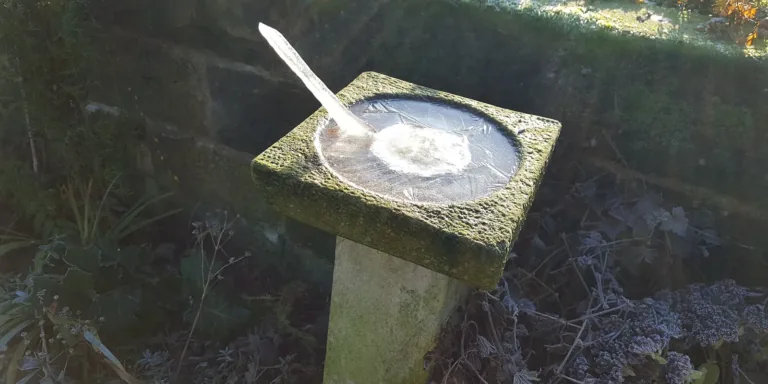
In cold climates, ponds can freeze over. A pond that’s entirely shallow may freeze solid in a hard winter, killing anything overwintering in it. A deeper section stays liquid beneath the ice, giving frogs, invertebrates, and plant material somewhere to survive. Kent Wildlife Trust recommends at least a section 30-60cm deep specifically for this reason. If your winters are mild — reliably above freezing — a shallower pond can perform perfectly well year-round.
Deeper water also stays cooler in summer heat and doesn’t evaporate as fast. In a dry stretch, a shallower pond can shrink significantly or even dry out completely, which can be catastrophic if frogs or newts are mid-breeding-cycle. Having a deeper refuge means the pond holds water longer and provides a stable cool zone when surface temperatures spike.
But here’s what deeper water doesn’t do particularly well: support the activity most visible in a healthy pond. That happens in the shallows.
The Most Important Part of the Pond Is the Shallow End
This doesn’t get emphasized enough in most guides. The shallow margins, sloping gently from the very edge into a few centimeters of water, are where most of the action is. Penn State Extension describes shallow areas as essential for birds bathing and drinking, tadpoles developing, and amphibians entering and exiting. Butterflies drink from muddy shallow patches. Hedgehogs drink from the edge. Dragonfly larvae need to climb from water to vegetation — something impossible from a steep-sided wall.
The shape of the pond edge matters as much as the depth. A pond with gently sloping sides and a gradual shallow entry is far more useful to wildlife than a flat-bottomed pit with vertical sides, regardless of how deep the center is. Our Wild Yard points out that the shallow end — just 5 to 15cm deep — is typically where you’ll see the most wildlife activity. It’s also where the pond is safest for small animals that could otherwise drown in deeper water with no way to get out.
If you can only build one feature into your pond, make it a shallow, sloping entry — what some guides call a “beach area.” Gravel, pebbles, or packed mud all work. It should slope gradually enough that a small mammal can walk in and out without climbing or jumping.
A Pond Depth Profile That Works
For most backyard wildlife ponds, a graduated depth profile like this tends to work well:
- Very shallow margins (2–10cm): For birds to bathe, frogs to spawn in, insects to access, and safe entry/exit for small animals. This is the most important zone.
- Intermediate shelf (20–30cm): For marginal aquatic plants, tadpole development, and general invertebrate habitat. A lot of pond life concentrates here.
- A deeper pocket (50–75cm): For thermal stability, winter survival, and drought resilience. One area of this depth is generally sufficient in a typical backyard pond.
Going deeper than 75–90cm in a small wildlife pond adds cost and digging without much ecological return, and can create anaerobic conditions at the bottom if organic material builds up there — which actually reduces water quality and habitat value. One gardening ecologist noted that deeper ponds are more likely to have low oxygen levels near the bottom, especially if leaf debris accumulates over years.
The Fish Question
One thing worth saying directly: if you add goldfish or koi to a wildlife pond, the ecological dynamics change significantly. These fish eat tadpoles, aquatic invertebrates, and insect larvae — the very wildlife the pond is meant to support. A fishless pond with varied depth and gentle margins will typically support far more diverse life than a deeper pond stocked with ornamental fish. The fish need depth; the wildlife mostly doesn’t.
If you do want fish for some reason, stick to small native species appropriate to your region. But for a pure wildlife pond, fishless is the better default.
Small Ponds Are Still Worth Making
One final thing worth saying, because the focus on depth can make this feel more complicated than it is: even a small, shallow pond supports real wildlife. The Natural History Museum is clear that frogs will spawn in ponds one to two metres across, and that something will use any size of water feature. A half-barrel with a ramp for wildlife access, an old sink sunk into the ground, a shallow ceramic bowl — these all attract insects, provide drinking water for birds, and support life.
A wildlife pond is one of the most effective things you can add to a yard for biodiversity. It connects naturally with other backyard habitat improvements — building a brush pile nearby gives frogs and newts a damp, sheltered retreat after leaving the water, and leaving leaf litter undisturbed around pond margins provides the cover and material that overwintering insects depend on. Together, these things create a genuinely functioning habitat rather than just a decorative feature.
The depth doesn’t have to be impressive. The variety does.
Pond FAQ
Can a wildlife pond be too shallow? A pond that’s entirely shallow — just a few centimeters throughout — can freeze solid in cold winters, dry out in summer, and may not support frogs or newts that need slightly deeper water to breed or overwinter. Even a small deeper pocket (around 50cm) improves resilience considerably. But a very shallow pond is still far better than no pond.
Should I put fish in a wildlife pond? For a true wildlife pond, generally not. Fish — even small ones like goldfish — eat tadpoles, aquatic invertebrates, and insect larvae. A fishless pond with shallow margins and varied depth typically supports more diverse wildlife.
How do I stop my pond from drying out? A deeper section (50–75cm) helps retain water through dry spells. Top up with rainwater when levels drop — mains tap water can be used in a pinch but may contain chlorine and minerals that affect water chemistry over time. Collecting rainwater in a butt is a good long-term approach.
Does location affect how deep the pond needs to be? Yes, somewhat. In climates with reliably mild winters, a shallower pond is more viable year-round. In areas with hard frosts, a deeper section becomes more important for winter survival. Full sun locations may need slightly more depth to stay cool in summer and resist evaporation.
Can I build a wildlife pond near trees? Partial shade from trees is fine and can reduce algae growth. But a pond directly under heavy canopy will collect large quantities of leaf debris in autumn, which decomposes and depletes oxygen — a bigger problem in deeper water. Either locate the pond away from heavy leaf drop or plan to remove surface debris each autumn before it sinks.