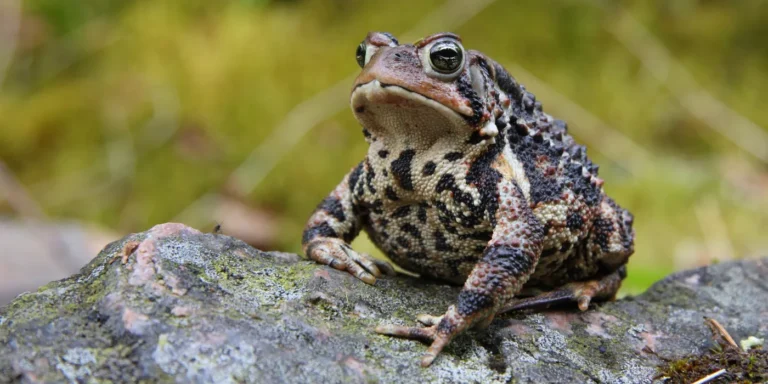
From the jump, I’ll tell you this: touching a toad won’t give you warts. That particular myth has been around long enough to feel like common knowledge, but it has no biological basis. Warts are caused by human papillomavirus, which toads don’t carry. The warty appearance of a toad’s skin is just skin texture, not a disease vector.
What toads do have is a mild toxin produced in the bumpy glands behind their eyes, called parotoid glands. This is the part worth understanding before you pick one up, because the risks are real but specific.
They don’t spray it or inject it. Skin-to-skin contact with most North American toad species generally won’t cause serious harm to an adult. The problems arise when toxin gets into your eyes, nose, or mouth, which is exactly why you wash your hands after handling any toad.
The short version: touching a common backyard toad is low-risk for most adults, as long as you wash your hands afterward and don’t touch your face in between. Your dog, on the other hand, is a different story.
How Toad Toxin Actually Works
All toads produce some level of toxin from their parotoid glands. The secretion is a defense mechanism, not an attack. When a predator grabs or bites a toad, the toxin tastes terrible and can cause irritation or worse, depending on the animal doing the grabbing. In the wild, that’s what keeps toads alive.
The toxin family is called bufotoxins, and the exact composition varies significantly by species. The American toad (the one most likely in your backyard in the eastern U.S.) produces a relatively mild version. The cane toad, an invasive species established in parts of Florida and Texas, produces considerably more potent secretions. The Colorado River toad, found in the desert Southwest, produces the most potent of any North American species. Knowing what species you’re dealing with matters.
For the common American toad, A-Z Animals notes that skin-to-skin contact generally doesn’t produce significant poisoning in adults. Handling one may leave a milky residue on your hands, and if you then rub your eyes, you could experience irritation or burning. If the toxin reaches your mouth, it tastes extremely bitter and can cause nausea. Wash your hands and the problem typically resolves. The risk escalates sharply with more potent species, with ingestion, or with contact through mucous membranes.
The Real Concern: Pets and Children
Adults handling a common garden toad are rarely in meaningful danger. Children and pets are in a different category.
Children are more likely to put their hands (or the toad itself) near their face without thinking, which is the main route of actual exposure. Small children should be supervised around toads and should always wash their hands immediately after any contact.
Pets, particularly dogs, are significantly more at risk. Dogs bite and mouth things without hesitation, which means direct mucous membrane contact with the toxin. A-Z Animals describes the potential effects on small animals as serious, including vomiting, excessive drooling, and in cases involving highly toxic species, more severe symptoms.
If a dog mouths a cane toad or a Colorado River toad, that is a veterinary emergency. If a dog has a brief encounter with a common American toad and starts drooling, rinse the mouth with water and monitor. The appropriate response depends heavily on the species and the exposure.
Cats are generally less likely to engage with toads than dogs, but the same cautions apply.
Why You Might Actually Be Bothering the Toad More Than It’s Bothering You
Here’s the thing that doesn’t get mentioned enough: handling is harder on the toad than it is on you.
Toads have permeable skin, meaning substances absorb directly into their bodies. Sunscreen, bug spray, lotion, soap residue, and even the natural oils and salts from human hands can irritate or harm a toad’s skin. Wild Ones recommends using wet, uncontaminated hands or sterile gloves if you need to move a toad, precisely because of this sensitivity. A toad that has been handled by someone wearing sunscreen may have absorbed chemicals through its skin that cause real harm.
So the safer question to ask before handling a toad is not just “is this safe for me” but also “is this necessary.” Watching a toad from a foot away causes no harm to anyone. Picking it up to show a friend is mildly stressful for the toad and carries at least some chemical-transfer risk in both directions. If you need to move one out of a harmful situation, do it with wet clean hands and keep it brief.
What Toads Are Actually Doing in Your Garden
A toad in your yard is a good sign. Northern Woodlands reports that toads can eat 50 to 100 insects per night, adding up to roughly 10,000 over a growing season, including slugs, Japanese beetles, cutworms, and tent caterpillars. About 88 percent of their prey are classified as agricultural pests. They are, in other words, doing free pest control every night without being asked.
Toads also serve as a rough indicator of environmental health. Their permeable skin means they’re highly sensitive to pesticides, chemical fertilizers, and pollutants. A yard with a resident toad population tends to be a yard with relatively clean soil and water. If you’ve been wondering whether the native plant garden you’re starting is working, a toad taking up residence is a decent signal that things are moving in the right direction.
Pesticide use in the yard is one of the fastest ways to lose toad residents. This connects to the broader pattern of chemical use affecting wildlife in ways that aren’t always visible: bug zappers, for instance, eliminate the insects toads depend on for food while doing little about the actual pests people are trying to control.
If you want to attract toads to your garden, the approach is similar to what benefits most yard wildlife: reduce chemical use, provide some moist shady cover, and add a water source with a gentle slope so they can get in and out. A brush pile or a simple clay pot tipped on its side makes a perfectly good toad shelter. Toads are not picky about real estate.
The Practical Summary
Touching a common North American garden toad carries low risk for adults, provided you wash your hands thoroughly afterward and avoid touching your face in between. The toxin is real, but the route of exposure that causes problems is through mucous membranes, not intact skin.
Keep children supervised and hands-washed. Keep dogs away from toads, and treat any dog-mouthing-a-toad incident as potentially serious depending on your region and the species involved. Be aware that if you’re in Florida, Texas, Hawaii, or the desert Southwest, the species in your area may be more potent than the common American toad.
If you have no practical reason to handle a toad, you don’t need to. Watching it hunt from a few feet away is a reasonable option, and it’s better for the toad.
FAQ
Can touching a toad really give you warts? No. Warts in humans are caused by human papillomavirus, which toads don’t carry. The warty appearance of toad skin is just a physical feature, not an infection risk.
What should I do if I touched a toad? Wash your hands with soap and water before touching your face, eyes, or mouth. That’s really the primary precaution for most common North American species.
My dog licked or mouthed a toad. What do I do? Rinse the dog’s mouth with water and monitor for symptoms like excessive drooling, pawing at the face, or vomiting. If you’re in an area with cane toads or Colorado River toads, contact a veterinarian immediately, as those species produce much stronger toxins.
Are all toads equally toxic? No. Toxicity varies significantly by species. The common American toad produces a relatively mild toxin. Cane toads and Colorado River toads are considerably more potent and dangerous to pets.
Is it harmful to toads if I pick them up? It can be. Toads absorb substances through their permeable skin, so sunscreen, bug spray, lotion, or even the salts in human sweat can cause irritation or harm. If you need to handle a toad, use wet, clean hands or wear gloves, and keep the contact brief.