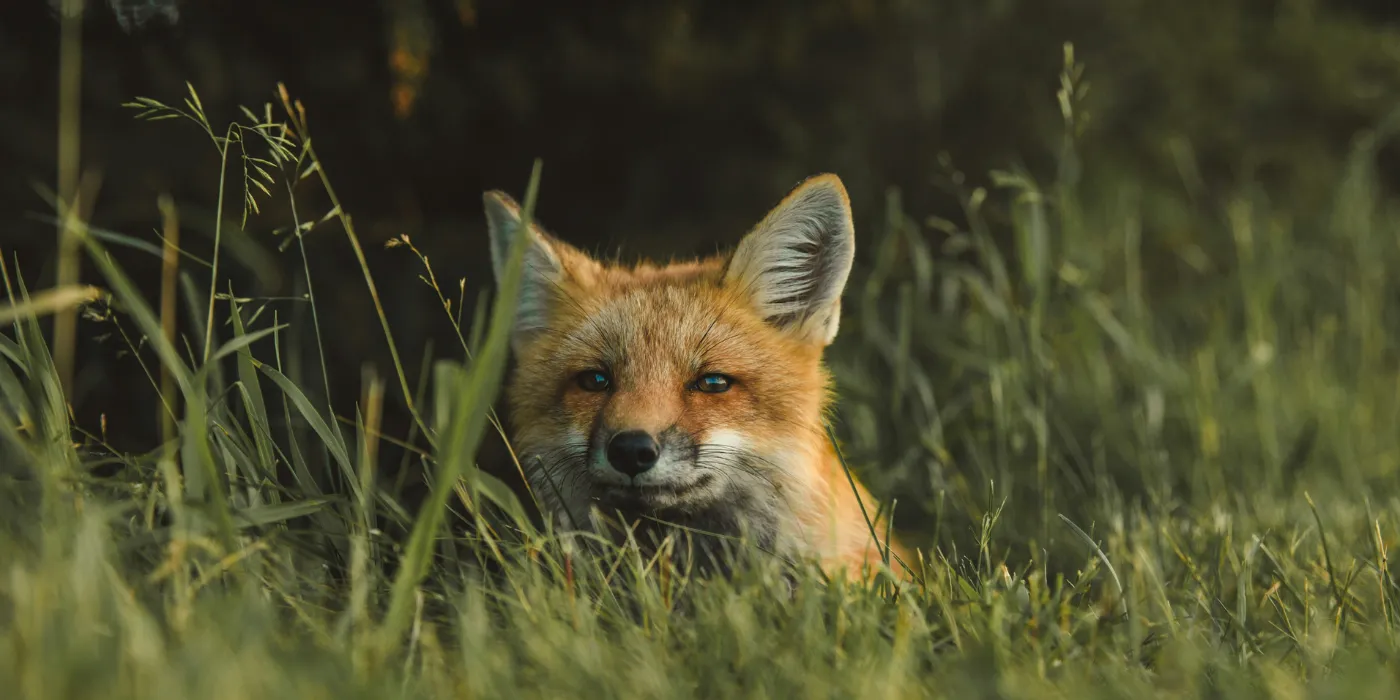
Can You Keep a Fox as a Pet? Here’s What You’re Getting Into
- Give A Shit About Nature
- May 11, 2026
- Wildlife
- 0 Comments
The fox videos are charming. There’s no getting around it. A fox bounding toward its owner, ears perked, tail going — it looks like a dog that someone forgot to fully domesticate, and that’s basically the point. But “basically a dog” is doing a lot of work in that sentence, and the gap between “basically” and “actually” is where most pet fox situations go wrong.
First, the legality, because this question has a real answer that varies significantly by where you live. Fox ownership is illegal in a majority of U.S. states. California, Texas, New York, and most of the Southeast prohibit it outright or restrict it to licensed facilities.
A smaller group of states, including Missouri, Michigan, Tennessee, and Ohio, allow it, sometimes with permits and enclosure inspections, sometimes without. State-by-state legality maps shift regularly as laws update, so checking with your state wildlife agency directly is the only reliable approach before doing anything else.
Even where it’s legal, the rabies picture complicates things. No rabies vaccine is currently approved specifically for foxes in the U.S., which means that if your fox bites someone, public health officials may treat it as unvaccinated regardless of what shots it’s had. That has real consequences for both you and the animal.
The Domesticated Fox Is a Real Thing, With Caveats
Here’s where it gets genuinely interesting. Fox domestication isn’t just theoretical. Starting in the late 1950s, Russian geneticist Dmitry Belyaev ran a decades-long selective breeding experiment at a farm in Novosibirsk, breeding silver foxes exclusively for friendliness toward humans.
Within six generations, the selected foxes were licking experimenters’ hands, wagging their tails at human approach, and whining when people left. Within a few decades, they had also developed floppy ears, shorter snouts, piebald coloration, and other physical traits associated with domestication syndrome — the same suite of changes seen in dogs.
The experiment, reviewed in a landmark 2009 paper by Lyudmila Trut in the journal BioEssays, demonstrated that selecting for a single behavioral trait could produce a cascade of physical and neurological changes across generations. It’s one of the most significant domestication experiments ever conducted.
Descendants of those foxes are occasionally sold in the U.S. They’re more dog-like than a wild-caught fox. They’re still not dogs.
What Living With a Fox Actually Looks Like
The scent marking is where most people’s enthusiasm runs into reality. Foxes have musk glands and mark territory with urine that people consistently describe as unusually strong and difficult to clean. Neutering reduces this somewhat but doesn’t eliminate it. If you have a carpet you care about, that’s relevant information.
Beyond the smell, foxes are highly energetic, escape-oriented, and destructive when bored. They need large, secure outdoor enclosures, substantial daily enrichment, and more active engagement than most people anticipate. They’re not dogs — they don’t have thousands of years of selection for enjoying human company on human terms. Even the Belyaev domesticated line retains strong wild instincts around prey drive, digging, and general unpredictability.
Veterinary care is another real obstacle. Most vets don’t see foxes, and finding one with genuine exotic canid experience takes research. Routine care costs more, and emergencies in an unfamiliar animal are harder to manage.
The Wildlife Angle
If what appeals to you is a fox in your life rather than a fox in your home, there’s a version of that which actually works. Wild foxes are increasingly comfortable in suburban environments and can become reliably present in yards that offer good habitat. Watching a wild fox hunt mice in a garden bed at dusk is a genuinely remarkable experience that doesn’t require permits, scent marking, or a specialized vet.
Native plants that support prey populations, the voles, insects, and small mammals foxes eat, make your yard more attractive to wild foxes naturally. A brush pile provides cover they’ll use. You don’t own the fox, but you get the fox, and the fox gets to be a fox.
That’s not a dismissal of people who genuinely want a pet fox and have done the research. Some people are well-suited to it, live in states where it’s legal, have appropriate outdoor space, and find the commitment worthwhile. But that’s a small category, and the internet’s fox content makes it look like a much larger one than it is.
FAQ
Can you tame a wild fox you find? No. Wild foxes are not the same as captive-bred ones, carry significant disease risk including rabies, and are protected by law in most states. Taking a wild fox is illegal in nearly every jurisdiction.
What states allow pet foxes? Laws change frequently, but states that have allowed fox ownership with or without permits have included Missouri, Michigan, Tennessee, Ohio, Indiana, and others. A majority of states prohibit it. Check your state wildlife agency for current rules.
Is a domesticated Belyaev fox available to buy in the U.S.? A small number of breeders have sold descendants of the Siberian domesticated fox line in the U.S. These are significantly more sociable than wild foxes, but still not domesticated in the way dogs are, and they’re expensive and rare.
How bad is the smell? People who have kept foxes consistently describe the urine smell as unusually strong and pervasive. Neutering helps somewhat. It’s one of the most commonly cited reasons people surrender pet foxes after acquiring them.
What’s the difference between a fennec fox and a red fox as a pet? Fennec foxes are smaller, have somewhat different legal status in some states, and are considered slightly more manageable. They still mark territory, are highly energetic, require specialized care, and aren’t suitable for most households. Red foxes are larger, more commonly available, and have a stronger odor.