The Truth About Opossum Aggression (And Why Their Reputation Is Wrong)
- Give A Shit About Nature
- May 11, 2026
- Opossums, Wildlife
- 0 Comments
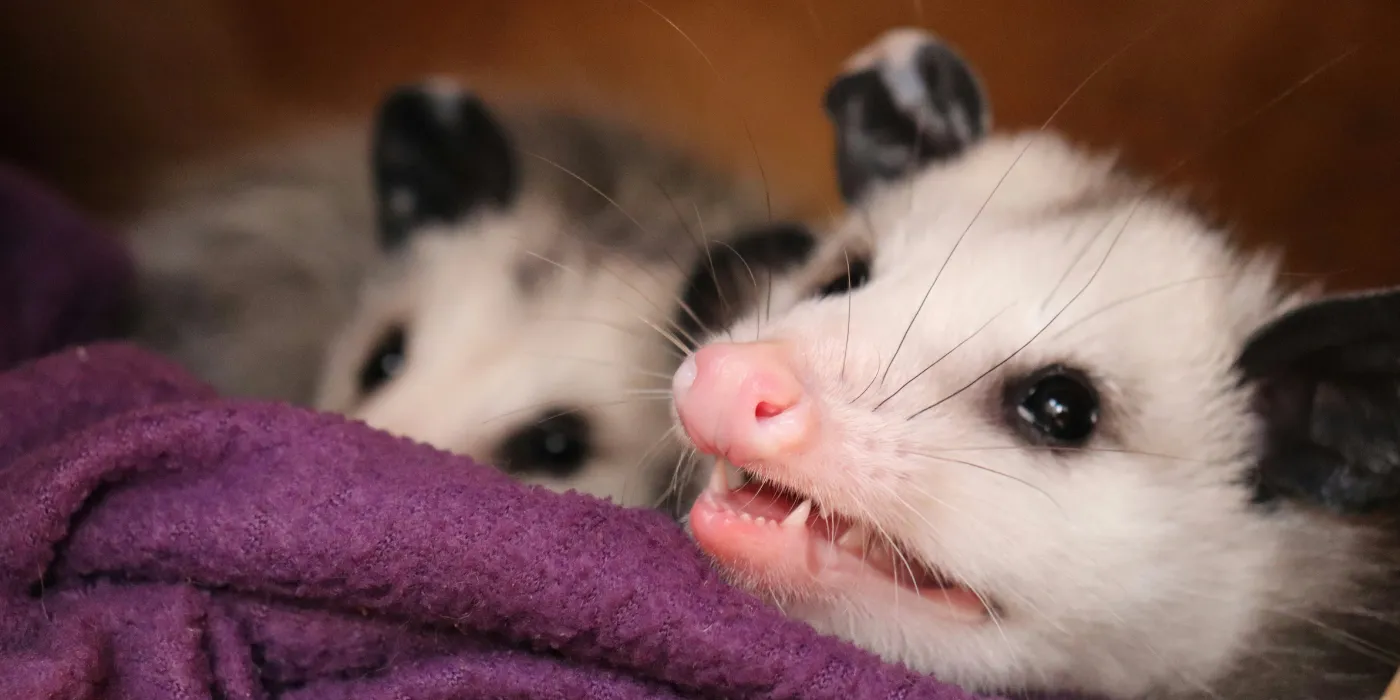
The opossum in your yard, mouth agape, showing off 50 teeth, drooling slightly, is not preparing to attack you. It’s terrified.
That’s the whole show: a maximum-effort display designed to make a predator decide the situation isn’t worth the trouble. If you give it a minute and some space, it will either shuffle away on its own or fall completely still and let you assume you’ve won.
Opossums are among the least aggressive wild mammals that commonly share space with humans. That’s not opinion. Their default response to threat is avoidance, bluffing display, or full thanatosis, the involuntary catatonic state where they collapse, become unresponsive, and emit a foul odor to simulate a rotting corpse. An animal whose primary defense is pretending to be dead is not an animal with aggressive intentions.
What the Hissing and Drooling Actually Mean
When an opossum hisses, bares its teeth, and drools, it’s running through a defensive checklist in the hopes that something in the sequence convinces you to leave. It’s a performance, and a fairly committed one. The drooling isn’t a sign of rabies, it’s part of the thanatosis response and a normal behavior for a frightened opossum.
This matters because the visible signs people associate with rabies in wild animals — disorientation, drooling, unusual behavior — are also exactly what an opossum does when it’s scared but healthy. The two things look similar from a distance, and the misidentification has contributed significantly to opossums’ bad reputation.
Bites are rare and nearly always the result of physical handling, trapping improperly, or cornering the animal with no exit. An opossum that bites is an animal that has exhausted every other option. The appropriate response to an opossum in your yard is to give it space and let it move on, which it will do on its own timeline.
Keep Reading: Possum vs. Opossum: Both Are Correct, But Not for the Same Animal
The Rabies Situation Is Genuinely Reassuring
Opossums are marsupials with a body temperature between 94 and 97 degrees Fahrenheit — lower than most placental mammals. The rabies virus struggles to survive and replicate at that temperature, which is why confirmed rabies cases in opossums are exceptionally rare. Less than 1% of tested opossums in the U.S. come back positive. For comparison, raccoons, bats, skunks, and foxes are all significantly higher-risk rabies vectors.
This doesn’t mean you should handle opossums freely. They can carry leptospirosis and other pathogens, and direct contact with any wild animal warrants handwashing and basic hygiene. But the rabies fear specifically is disproportionate to the actual risk, and it’s worth knowing that.
If you see an opossum showing signs beyond normal defensive behavior — unprovoked aggression, genuine paralysis, sustained disorientation with no apparent trigger — contact animal control. Those would be signs of illness in any mammal, opossum or not. But hissing and drooling in response to your presence is just an opossum being an opossum.
What Opossums Are Actually Doing in Your Yard
Mostly scavenging. Opossums are opportunistic omnivores with an impressive appetite for things that would otherwise accumulate: fallen fruit, carrion, insects, and according to some research, ticks. They’re also one of the few animals with some resistance to certain snake venoms, though the ecological significance of this varies.
They’re not territorial in any meaningful sense, they don’t den permanently in one spot, and they move on relatively quickly. An opossum visiting your yard tonight may never return. They have large home ranges and move through rather than settle in.
The things that attract them — accessible garbage, pet food left outside, fallen fruit — are the same things that attract raccoons and skunks. Securing food sources is the effective way to reduce visits from all of them, opossums included. Unlike raccoons, though, opossums aren’t going to open a latch or figure out a bungee cord. The bar for deterrence is lower.
Pets and Opossums
A dog that encounters an opossum in the yard may trigger a defensive response — hissing, teeth, the full display. An opossum isn’t going to initiate a confrontation with a dog, but it won’t retreat if the dog is in its face. They’re generally not a threat to adult dogs or cats, though a cornered opossum can bite, and a bite from any wild animal warrants veterinary attention.
Keeping dogs on leash or supervised in the yard at night in areas with active wildlife is good practice generally — it protects both your dog and the wildlife. An opossum that survives the encounter is still useful to the ecosystem. One that doesn’t is a loss that wasn’t necessary.
If you’re doing other things to support backyard wildlife — native plantings, leaving leaf litter in place, putting up a brush pile — opossums may visit more regularly. That’s generally a sign of a functioning habitat, not a problem to solve.
Read next: Why a Pet Opossum Almost Never Works Out, Even Where It’s Legal
FAQ
Will an opossum attack me if I get too close? Almost certainly not. Their response to close human proximity is to display defensively (hissing, showing teeth) or play dead. Bites are rare and nearly always the result of the animal being handled or physically cornered.
Is a drooling opossum sick? Not necessarily. Drooling is part of the thanatosis response — the playing dead behavior opossums use when severely frightened. It can look like a symptom of illness but is often just a scared animal running through its defensive repertoire.
Do opossums carry rabies? Confirmed rabies in opossums is exceptionally rare due to their low body temperature, which makes it difficult for the virus to replicate. They’re considered one of the lowest rabies risk species among common backyard wildlife.
How do I get an opossum to leave my yard? Give it space and time — it will usually move on within a few hours. Remove food attractants (pet food, unsecured garbage, fallen fruit) to discourage repeat visits. Opossums don’t establish permanent dens in residential areas the way other wildlife sometimes does.
What should I do if I find one playing dead? Leave it alone. Thanatosis can last from a few minutes to several hours. The opossum will recover and move on when it feels safe. Touching or moving it prolongs the stress response.