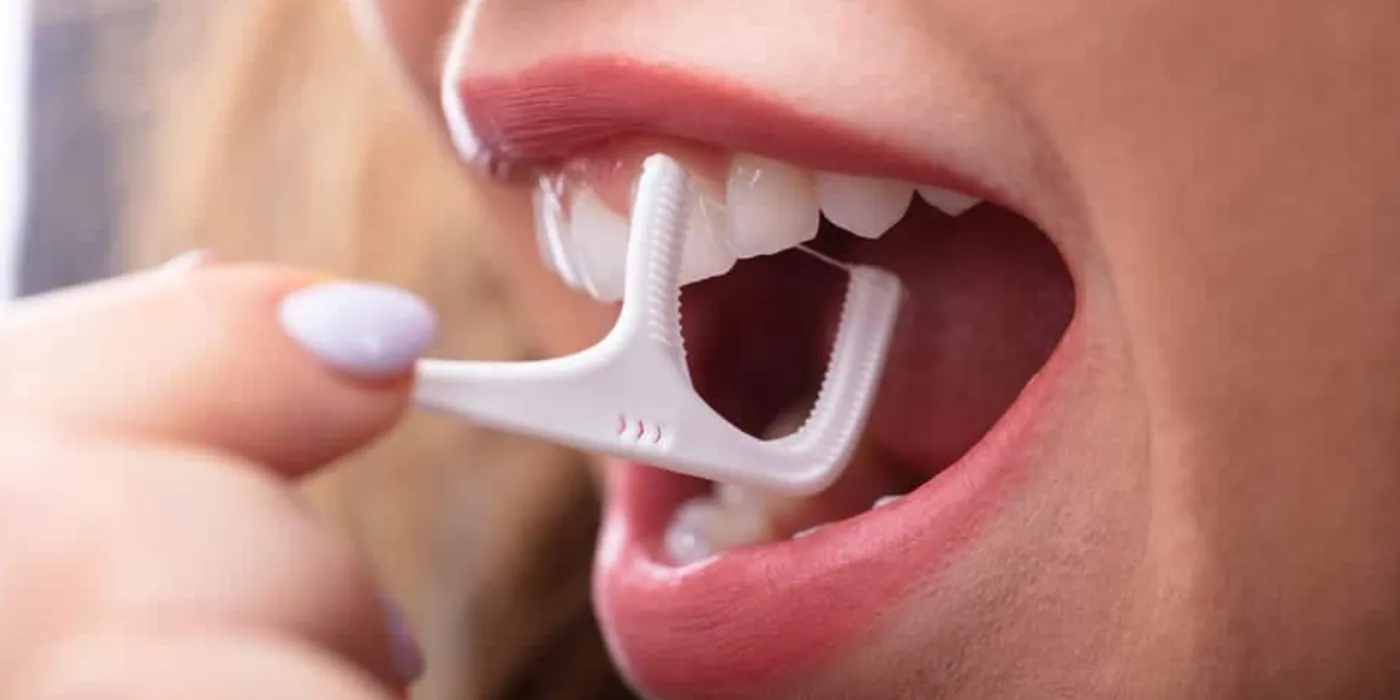
Can You Recycle Floss Picks? (And What to Use Instead)
- Give A Shit About Nature
- April 12, 2026
- Sustainable Living
- 0 Comments
There’s a saying worth living by: only floss the teeth you want to keep. There’s another one that doesn’t quite roll off the tongue as smoothly but matters just as much: don’t create waste you don’t have to.
For the environmentally minded flosser, single-use plastic floss picks present a real problem. They’re convenient, they’re everywhere, and they are essentially impossible to recycle. Here’s why — and what to do about it.
What are floss picks made of?
Understanding why something can’t be recycled starts with knowing what it’s made of.
A standard single-use floss pick has two components: a hard plastic handle (typically polypropylene or nylon) and a strand of floss stretched across the forked top. That floss is almost always made from nylon — a synthetic plastic fiber chosen for its low-friction, comfortable feel. Most commercial floss also carries a wax coating, either microcrystalline wax (petroleum-derived) or beeswax, to make it glide more easily between teeth.
The problem is in that combination.
Can you recycle floss picks?
No. Single-use floss picks are not recyclable through standard curbside recycling programs, and this is unlikely to change anytime soon. There are two reasons:
The nylon floss. Nylon is technically a recyclable material, but it is not accepted at the vast majority of municipal recycling facilities. It requires specialized processing that most residential recycling programs simply don’t offer. Even if you were to remove the floss strand from the pick before recycling — which is possible in theory — the strand itself would almost certainly be rejected at the facility and sent to landfill anyway.
The size problem. Even setting the nylon issue aside, the plastic handle of a floss pick is too small to be processed reliably by most recycling equipment. Small plastics — anything smaller than roughly two inches — fall through sorting machinery and end up in landfill regardless of what material they’re made from. This is the same reason plastic cutlery, bottle caps (unless attached to their bottle), and plastic straws are generally not recyclable through curbside programs.
The short answer: floss picks go in the trash. Both components, together or separated, end up in landfill.
Is regular dental floss any better?
Somewhat, but not as much as you’d hope. Standard wax-coated nylon dental floss — the kind in most drugstore floss containers — cannot be recycled or composted. It goes in the trash too. The plastic dispenser it comes in is technically recyclable (it’s usually polypropylene), but whether your local facility accepts it depends on your municipality.
The floss itself is worse than it looks environmentally. Nylon takes approximately 30 to 40 years to decompose, and because floss is so thin and lightweight, it escapes landfills easily and ends up in waterways, where it poses a serious entanglement hazard to marine life and birds. The Ocean Conservancy has documented fishing line and synthetic fibers — including dental floss — as a persistent threat to aquatic wildlife.
So yes, regular floss is marginally better than picks (less plastic per use, no handle waste), but it’s not a clean solution.
Eco-friendly floss alternatives that actually work
The good news is that genuinely better options exist — and have gotten easier to find.
Biodegradable silk floss
Natural silk floss is the most established eco-friendly alternative. It’s made from silk fiber — typically marketed as “peace silk,” meaning it’s harvested in a way that doesn’t kill the silkworm — and coated with natural candelilla wax (plant-derived) rather than petroleum wax. It’s compostable, though degradation time in home compost varies depending on conditions.
A few well-regarded options:
- Dental Lace uses peace silk floss in a refillable glass container — the refills come in a small cardboard tube, making it essentially zero-waste
- Radius Silk Floss uses USDA-certified organic silk and natural candelilla wax
- Lucky Teeth Organic Silk Floss is another compostable option with a straightforward ingredient list
One honest caveat: silk floss is not suitable for vegans, since it’s an animal-derived product. If that matters to you, keep reading.
Plant-based vegan floss
Several brands now offer floss made from plant-based materials rather than nylon or silk:
- Burt’s Bees Charcoal Floss uses a plant-based fiber and comes in recyclable packaging
- Cocofloss uses polyester rather than nylon, which is a marginal improvement, and comes in recyclable refill spools — though it’s not fully biodegradable
- Ecoroots Biodegradable Floss uses corn-based PLA fiber, which is compostable under the right conditions
The vegan biodegradable floss category is evolving quickly. Check packaging carefully — “plant-based” doesn’t always mean compostable, and “compostable” sometimes means industrial compost only, not home compost.
Water flossers
If you’re open to changing your method rather than just your materials, a water flosser (also called an oral irrigator) eliminates floss waste entirely. The American Dental Association recognizes water flossers as effective for removing plaque and debris from between teeth, particularly for people with braces, bridges, or implants.
The Waterpik Cordless Advanced is the most widely recommended entry-level model. It has a higher upfront cost than a roll of floss, but produces essentially zero ongoing waste. For people who struggle with traditional flossing technique — a very common issue — water flossers are also often easier and more comfortable to use consistently.
Compostable floss picks
If the convenience of a pick is what you’re after, a small number of companies now make compostable alternatives:
- Woobamboo Biodegradable Floss Picks use a bamboo handle and plant-based floss — the whole pick is compostable
- The Humble Co. Floss Picks use a plant-based handle and donate a portion of proceeds to oral health programs globally
These are genuinely better than conventional plastic picks. “Compostable” still requires the right conditions — most need a commercial composting facility rather than a backyard pile to break down fully — but they’re a meaningful step up from standard plastic.
What about the TerraCycle oral care recycling program?
TerraCycle runs a paid recycling program specifically for oral care waste — including toothbrushes, floss containers, and toothpaste tubes. It doesn’t currently accept floss itself (the nylon strand), but it does accept the plastic dispensers that floss comes in, which would otherwise go to landfill.
It’s a paid program (you buy a box, fill it with qualifying waste, and ship it back), so it’s not for everyone. But if you’re already generating a significant amount of oral care plastic waste, it’s worth looking into. Costs typically run $10 to $20 for a box depending on size.
The practical hierarchy
From most to least environmentally harmful, here’s how common flossing options stack up:
- Water flosser — zero ongoing waste, ADA-approved, highest upfront cost
- Biodegradable silk or plant-based floss in a refillable container — compostable floss, minimal packaging
- Biodegradable floss in recyclable or cardboard packaging — floss still needs trash or compost, packaging is better
- Standard nylon floss — all landfill, but less plastic waste than picks
- Compostable floss picks — better than conventional picks, still requires composting infrastructure
- Standard plastic floss picks — worst option environmentally, not recyclable
Frequently asked questions
Can I compost dental floss? Only if it’s made from a natural, compostable material like silk or a certified plant-based fiber. Standard nylon floss cannot be composted — it won’t break down in any meaningful timeframe in a home or commercial compost pile. Check packaging for compostability certification if this matters to you.
What should I do with used floss picks? They go in the trash. There’s currently no recycling stream for them. If you’re using compostable picks, check whether your local composting program accepts them — some do, some don’t.
Are bamboo floss picks actually better? Yes, meaningfully so — if they’re certified compostable. A bamboo handle with plant-based floss is biodegradable in the right conditions, unlike conventional plastic picks. Look for picks with third-party compostability certification (like the BPI seal) rather than just the word “natural” on the packaging.
Is flossing still worth it environmentally? Yes. The oral health benefits of flossing — preventing gum disease, which is linked to systemic health issues including cardiovascular disease — are well-established. The goal isn’t to stop flossing; it’s to floss with materials that don’t outlast you in a landfill. The alternatives above make that genuinely achievable.
What’s the most sustainable flossing routine overall? A water flosser for daily use, supplemented occasionally with biodegradable silk or plant-based floss for situations where the flosser isn’t practical (travel, for example). That combination produces essentially no waste, costs less over time than buying disposable picks or floss rolls, and is fully in line with ADA recommendations.