You planted milkweed for the monarchs. Then you went outside and found something else eating it — something fuzzy, or bright orange, or clustered in alarming numbers. Now you’re wondering whether to intervene.
Here’s the short answer: most of the insects you’ll find on milkweed are native species that belong there, have coexisted with monarchs for thousands of years, and should be left alone. A few are genuine nuisances worth managing. And the things that look most alarming are often the ones least worth worrying about.
Milkweed is one of the most ecologically loaded plants you can put in a yard. As we’ve written before, milkweed alone isn’t enough for monarchs — but when you have it, you’re inviting an entire community of specialized insects that evolved alongside this plant. Understanding who’s who makes all the difference between effective action and accidentally harming the ecosystem you were trying to support.
Hairy Caterpillars That Are Not Monarchs
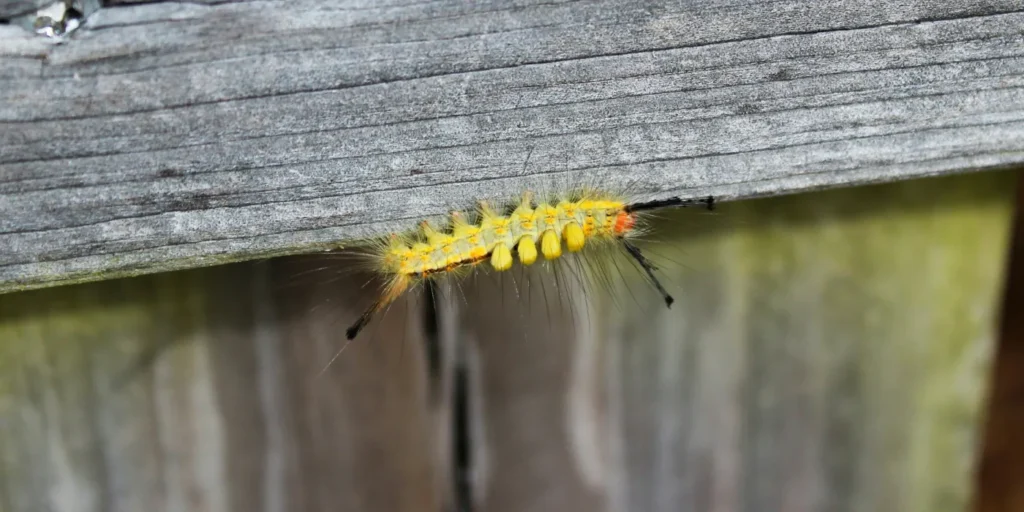
The single most common source of milkweed alarm for gardeners is the milkweed tussock moth caterpillar (Euchaetes egle). In late summer, they appear in clusters, feeding voraciously, covered in dense tufts of black, white, and orange hair. They can strip a plant fast. They look dramatic.
They are not monarchs. They don’t harm monarchs directly. And they’re native insects with just as much ecological right to the milkweed as monarchs have.
You can tell the difference easily: monarch caterpillars are completely smooth, with yellow, black, and white stripes. Tussock moth caterpillars are heavily furred — think small, aggressively decorated pipe cleaners. The two don’t look remotely similar up close.
Clemson Extension describes the tussock moth caterpillar as a native insect thriving on a plant it evolved specifically to eat. Like monarchs, tussock moth caterpillars sequester cardiac glycosides from the milkweed, making themselves toxic to predators — which is why their bright coloration mirrors the warning colors of monarch caterpillars. They’re running the same chemical defense strategy.
The practical guidance from Birds & Blooms editors, citing entomologists: tussock moths seldom reduce milkweed enough to seriously limit monarch access, and if you’re concerned, the solution is simply to plant more milkweed. OSU Extension’s take on people trying to remove tussock moth caterpillars to “save the milkweed for monarchs” is pointed: native milkweed tussock moths have the same food rights as monarchs. You don’t need to manage them.
Read more: Native Plants That Attract Monarch Butterflies
Yellow-Orange Aphids Covering the Stems
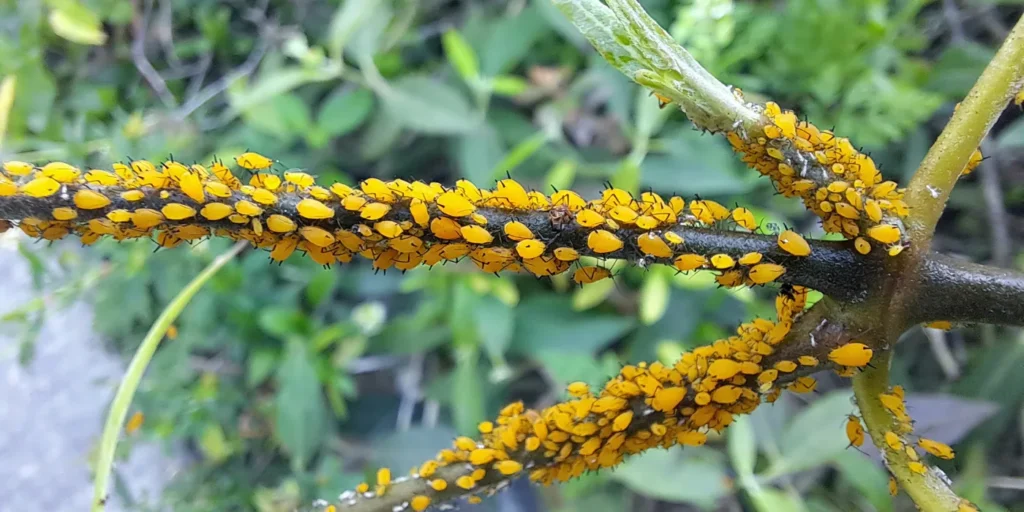
Bright yellow-orange aphids with black legs clustered all over your milkweed stems are oleander aphids (Aphis nerii). They are, genuinely, the only insect on this list that can reasonably be called a milkweed pest worth occasional management — though even that depends on how severe the infestation is.
Unlike the tussock moth and milkweed bugs, oleander aphids are an introduced species, not native to North America. They suck sap from the plant, and in high populations can stress plants, stunt new growth, and produce enough sticky honeydew to encourage sooty mold. Small or newly established plants can be more vulnerable than large, established ones.
The good news is that natural enemies — ladybugs, lacewings, parasitoid wasps, syrphid fly larvae — are drawn to aphid colonies and often bring them under control without any intervention. Illinois Extension recommends patience and allowing predator populations to build before taking action.
If you do want to manage them: a strong spray of water from a hose dislodges aphids effectively. Be aware this could also remove small monarch eggs or early-instar caterpillars from nearby leaves. Insecticidal soap is an option for severe infestations, though any pesticide application on milkweed carries risk for the insects you’re trying to support. Avoid broad-spectrum insecticides entirely — they will harm far more than they help.
Red-and-Black Bugs That Look Like Tiny Shields
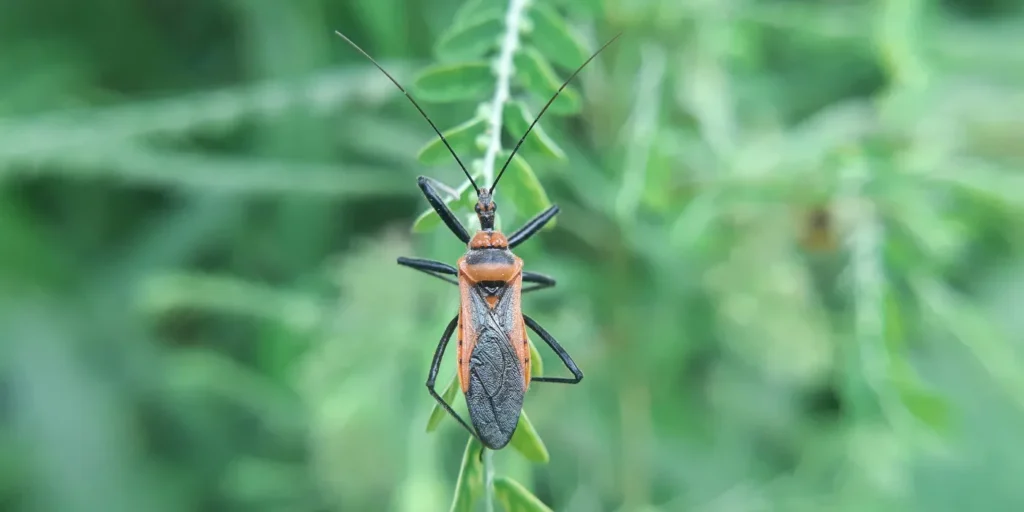
Large milkweed bugs (Oncopeltus fasciatus) and small milkweed bugs (Lygaeus kalmii) are both native insects and both entirely normal residents of a healthy milkweed patch. Large milkweed bugs are orange-red with black markings; small milkweed bugs are black with an orange X shape on their backs.
Both feed primarily on milkweed seeds, not leaves. Nebraska Extension’s description is useful here: they eat mainly seeds, and though they may occasionally consume other plant parts or even monarch eggs in some circumstances, they’ve coexisted with monarchs for millennia. They are not considered pests worth managing in a home garden context.
Red Beetles With Black Spots
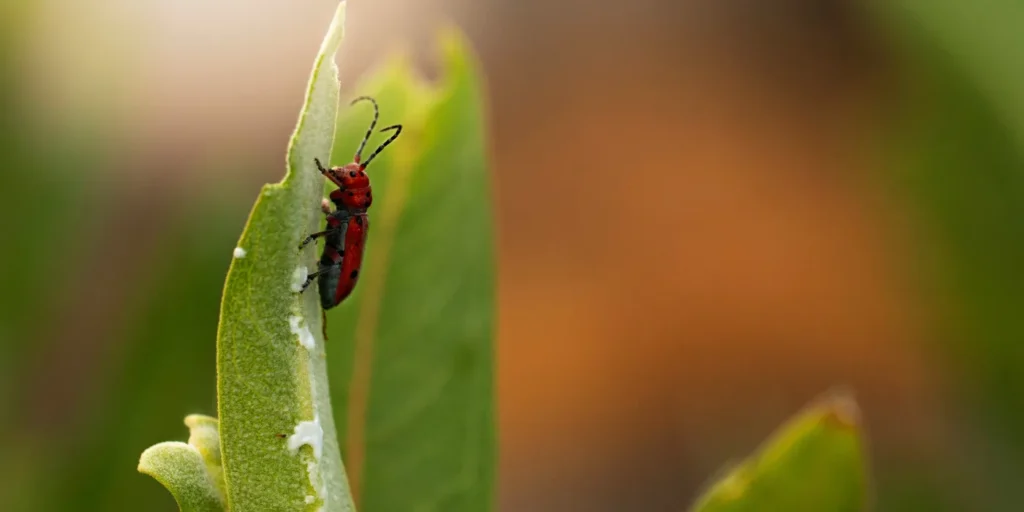
Red milkweed beetles (Tetraopes tetraophthalmus) are large, bright red longhorn beetles with black spots that appear on milkweed in midsummer. They’re native, they’re milkweed specialists, and they chew leaf tissue after cutting leaf veins first — a technique that reduces the sticky latex in their feeding area. This makes them capable of eating more leaf material than you might expect.
Milkweed leaf beetles (Labidomera clivicollis) are another option — chunky, orange-and-black beetles whose larvae also feed on leaves after cutting veins. Both beetle species are native and present no meaningful threat to a healthy, established milkweed planting. If populations seem very high on a small number of plants, eggs or larvae can be manually removed, but this is rarely necessary.
What About Deer and Rabbits?
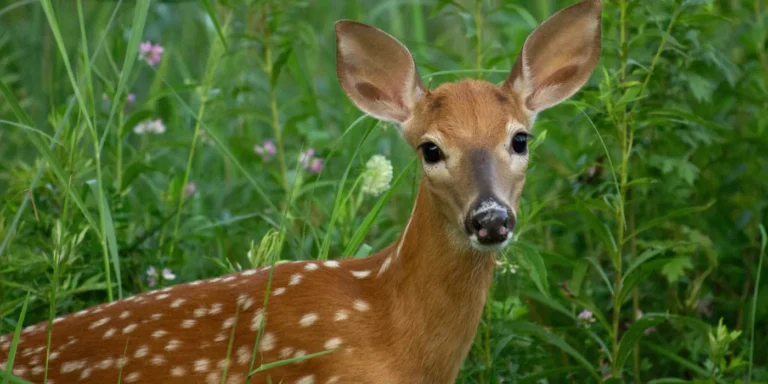
Yes — deer and rabbits will eat milkweed, even though its latex is mildly toxic. The Monarch Joint Venture notes both as reported milkweed eaters, particularly when other food is scarce or when plants are young and the latex hasn’t fully concentrated. Milkweed is generally considered deer-resistant but not deer-proof — under enough pressure, most plants become fair game.
If you’re losing young milkweed plants to browsing, a simple wire cage around new transplants until they’re established can help. Larger, established milkweed is typically less vulnerable.
Most Milkweed Pests Aren’t Really A Problem
The reflex to protect milkweed from “pests” often leads gardeners toward pesticide applications that kill the beneficial insects, predators, and native species the plant was meant to support.
The Illinois Extension is direct about this: pesticide applications on milkweed could harm any insects that visit — including monarchs. The milkweed ecosystem is not a problem to be managed; it’s the point.
If your milkweed is getting eaten to the stems by tussock moth caterpillars and you have very few plants, temporarily relocating some caterpillars to a leaf elsewhere is a reasonable response. But the better long-term solution — as most monarch conservation guidance emphasizes — is more milkweed. Multiple species of milkweed are even better, since different species bloom and leaf out at different times, supporting a longer season for all the insects that depend on them.
Milkweed in a yard is supposed to look a little rough by late summer. That’s what a working native plant habitat looks like. The alternative — a pristine, pest-free milkweed patch — is, ecologically speaking, a pretty quiet place.
Frequently Asked Questions
Should I remove milkweed tussock moth caterpillars? In most cases, no. They’re native insects, they coexist with monarchs naturally, and they rarely strip enough milkweed to meaningfully limit monarch caterpillar access. If you have a very small number of milkweed plants and a large tussock caterpillar population, you can physically relocate some caterpillars elsewhere — but avoid pesticides.
Are yellow aphids on milkweed harmful to monarchs? Aphids don’t directly harm monarch caterpillars or eggs in most cases, but severe aphid infestations can weaken plants. Try a strong spray of water first, or wait for natural predators like ladybugs to build up. Avoid insecticide sprays, which can harm monarchs and their eggs.
How do I tell a monarch caterpillar from a tussock moth caterpillar? This one’s easy once you know to look. Monarch caterpillars are completely smooth with yellow, black, and white stripes. Milkweed tussock moth caterpillars are heavily furred with orange, black, and white tufts of hair — they look like a small, fluffy pom-pom.
Is it okay to spray insecticide on milkweed to protect it? This is generally counterproductive for anyone trying to support monarchs. Any pesticide applied to milkweed is likely to harm monarch eggs, small caterpillars, and the beneficial insects that help control actual pests like aphids. Avoid insecticide applications on milkweed as a general rule.
What if something is eating my milkweed down to bare stems? Tussock moth caterpillars in high populations can do this, especially late in the season. Milkweed is a resilient plant and typically recovers. If the defoliation happens early in the monarch season when caterpillars are present and feeding, manually relocating some tussock caterpillars to leaves farther from active monarch feeding is a reasonable option. Planting more milkweed is the most effective long-term response.
Read more: Can you grow milkweed in pots?