Why Are Fireflies Disappearing? The Science Behind the Decline + What You Can Do
- Give A Shit About Nature
- May 12, 2026
- Backyard Habitat, Wildlife
- 0 Comments
If you grew up catching fireflies in a jar and your kids have seen maybe a handful total, you’re not imagining the difference. Firefly populations have been declining across much of North America and globally, and the causes are well-documented enough to be worth understanding clearly.
A 2020 study published in the journal BioScience, led by Tufts University professor Sara Lewis and a team of international firefly experts, surveyed researchers across multiple continents to identify the most serious threats. The ranking: habitat loss first, artificial light pollution second, pesticide use third. None of these are abstract problems. All three are things happening in and around residential yards.
Habitat Loss: The Foundation of the Problem
Firefly larvae spend one to two years living in the soil or near water before they ever flash a single light. They eat earthworms, snails, and slugs in the ground, and they need moist, undisturbed habitat to complete that stage of their life cycle. When that habitat gets paved, developed, drained, or manicured into lawn, the larvae don’t survive to become the adults you’d actually see.
A review published in PMC by the National Institutes of Health identifies habitat loss and degradation as the dominant driver of population declines globally, noting that fireflies require suitable conditions across their entire life cycle, not just the adult flashing stage most people think of. The adult firefly you see in June represents a successful two-year underground journey. Fewer suitable habitats mean fewer adults make it through.
This is why leaving leaf litter in place matters specifically for fireflies, not just butterflies and ground beetles. Firefly larvae overwinter under undisturbed ground cover and leaf litter in garden beds and lawn edges. Raking everything bare and blowing leaves to the curb in fall removes the insulation and habitat those larvae need to survive winter. A brush pile at the edge of the yard serves the same function as a leaf layer — cover and moisture for soil-dwelling insects.
Light Pollution: The One That Surprises People
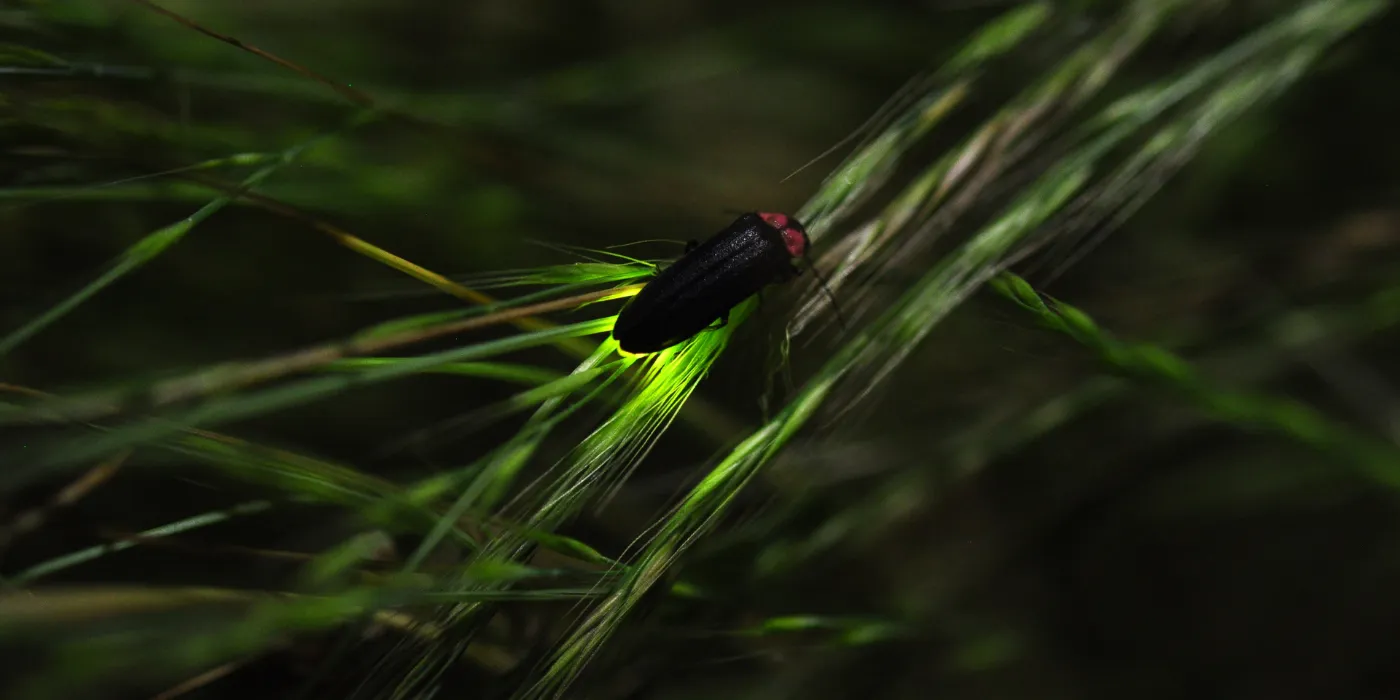
Fireflies find mates by flashing. The male flies and blinks in a species-specific pattern; the female on the ground or in the vegetation watches and responds. This is the entire courtship mechanism, and it only works in the dark.
Artificial light at night doesn’t just make the display harder to see. It actively disrupts the signal. Females have difficulty detecting male flashes against a bright background, males may not flash at all in highly lit areas, and both sexes can have their natural biological rhythms thrown off by chronic light exposure. As the Tufts study’s co-author Avalon Owens put it, light pollution really messes up firefly mating rituals in ways that directly reduce reproduction.
In practical terms: a yard with a motion-sensor porch light that flicks on at dusk and stays off otherwise is meaningfully better for fireflies than one with always-on flood lighting. Turning outdoor lights off during peak firefly activity in June and July — roughly 8 to 11 pm in most regions — gives the ones in your yard a better chance of finding mates. This sounds small but it compounds across neighborhoods. Fireflies don’t cover large distances. A block of dark yards during mating season is genuinely different from a block of lit ones.
Pesticides: The Underground Problem
Firefly larvae live in the ground for up to two years. That’s also where pesticide applications land, leach, and persist. The BioScience study identified insecticides, particularly organophosphates and neonicotinoids, as causing documented off-target harm to beneficial insects including fireflies. The researchers noted that while more specific research on fireflies is still needed, the evidence aligns with what’s known about insecticide effects on soil-dwelling insects more broadly.
Mosquito fogging is worth mentioning specifically because it’s a widespread suburban practice timed exactly to firefly peak season. Pyrethroid-based mosquito sprays are broad-spectrum — they don’t distinguish between mosquitoes and firefly larvae, or between mosquitoes and the beetles and moths that form the food web fireflies depend on. Bug zappers follow the same pattern: they kill large numbers of beneficial and neutral insects while making a negligible dent in mosquito populations. The tradeoff for a firefly-friendly yard is real.
What You Can Actually Do
The actions that help fireflies are almost entirely the same ones that help other beneficial insects — which makes this less a specialized project and more a reason to do the things already worth doing.
Stop using broad-spectrum pesticides, especially in summer. Let some of your lawn edge go unmowed. Leave leaf litter under shrubs and along garden borders through winter. Turn outdoor lights off from late evening during June and July. Plant native species that support the moist, layered habitat firefly larvae need — native plantings in general support far more soil insect diversity than lawn or non-native ornamentals.
If you have a low spot in the yard that stays damp, that’s more valuable than you might think. Fireflies favor moist microhabitats, and areas with consistent soil moisture near water features, downspout runoff zones, or natural depressions tend to support higher populations than dry, well-drained turf.
One more thing worth knowing: you can contribute to actual population monitoring through citizen science programs. The Firefly Atlas, a citizen science project run through Mass Audubon, collects standardized data on firefly sightings across North America. Data from residential observers is genuinely useful — long-term population trend data for most North American firefly species is thin, and the Tufts study specifically called for better monitoring. Reporting what you see in your yard is a real contribution.
FAQ
Are fireflies actually going extinct? Some species are at serious risk — the synchronized firefly Pteroptyx tener in Malaysia, for example, has seen significant declines tied to mangrove loss. For many North American species, documented population data is limited, but widespread anecdotal reports of declines align with the known threats. The 2020 BioScience study describes certain species as facing extinction risk, particularly those with narrow habitat requirements.
Why don’t I see as many fireflies as I used to? Habitat loss, light pollution, and pesticide use are the three most well-documented causes. Suburban development of moist woodland edges, increased outdoor lighting, and broader insecticide use across landscapes have all reduced suitable habitat and survival conditions.
Does catching fireflies hurt the population? Brief catch-and-release by children is unlikely to cause population-level harm. Catching adults in large numbers for extended periods or killing them causes more concern. The bigger threats to fireflies are habitat and light, not casual summer interaction.
What plants help support fireflies? Native plants that create moist, layered ground cover — native ferns, native sedges, wild ginger, woodland wildflowers — support the soil habitat firefly larvae need. Moist native lawn edges with undisturbed leaf litter are more valuable than manicured turf.