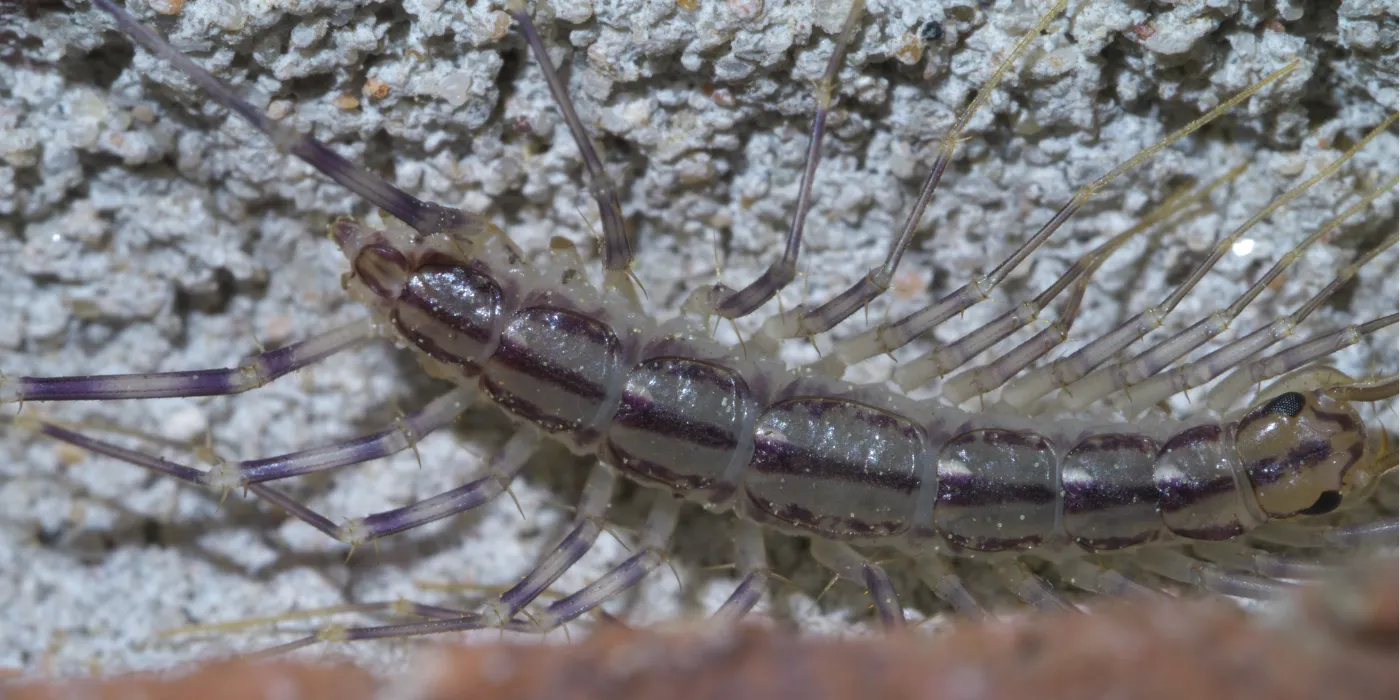
Are House Centipedes Dangerous? The Case for Letting Them Stay
- Give A Shit About Nature
- May 12, 2026
- Wildlife
- 0 Comments
House centipedes are venomous. That’s the scary-sounding part. And yes, they can technically bite. They are, objectively, one of the more alarming things to appear suddenly on a bathroom wall at midnight.
They are also not dangerous to you, and they are eating the things in your house that actually are worth worrying about.
The house centipede (Scutigera coleoptrata) — the species you’re almost certainly encountering — uses venom to hunt cockroaches, silverfish, spiders, termites, and ants. Penn State Extension confirms their venom is only strong enough to kill small insects, and Miche Pest Control’s review of the medical literature is direct: house centipede venom does not cause systemic poisoning, tissue damage, or lasting effects in healthy people.
A bite, which is rare and defensive, produces localized pain similar to a bee sting that typically resolves within a few hours.
What a Bite Actually Involves
The “bite” is technically a sting — house centipedes use modified front legs called forcipules to inject venom into prey, not jaws. The Poison Control center’s guidance on centipede stings is notably measured about it: the fear of centipedes causes considerably more suffering than centipedes themselves.
Bites almost always happen when the animal is accidentally trapped against skin — putting on a shoe, reaching into a space where one has sheltered. An undisturbed house centipede in open space will run away from you at surprising speed before it would ever consider biting. Their first, second, and third response to a human is to flee. Biting requires a specific set of circumstances that most people never create.
If you do get bitten, wash the area with soap and water, apply a cold compress if there’s swelling, and monitor for signs of infection. That’s the full medical guidance. Allergic reactions are possible but uncommon, in the same way any foreign protein occasionally triggers an immune response in sensitive people.
What They’re Actually Doing in Your House
A house centipede living in your basement or bathroom is actively hunting the insects already in your home. Cockroaches, silverfish, clothes moths, ants, spiders — these are the things on its menu. WebMD’s summary on house centipedes notes they help control infestations of other pests, which is putting it gently. They’re running pest control in the parts of your house where you’d least like to think about what’s living there.
This is also why seeing house centipedes regularly can be informative. They appear where prey is available. A house with a steady centipede population visible in basement corners and under appliances likely has a moisture issue and a population of the insects centipedes eat. Orkin notes that their presence often signals a broader pest situation worth investigating — which is more useful information than most homeowners get from a single spray-and-forget pest control visit.
The most effective long-term approach for people who don’t want centipedes indoors isn’t to kill them. It’s to address the moisture conditions they require and the insect prey they’re following. Reduce indoor humidity, seal gaps at the foundation and around pipes, and fix any plumbing leaks that create the damp environments where they thrive. Remove centipedes and the conditions that sustain them both go away.
Related Article: Are Wolf Spiders Venomous? What’s Actually Dangerous and What Isn’t
The Case for Tolerance
House centipedes are genuinely one of the more useful arthropods that share indoor space with humans. They don’t contaminate food, they don’t spread disease, they don’t damage structures, and they’re not interested in you. What they do is hunt pest insects in the places most likely to harbor them.
The impulse to kill them is understandable — they’re fast, they have too many legs, and they appear suddenly. But they’re doing something useful, and the logic of eliminating free pest control because it looks strange is worth at least pausing on.
The same principle that applies to leaving spiders alone in garden beds applies here. The arthropods doing useful predatory work in and around your home are assets, not problems. House centipedes fit that category more clearly than almost anything else that ends up in a basement. If the presence of one specifically bothers you, catch it in a cup and release it outside rather than killing it. The cup-and-cardboard method works on a centipede the same way it works on a spider, just faster.
FAQ
Can a house centipede bite break skin? Their forcipules can puncture skin in some cases, though this is uncommon. When it happens, the result is typically mild pain, redness, and swelling that resolves within a few hours. Larger centipede species found in tropical regions are a meaningfully different situation, but the common house centipede is not medically significant to healthy adults.
Are house centipedes a sign of a bigger problem? Sometimes. They appear where they have prey, so regular centipede sightings — particularly in basements, bathrooms, and laundry rooms — can indicate a moisture problem and an insect population worth investigating. Addressing those conditions does more than trying to catch the centipedes themselves.
Do house centipedes come up through drains? They can move through gaps around drains and pipes, though they don’t live in drain water. Sealing gaps around plumbing penetrations at the foundation level is the effective way to reduce indoor entry.
Are they dangerous to pets? Bites to cats or dogs are very unlikely and generally produce the same minor localized reaction seen in humans. House centipede venom is not medically significant to most domestic pets.
Read next: Are Bats Dangerous To Human? Myth vs. Fact