Wolf Spider Bites Are Rarer Than You Think: What Happens And When To Worry
- Give A Shit About Nature
- May 14, 2026
- Wildlife
- 0 Comments
Wolf spiders bite. They’re capable of it, and under the right circumstances they will. But “the right circumstances” is doing some serious work in that sentence, because a wolf spider’s default response to a human is to run away as fast as possible, not go toe-to-toe with one.
Bites generally happen when a wolf spider is accidentally pressed against skin: sitting in a shoe, tucked under clothing, wedged between a person and a garden glove. Cleveland Clinic’s medical review of wolf spider bites suggests that these spiders prefer to avoid humans and will only bite in self-defense. An undisturbed wolf spider in an open space presents essentially no threat.
When a bite does happen, the experience is typically immediate sharp pain, followed by redness and swelling that resolves within a few days. Medical News Today’s clinical summary compares it to other minor insect bites: uncomfortable, localized, and self-limiting for most people.
What a Wolf Spider Bite Actually Looks Like
The bite site usually appears as a small red mark with mild swelling, sometimes with a visible puncture point at the center. The area may be warm to the touch and itchy for a day or two. Some people experience minor bruising or skin darkening around the site as small blood vessels respond to the bite.
Most symptoms clear within a few days without treatment beyond basic wound care. SpiderAdv’s clinical breakdown notes that unlike brown recluse bites, wolf spider bites do not typically cause skin ulcers or tissue death, a distinction that is important because these two spiders get confused regularly, and the confusion drives a lot of unnecessary alarm.
The symptoms worth taking seriously: a red line extending outward from the bite (a potential sign of infection), swelling that spreads significantly over several days, fever, difficulty breathing, or any sensation of general illness.
These warrant a doctor visit. Any wound can become infected, including wolf spider bits, and allergic reactions to spider bites, though uncommon, occasionally occur. If symptoms worsen instead of improving over 48 to 72 hours, getting it checked is the right call.
The Brown Recluse Confusion
The confusion around wolf spiders and brown recluses is worth spending a moment on because it shapes so much of the fear around wolf spiders.
Wolf spiders and brown recluses get misidentified constantly. Both are ground-dwelling hunters found in similar habitats, under rocks, in leaf litter, inside homes in dark corners. But their bite profiles are very different. Brown recluse venom can cause genuine tissue damage in some cases and warrants prompt medical attention.
Wolf spider venom does not. A peer-reviewed case study in ScienceDirect confirms this: wolf spider envenomation seldom causes cutaneous necrosis or systemic symptoms, and the documented cases reviewed showed no skin death.
The original PubMed paper on wolf spider bites made the same point: because of their similar coloration and hunting habits, wolf spiders are often confused with brown recluses, but their clinical profiles are meaningfully different.
If you were bitten and didn’t see the spider, don’t assume the worst based on what you’ve read about dangerous spider bites. If symptoms remain mild and localized, it’s almost certainly not a recluse bite. If you’re unsure or concerned, a doctor can assess it. And if you can capture the spider safely (without touching it), that identification helps medical evaluation considerably.
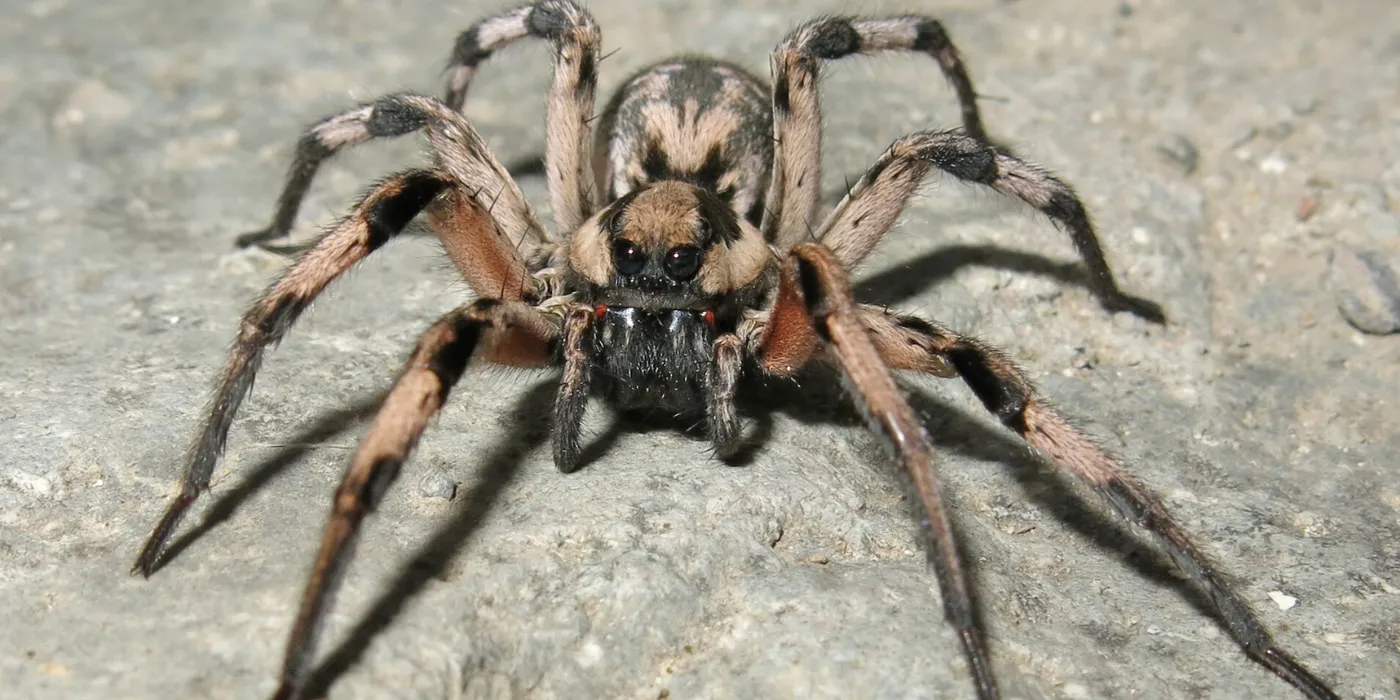
How to tell them apart visually: wolf spiders are larger, faster, and patterned with stripes or spots. Their eye arrangement is distinctive: two large eyes in the middle row, giving them excellent vision. Brown recluses are small, uniformly tan to brown, and have the characteristic violin-shaped marking on their back.
Treating a Wolf Spider Bite at Home
For the typical bite, involving localized pain, minor swelling, redness, home treatment is appropriate. Wash the area with soap and water. Apply a cold compress in 10-minute intervals to reduce swelling. Over-the-counter antihistamines can help with itching. Keep the area clean and monitor for signs of infection over the next few days.
That’s genuinely the full guidance for most bites from healthy adults. WebMD’s review and Cleveland Clinic both align on this: wolf spider bites don’t typically require prescription treatment or emergency care for otherwise healthy people.
People at higher risk of more pronounced reactions include immunocompromised individuals, those with known spider venom allergies, and very young children. For these groups, a call to a doctor after any confirmed or suspected spider bite is reasonable.
What Wolf Spiders Are Doing in Your Garden
This is something I think is always worth saying, because the fear response to wolf spiders often leads straight to pest control: they’re hunting the insects you actually don’t want. Cockroaches, ants, crickets, beetles — these are what wolf spiders eat. A wolf spider in a garden bed or under a woodpile is doing quiet, effective pest control.
We’ve written more about wolf spiders, their venom, and why their reputation exceeds the actual risk if you want the full ecological picture. The short version: they’re useful, they’re not dangerous in any meaningful sense to healthy adults, and killing them removes a predator that’s keeping insect populations in check.
Leaving leaf litter in place and maintaining some undisturbed ground cover supports the wolf spider population alongside all the other beneficial ground-dwelling insects and arthropods. A raked-bare yard has fewer of them. Whether that’s a feature or a bug depends on your tolerance for spiders, but ecologically it’s a loss.
If you find one indoors, a cup and a piece of cardboard is the right tool. They move fast, so you may need a second attempt, but they don’t bite during the process if you’re calm and deliberate. The same method works for jumping spiders and house spiders — catch and release rather than kill, because they’re doing something useful wherever they end up.
Read More: How to Get Rid of Spiders Without Poison
FAQ
How do I know if I was bitten by a wolf spider or a brown recluse? Seeing the spider is the only reliable way to confirm species. Symptomatically: a wolf spider bite produces localized pain, redness, and swelling that stays contained and resolves within a few days. A brown recluse bite may involve spreading tissue damage, a worsening wound over days, or a necrotic center. If symptoms are progressing rather than improving, see a doctor.
Should I go to the hospital after a wolf spider bite? For most healthy adults, no. Basic home wound care is appropriate for mild localized symptoms. Go to urgent care or an ER if you experience rapidly spreading swelling, difficulty breathing, fever, a red line extending from the bite, or any symptoms of anaphylaxis.
Can wolf spiders bite through clothing? Their fangs can penetrate thin fabric, but clothing generally reduces bite risk by creating a barrier between the spider and skin. Most bites occur when the spider is directly against bare skin and pressed.
Are wolf spiders more dangerous in certain parts of the country? The family Lycosidae contains many species across North America with broadly similar venom profiles. No regional wolf spider species is considered medically significant in the way that brown recluses or black widows are.
Sources: Cleveland Clinic: Wolf Spider Bite · Medical News Today: Wolf Spider Bite · PubMed: Wolf Spider Bites · ScienceDirect: Wolf Spider Envenomation · WebMD: Wolf Spider Bite