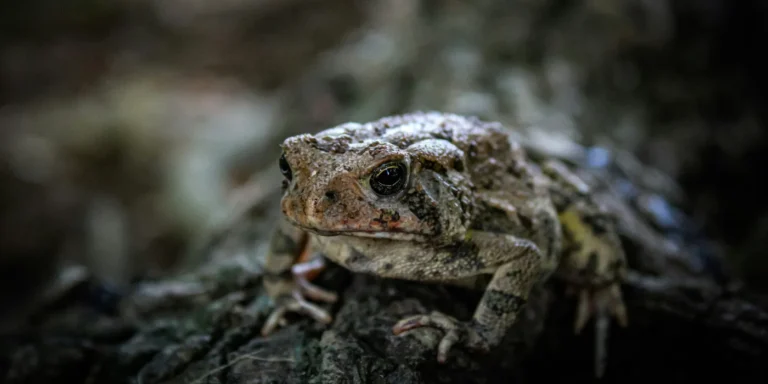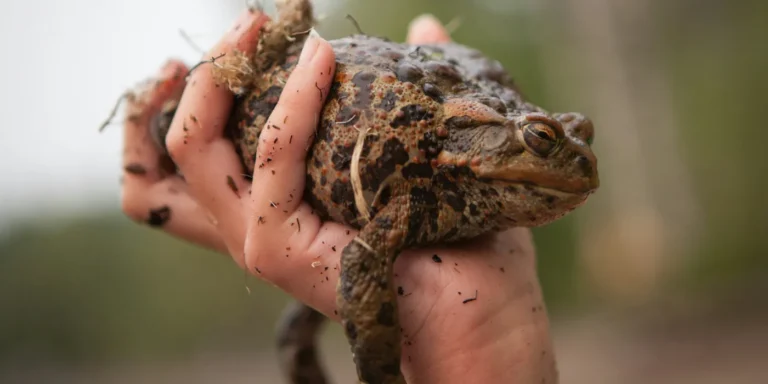
Almost every toad in North America can make your dog drool. In the U.S., two species cause the most serious poisonings.
Every toad makes some toxin in the glands behind its eyes and in its skin, and a dog that licks or bites one soaks it in through the gums. What happens next depends on which toad it was, and that depends on where you live. Pick your state below.
- If your dog is alert: rinse with the head tipped down, water out the front, for about 10 minutes. If your dog is collapsed, disoriented, seizing, or can’t swallow: skip the rinse and wipe the mouth with a wet cloth.
- Don’t make your dog vomit.
- Get to a vet now. Pet Poison Helpline: (855) 764-7661 (an incident fee applies).
Which toads are poisonous to dogs

Serious reactions and death generally follow exposure to large toads, namely the cane toad (Rhinella marina) and the Sonoran Desert toad (Incilius alvarius), also called the Colorado River toad. Only those two cause life-threatening signs. How sick a dog gets also depends on its health, how much contact it had, and how long ago.
A dog that bites or swallows a cane toad can die in as little as 15 minutes without treatment. Toxicity scales with body size, and both of these toads are big. Speed matters more than anything else you do.
Where each one lives
Cane toad. Established in Florida, Hawaii, Puerto Rico, the U.S. Virgin Islands, Guam, the Northern Mariana Islands, and American Samoa. In Florida it lives in central and south Florida, generally south of Interstate 4. In Texas it is native only to the far south, in Cameron, Hidalgo, Jim Hogg, Starr, Webb, Willacy, and Zapata counties, and there is no evidence it is spreading.
Sonoran Desert toad. It lives in Arizona and in the desert shrubland and grassland of southwestern New Mexico. It comes out on summer nights after rain. California is the odd one. The species once lived along the lower Colorado River and in the Imperial Valley, but state biologists know of no living populations there, and it's listed as a species of special concern.
Older pet-health pages put cane toads in Louisiana and Colorado River toads in Texas and California. The records don't back that up. Louisiana has one 1935 introduction record, and the toad isn't considered established there. The Sonoran Desert toad isn't on the Texas Parks and Wildlife list of Texas toads at all.
Isolated cane toads have turned up outside their range. Mississippi has a 2014 record tied to nursery shipments from Florida, Ohio has a 2020 record, and Massachusetts has a 1991 record. None are considered established. If you see a huge toad that doesn't match the local ones, take a photo and call your state wildlife agency.
How to tell them from ordinary toads
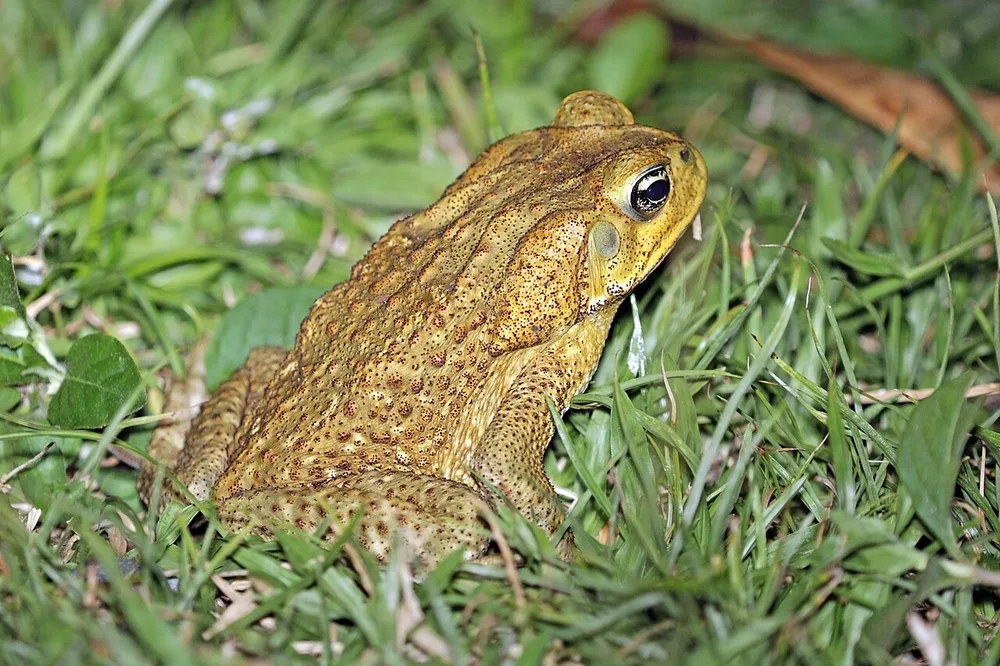
The cane toad is reddish-brown to gray-brown with a pale belly. Adults run about 4 to 9 inches, and the glands behind the eyes angle down toward the shoulders. In Florida it gets mistaken for the native southern toad, which tops out around 3 to 4 inches and is harmless to the ecosystem. Check before you act.
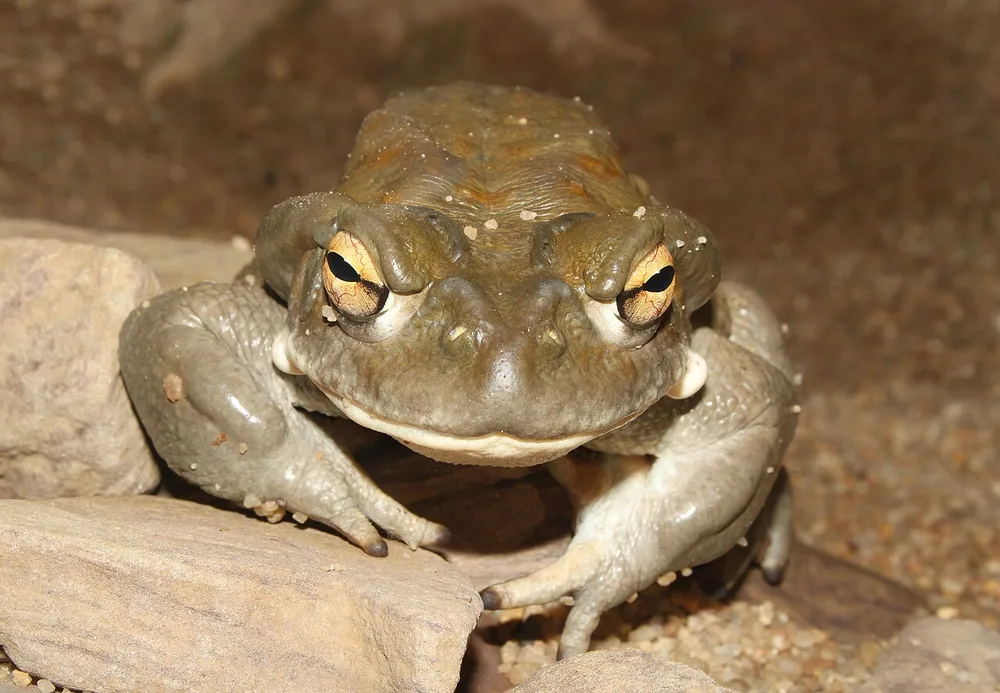
The Sonoran Desert toad has relatively smooth olive-green skin, huge glands behind each eye, and several large warts on the hind legs. It grows up to about 7.5 inches, the largest native toad in the U.S. The white warts at the corners of the mouth are the mark people remember.
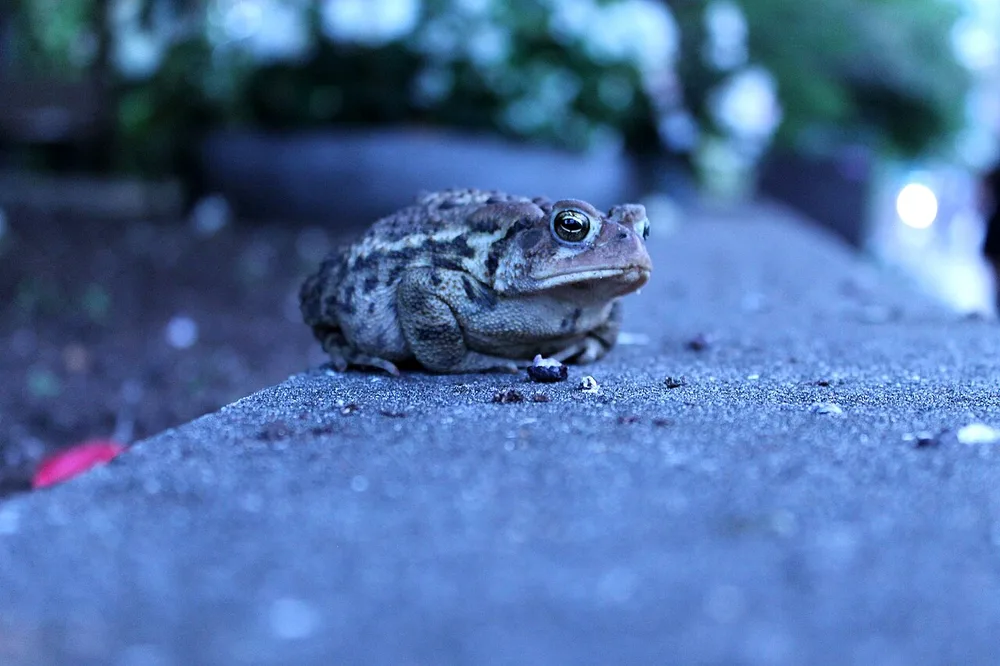
Don't rule a dangerous toad out by size alone. Young cane toads and Sonoran Desert toads are small. Go by where you live, the glands and skin, and what your dog is doing.
What it looks like when a dog gets into one
With an ordinary toad you see drooling, foaming, head shaking, and pawing at the mouth, sometimes with vomiting. Vomiting can last for hours, but with common toads often nothing else develops.
A dangerous toad looks worse, fast. Frantic or disoriented behavior, brick-red gums, seizures, and heavy foaming are the early signs. Weakness, bluish gums, trouble breathing, and an abnormal heart rhythm can follow.
What to do right away
If your dog is alert and walking, rinse first, then drive. Hold the head down so water runs out the front of the mouth and not down the throat. A hose on gentle flow for about 10 minutes works. Wipe the gums and tongue with a towel to pull off the sticky toxin.
If your dog is collapsed, disoriented, seizing, or can't swallow properly, don't flush. Water can end up in the lungs. Wipe the lips, cheeks, tongue, and gums with a wet washcloth and get to an emergency vet right now. In a severe case, getting there matters more than finishing a rinse.
Then go to a vet, even if the dog seems better. In cane toad and Sonoran Desert toad territory, don't wait to see how it goes. Call the clinic on the way.
Don't make your dog vomit. Vets avoid it because neurological signs can come on fast.
If you can safely get a photo of the toad, take one. It helps the vet judge how bad it could be.
What happens at the vet
Treatment is mostly supportive. The vet flushes the mouth, controls seizures with sedatives, treats heart rhythm problems, and gives oxygen or breathing support if the dog is struggling. The drug atropine can dry up saliva, but it waits until the heart has been checked. In severe cases where arrhythmias won't respond to standard treatment, a vet can use antibody fragments made for the heart drug digoxin. The cost often rules them out.
Keeping your dog away from them
Cane toads are nocturnal, and most dog encounters happen in backyards after dark. Cut the grass short, trim the undersides of shrubs, clear brush piles and clutter, and bring pet food and water bowls in at night. Toads and the bugs they eat go where the food is.
Leash the dog at night in toad range, and teach a solid “leave it.” That one skill works anywhere.
None of this means toads are the enemy. Outside the range of the two dangerous species, they are good garden residents. If you're curious, we've covered touching a toad, making your yard safer at night, and how to attract toads to your garden.
FAQ
Can a toad kill a dog? Yes. In the U.S., the deaths come from cane toads and Sonoran Desert toads, and a cane toad can kill a dog in as little as 15 minutes without treatment. Outside their range, toad poisoning is usually a messy scare, not a fatality.
Are all toads poisonous to dogs? All toads make toxin, but the effect varies. Most cause drooling and mouth irritation that fades. Cane toads and Sonoran Desert toads can cause fatal poisoning.
How do I know if my dog met a dangerous toad? Use the tool above to see if either toad lives in your state, then check the glands and skin. Size helps, but don't rely on it. Young dangerous toads are small. If your dog has brick-red gums, seizures, or trouble breathing, treat it as an emergency wherever you live.
My dog is drooling after being outside. Was it a toad? Sudden heavy drooling, head shaking, and pawing at the mouth right after time outdoors fits a toad. Rinse the mouth if your dog is alert, call your vet, and tell them where you live. If it's a dangerous-toad state or the signs are getting worse, go in.
Are toads dangerous to cats too? Cats can be poisoned the same way, though less often than dogs. The first aid and the vet visit are the same. Don't make a cat vomit, and call a vet.
Can I move a cane toad off my property? In Florida, yes, with the landowner's permission, and you should wear gloves and eye protection. Captured cane toads can't be relocated and released. Be certain it isn't a native southern toad first. Anywhere else, leave toads where they are.
Can a toad hurt me? Cane toad secretions can irritate skin and burn eyes. Wear gloves if you handle one and wash your hands afterward. If you're not sure what kind of toad it is, don't pick it up.
Sources
- Merck Veterinary Manual, Toad Poisoning in Dogs and Cats.
- Pet Poison Helpline, Toads.
- PetMD, Toad Venom Poisoning in Dogs.
- USGS Nonindigenous Aquatic Species Database, Cane Toad (Rhinella marina).
- Florida Fish and Wildlife Conservation Commission, Cane Toad.
- Texas Parks and Wildlife Magazine, Giant Toad (June 2020).
- Texas Parks and Wildlife, Frogs and Toads Found in Texas.
- Arizona Game and Fish Department, Incilius alvarius (Sonoran Desert Toad).
- New Mexico State Wildlife Action Plan, Sonoran Desert Toad.
- National Park Service, Amphibians, Saguaro National Park.
- California Department of Fish and Wildlife, Sonoran Desert Toad species account.
- Wikimedia Commons, Cane toad (Bufo marinus), photo by Charles J. Sharp, CC BY-SA 4.0.
- Wikimedia Commons, Bufo-alvarius-front, photo by Holger Krisp, CC BY 3.0.
- Wikimedia Commons, The American toad (Anaxyrus americanus), photo by DaringGravitons, CC0.