Shady spots in a yard tend to get one of two treatments: the owner either gives up on them entirely, or fills them with hostas. Both approaches are understandable, and neither is a total disaster. But if you’ve got a shaded bed under trees or along the north side of the house, there’s a genuinely more interesting option, one that actually connects to the local ecosystem rather than just sitting in it.
Native plants adapted to woodland shade evolved in exactly the conditions you’re working with: filtered light, leafy soil, occasional competition from tree roots. They’ve been doing this for thousands of years without anyone’s help. Getting them established takes some thought about the specific conditions in your yard, but once they’re in, they tend to hold. And unlike hostas, they’re pulling their weight ecologically.
Why the Ecological Gap Matters Here
University of Delaware entomologist Doug Tallamy, whose research on native plants and insects has been widely cited in conservation circles, described hostas bluntly to Fine Gardening: “Think of your hosta as a little plastic statue. It’s there and it’s not wrecking anything; it’s just not helping anything.” That’s not a slam on hostas as landscape plants. It’s a precise ecological observation.
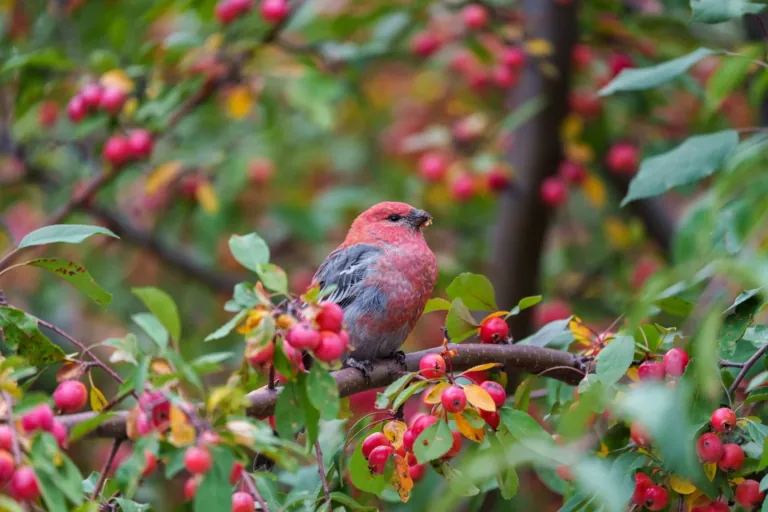
Native insects, including the caterpillars that songbirds depend on to raise nestlings, largely can’t use Asian ornamentals like hostas. Native woodland plants, by contrast, support the insects that support birds.
University of Maryland Extension notes that one aspect of native shade gardening unique to this context is the opportunity to mimic the layered structure of a forest, which research shows helps support insect and songbird biodiversity. That’s not something you get from a monoculture of hostas or English ivy.
This doesn’t mean ripping out every non-native plant you own. It means understanding what you’re working with and making considered choices when you’re planting something new. A shaded bed is an opportunity, not a compromise.
Understanding Your Shade Before You Plant
Not all shade is the same, and matching plants to conditions matters more here than almost anywhere else in the garden. The shade under a mature oak canopy differs significantly from the deep year-round shade on the north side of a building, and plants that thrive in one may struggle in the other.
Dappled shade (light filtered through a tree canopy that shifts through the day) suits a wide range of native woodland plants. Full shade cast by structures, dense evergreens, or north-facing exposures is more limiting and calls for plants adapted to forest interiors.
Morning shade with afternoon sun, which sounds like the best of both worlds, can actually stress woodland plants that prefer cooler, stable conditions. For those situations, species from the woodland edge tend to do better than true understory plants.
Soil moisture is the other major variable. Dry shade under a Norway maple (or any large tree with shallow, competitive roots) is genuinely one of the harder gardening challenges. Native sedges, wild ginger, and some ferns can handle it, but the palette narrows. Rich, moist soil under a high deciduous canopy is where native woodland plants really shine.
The Plants Worth Knowing
Foamflower (Tiarella cordifolia) is one of the most reliably useful native groundcovers for shade. It forms spreading mats of lobed leaves topped with frothy white flower spikes in spring, tolerates a range of shade conditions, spreads slowly by rhizomes, and is deer-resistant. It’s genuinely easy to grow and tends to fill in gaps over a couple of seasons without becoming aggressive. Deer resistance is worth flagging, since deer pressure is one of the real practical constraints for any shade garden near woodland edges.
Wild ginger (Asarum canadense) makes an excellent low groundcover with heart-shaped leaves that form a dense carpet. It tolerates dry shade better than many native woodland plants, spreads steadily but slowly, and is both deer-resistant and a host plant for pipevine swallowtail butterflies. The flowers are hidden under the leaves in spring and almost always missed unless you’re looking for them, which is either charming or annoying depending on your perspective.
Solomon’s seal (Polygonatum biflorum) is one of the more elegant native shade plants, with arching stems lined with paired leaves and small bell-shaped flowers hanging underneath in spring. The berries in fall attract birds. It grows well even in deeper shade, spreads gradually by rhizomes, and combines well with ferns for a natural-looking woodland floor effect.
Native ferns belong in nearly every shade garden. Christmas fern (Polystichum acrostichoides) stays green through winter in most of its range. Maidenhair fern (Adiantum pedatum) has distinctive fan-shaped fronds and a refined look that works well in both naturalistic and more formal shade gardens. Ostrich fern (Matteuccia struthiopteris) spreads more vigorously and works best where you have space. Leaving the leaf litter that accumulates around ferns rather than blowing or raking it out is particularly important, as many woodland insects overwinter in undisturbed forest duff.
Virginia bluebells (Mertensia virginica) offer something few shade plants do: a genuinely impressive spring bloom. Clusters of trumpet-shaped blue flowers appear in early spring before the plant goes dormant by midsummer. That dormancy is worth planning for, as the space they occupied goes empty. Pair them with later-emerging plants like ferns or Solomon’s seal that will fill in as the bluebells fade.
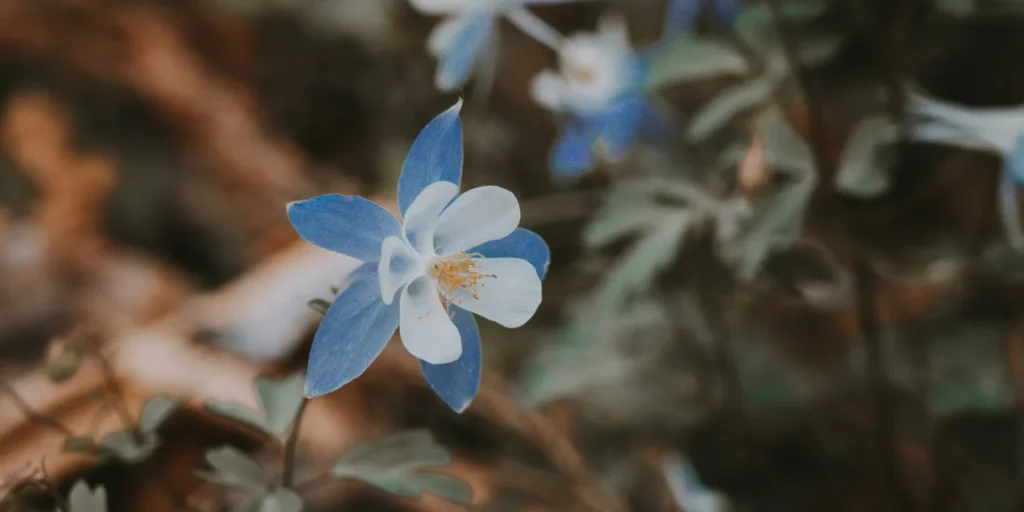
Wild columbine (Aquilegia canadensis) handles dappled shade well and blooms in early spring when migrating hummingbirds are arriving, making it one of the most ecologically timed native plants you can include. Hummingbirds specifically seek out columbine for its nectar-rich spurs, and shaded garden edges are often exactly where they’re foraging. It reseeds naturally over time, which some people love and others find overwhelming, but it’s easy enough to manage.
Spicebush (Lindera benzoin) is worth having if you have any space for a shrub layer. It’s a keystone native shrub that supports spicebush swallowtail butterflies, provides berries for migratory birds in fall, and tolerates partial to full shade in moist soils. Deer tend to avoid its aromatic foliage. It works beautifully at the edge of a woodland planting as a transition between open garden and taller tree canopy.
Native sedges deserve mention as a category because they’re among the best solutions for dry shade where little else thrives. Pennsylvania sedge (Carex pensylvanica) forms a fine-textured, grass-like groundcover that works under oaks and other shallow-rooted trees. It doesn’t flower showily, but it holds the soil, suppresses weeds once established, and provides year-round structure.
How to Actually Start
If you’re working with an existing shaded bed of hostas or other non-natives that you’re happy with, there’s no need to rip everything out. Native plants spread and fill in more gradually than invasives, so adding them alongside existing plants and letting them naturalize over time is a reasonable approach. Start with a few species that suit your specific conditions and see how they establish before committing to a larger redesign.
If you’re starting from scratch, the layered approach the Ecological Landscape Alliance describes works well: small understory shrubs for structure, medium perennials for bloom and interest, and low groundcovers or sedges at the base. Even a small version of that layered structure, a spicebush or native viburnum plus a mix of foamflower and ferns, creates something that functions as habitat rather than just decoration.
Leave the leaves where they fall in your shade garden. University of Maryland Extension specifically notes that native woodland plants are well adapted to an undisturbed leaf blanket, and the litter supports the insects and fungi that make the whole system work. It also saves you the labor of mulching.
The shady corner of your yard doesn’t need to be a problem to solve. It’s already halfway to a woodland habitat. You just need to plant it that way.
FAQ
Can I mix native shade plants with hostas? Yes. There’s no reason to eliminate hostas if they’re working for you aesthetically. Adding native species alongside them over time, letting the natives establish and spread, is a practical way to increase the ecological value of the bed without a major overhaul.
What’s the easiest native plant to start with in shade? Foamflower and Christmas fern are both good starting points. They’re adaptable, widely available from native plant nurseries, deer-resistant, and low-maintenance once established. Wild ginger is a good choice if dry shade is the challenge.
Do native shade plants need a lot of maintenance? Generally less than non-natives once established, since they’re adapted to local conditions. The main tasks are keeping out invasive species (garlic mustard, for instance, loves the same conditions as many native woodland plants) and leaving leaf litter in place rather than removing it.
Do native shade plants work in containers? Some do, particularly foamflower, wild columbine, and native sedges. Growing native plants in containers is a reasonable approach for small spaces or shaded patios where in-ground planting isn’t possible, though they’ll need more consistent watering than in-ground plants.
When is the best time to plant native shade plants? Fall planting works well for most native woodland perennials, as cooler temperatures and fall rains help with establishment. Spring works too. Avoid planting during summer heat stress, particularly for newly purchased plants without established root systems.