Windows kill a staggering number of birds every year. Feeders, if neglected, can spread disease through visiting flocks. Outdoor cats take an enormous toll. And rodenticides placed for mice end up killing the raptors that would have controlled the mice naturally.
None of these hazards are malicious, and most are fixable with modest effort. The first step is knowing which ones actually matter.
Windows: The Hazard Most People Underestimate
Window collisions are among the most significant sources of human-caused bird mortality in the United States. A 2014 peer-reviewed study published in The Condor estimated that between 365 million and 988 million birds are killed annually by building collisions in the U.S., with roughly 44% of that mortality attributed to residences.
A 2024 study published by researchers from American Bird Conservancy and Fordham University found the actual number may be considerably higher, well over one billion annually, after factoring in birds that survive the initial impact but later die from their injuries.
Birds can’t distinguish glass from open air, particularly when a window reflects sky or vegetation. The physics of the problem are simple: the bird sees a clear path and flies into what is effectively an invisible wall. Healthy birds, not sick or weakened ones, are frequently the casualties.
The fix is also straightforward. Anything that breaks up the reflective surface of the glass from the outside makes the window visible to birds. Window films designed for bird safety work well, as does applying patterns of dots or tape spaced no more than 2 inches apart horizontally and 4 inches vertically.
The spacing matters because birds attempt to fly through gaps, so dense enough coverage is what prevents collisions. Turning off interior lights at night during migration seasons reduces the disorientation that draws birds toward lit buildings. We’ve covered what to do when a bird hits your window and how to handle injured birds found below windows, both worth reading if this is a recurring problem at your home.
Feeders and Disease: When Helping Hurts
Setting up a bird feeder and then not cleaning it is one of the more common ways well-intentioned bird feeding goes wrong. Feeders concentrate birds that wouldn’t naturally gather in one spot, and that concentration creates ideal conditions for disease transmission, particularly salmonellosis and, in some regions, trichomonosis.
Salmonellosis affects finch species particularly hard, including pine siskins, American goldfinches, and purple finches. According to the Cornell Lab of Ornithology’s FeederWatch program, infected birds become lethargic and easy to approach, which is often the first sign something is wrong. The disease spreads through fecal contamination of seed and ground debris below feeders.
The Georgia Department of Natural Resources recommends cleaning feeders weekly using a 10-percent bleach solution (one part bleach to nine parts water), rinsing thoroughly, and letting feeders dry completely before refilling. Raking up seed hulls and droppings beneath the feeder two or more times a week reduces the fecal buildup where disease persists. If you see multiple sick birds at a feeder, the recommended response is to take the feeder down entirely for at least a week and disinfect it before putting it back up.
Hummingbird feeders require more frequent attention because sugar water ferments quickly in warm weather. Cleaning and refilling every one to two days in hot weather, and every three to five days in cooler conditions, prevents the growth of mold and bacteria that can harm hummingbirds. Putting hummingbird feeders out at the right time is its own topic worth reading, but timing without maintenance is only half the picture.
Outdoor Cats: The Numbers Are Hard to Ignore
A 2013 study published in Nature Communications by researchers at the Smithsonian Conservation Biology Institute and the U.S. Fish and Wildlife Service estimated that free-ranging cats kill between 1.3 and 4 billion birds annually in the United States, with unowned feral and stray cats responsible for the majority of that mortality. These figures have been contested by some, but the peer-reviewed consensus holds that cats represent one of the largest sources of human-caused bird mortality.
This isn’t a comfortable finding for cat owners, and it isn’t aimed at being one. The practical response for people who care about both their cats and local birds is keeping cats indoors, or using an enclosed outdoor space like a catio. A well-fed domestic cat still has predatory instincts that aren’t suppressed by food availability. Even cats that appear to be simply watching birds from a distance can disrupt nesting behavior and reduce the time birds spend foraging when a predator is nearby.
If you have outdoor cats and also maintain bird feeders, placing feeders at least 10 to 12 feet from shrubs or structures that could provide cover for an ambush gives birds a better chance to see a cat approaching.
Rodenticides: The Poison That Travels Up the Food Chain
This one gets less attention than windows and cats, but it’s worth understanding. When rodenticides are placed for mice or rats around a home or yard, the rodents that eat the bait don’t die immediately. They become slow and disoriented, making them easy prey for owls, hawks, foxes, and other predators. The predator then absorbs the poison from the rodent’s tissues.
Research documented in California found that 90% of tested bobcats showed evidence of rodenticide exposure in their tissue, with weakened immune systems leaving them vulnerable to disease. For owls specifically, the problem is well-documented. As we’ve written at length, second-generation anticoagulant rodenticides accumulate in predator tissue and can be lethal. The irony is that the owls and hawks killed by rodenticides were doing the rodent control job naturally, for free.
Snap traps, sealing entry points, and removing food attractants are effective alternatives that don’t move poison up the food chain. If you currently have rodenticides in your yard and also put up bird feeders or nest boxes, those two things are working against each other.
Reflective and Spinning Yard Decorations Near Nesting Areas
This one is lower stakes than the others, but worth a note. Reflective spinners, highly polished surfaces, and loud wind chimes placed near active nesting areas can disrupt nesting birds enough to cause nest abandonment, particularly during the critical early nesting period. The concern is less about casual visitors to a feeder and more about birds that are actively incubating eggs or brooding young nearby.
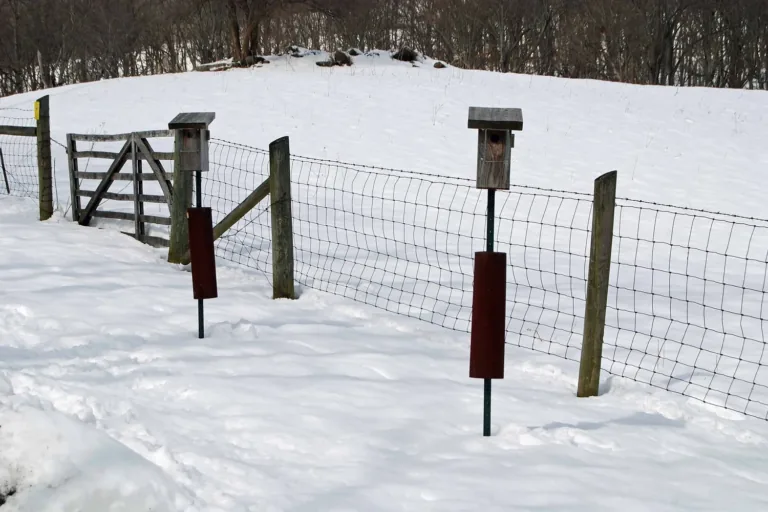
If you have nest boxes or have noticed birds nesting in hedges or trees near your house, keeping the immediate area relatively undisturbed during spring and early summer is worthwhile. We’ve written about how to attract bluebirds and why nest boxes often go unused, and a lot of that comes down to whether the placement feels safe to the birds.
The Yard That Actually Helps
The hazards above are all solvable, and none of them require giving up feeders or bird baths. Treating your windows, cleaning feeders on a real schedule, keeping cats inside, and switching away from rodenticides are the highest-impact changes for most yards.
Beyond avoiding harm, a yard planted with native species does something feeders can’t: it provides the insects, berries, and seed that birds need to raise young successfully. Native plants support far more of the insect life that songbirds depend on for feeding nestlings than most ornamental plantings do.
Leaving leaf litter in place over winter protects overwintering insects that birds depend on in spring. These aren’t just nice-to-haves. They’re what turns a yard from a bird-adjacent space into actual bird habitat.
The people most likely to make these changes are the same people who already care enough to fill a feeder. That’s genuinely a good starting point.
FAQ
How do I make my windows safe for birds? Apply external window film or tape in patterns with no more than 2-inch horizontal and 4-inch vertical spacing. UV-reflective films visible to birds but nearly invisible to humans are available from conservation suppliers. Moving feeders either very close to windows (within 3 feet, so birds can’t build up speed) or further than 30 feet away also reduces collision risk.
How often should I clean my bird feeder? The Georgia DNR and Cornell Lab both recommend at least weekly cleaning with a dilute bleach solution, with trays and ground areas raked more frequently. Hummingbird feeders need cleaning every one to two days in warm weather.
Do bells or noise-makers on cats help protect birds? Research on this is mixed. Some studies suggest bells reduce predation of birds to some degree, while others find cats adapt their hunting behavior around them. Bells are not a substitute for keeping cats indoors.
What should I do if I find a sick bird at my feeder? If one bird appears sick, clean and disinfect the feeder. If several birds appear sick, remove all feeders for at least a week and disinfect before putting them back up. Contact your state wildlife agency if you observe a cluster of sick or dead birds, as these can indicate reportable disease outbreaks.