A bird eats an autumn olive berry, flies off, and drops the seed along your fence line. Repeat that enough times and you’ve got a thicket.
That’s the business model for a lot of invasive shrubs and vines. The plant makes fruit that birds like, and the birds do the planting. Autumn olive is the classic case. A big shrub can make hundreds or thousands of fruits, each with one seed, and birds and small mammals spread them.
Late fall is the best time to find these plants, because the fruit gives them away. Four of the worst are below, with the lookalikes to avoid and the best window to go after each one.
Berries don’t make a shrub good for wildlife
Plenty of these plants were sold or planted on purpose as wildlife food. Autumn olive went into windbreaks and strip-mine reclamation for that reason, and birds do eat the fruit. The catch is what’s in it. It’s low in protein and fat and high in carbohydrates, so it’s less nutritious than the native fruit it pushes out.
Then there’s speed. Autumn olive can fruit in as few as three years, and it fixes its own nitrogen, so it does fine on poor soil where natives struggle. Bush honeysuckle leafs out earlier and holds its leaves later than most woodland shrubs, which shades out what’s underneath. In Illinois forests invaded by it, large trees are stunted by as much as 40 percent.
The real cost runs bigger than one yard. It’s a slow swap of a diverse understory for a few aggressive species, and fewer kinds of plants means fewer kinds of animals. The four below are common in the eastern and midwestern US. Anywhere else, check your state’s invasive plant list.
Autumn olive
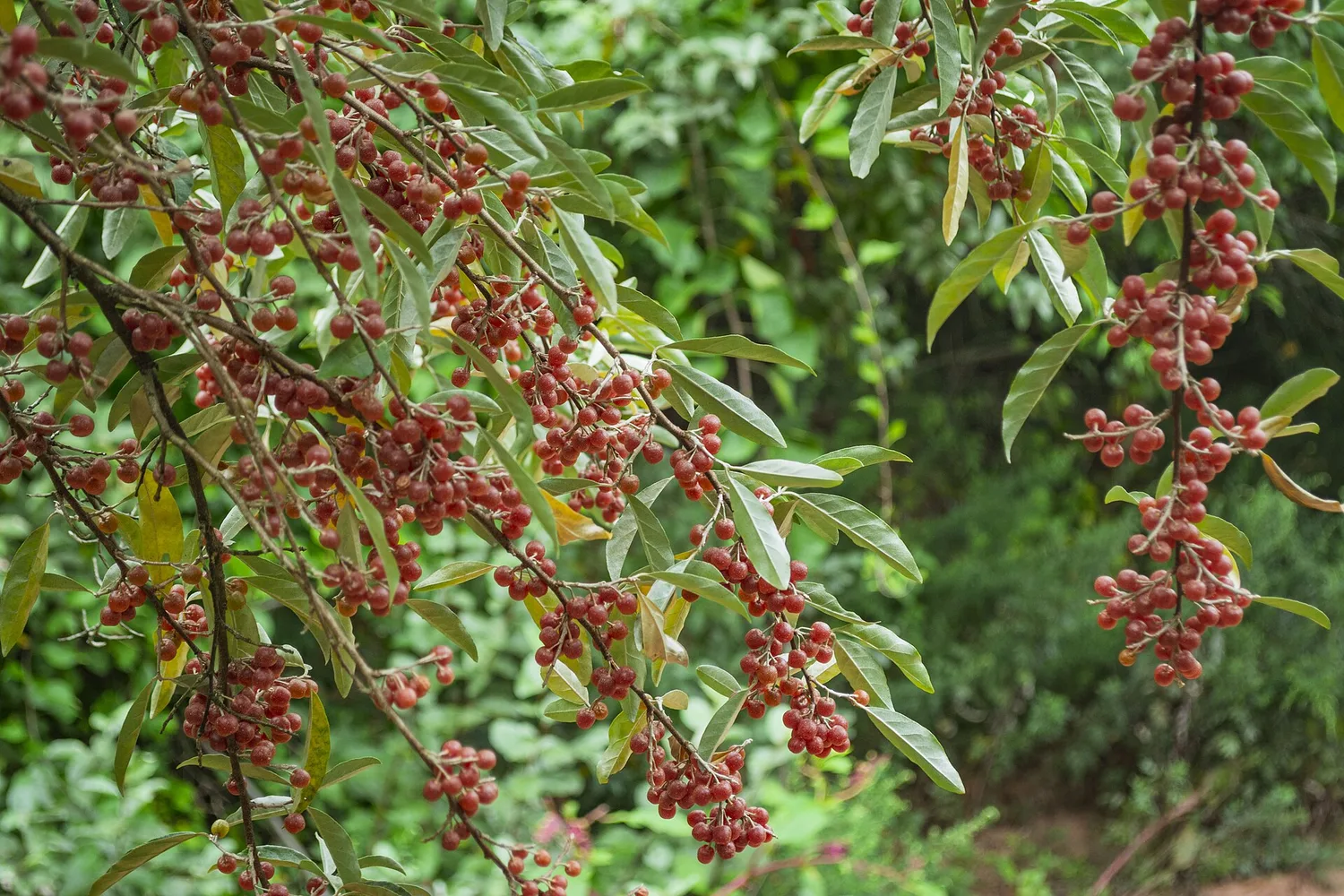
The giveaway is silver. The leaves are pale green on top and silvery white underneath, and the red fruit is flecked with silvery scales. Fruit comes in clusters of four to six, each half an inch or less, and the stems carry sharp, stout spines. Leaves run 2 to 4 inches with smooth edges.
Russian olive is the lookalike. Its leaves are longer and narrower, and the leaves and twigs droop like a willow. It’s much more common in the west, autumn olive in the east, and both get the same treatment.
Small plants pull or dig out. Bigger ones are easiest in two steps. Cut them down, then treat the resprouts, which are a smaller target than a full shrub. Stump and bark treatments can be done year-round when the weather allows. Foliar spraying runs from June until the leaves start to turn.
Bush honeysuckle
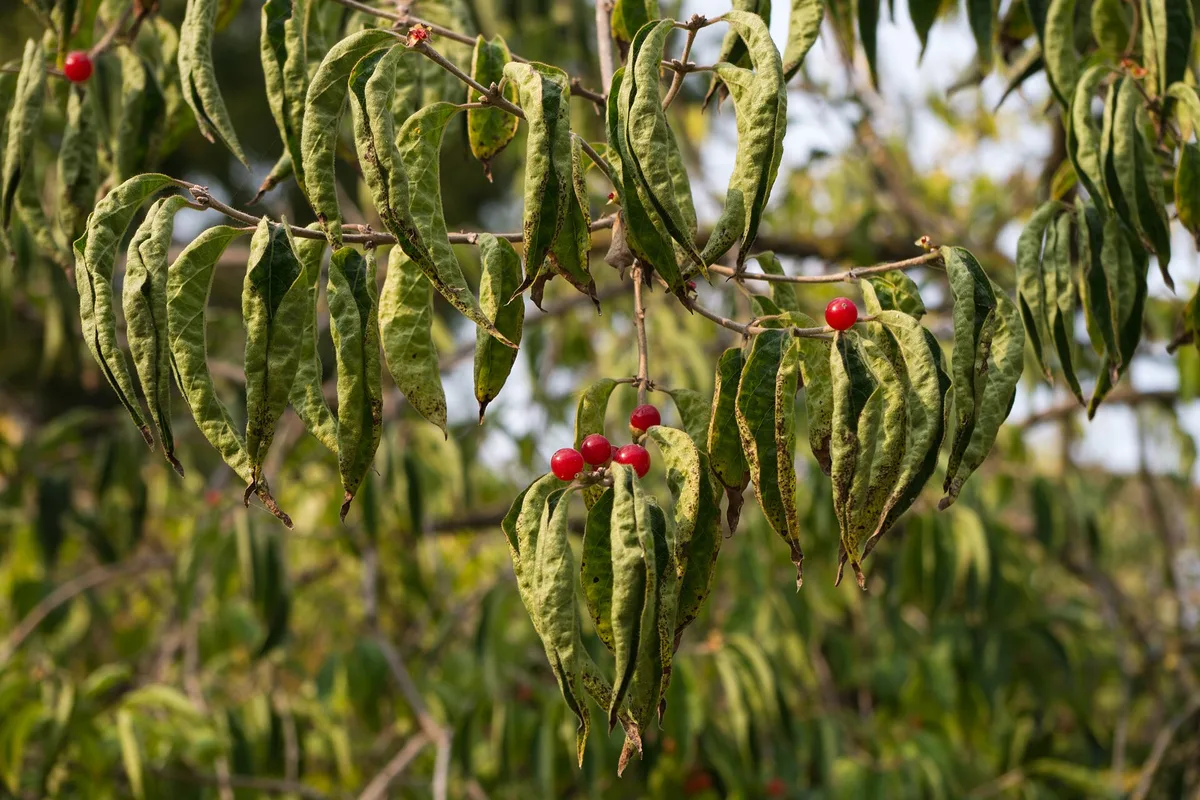
Look for opposite leaves, white flowers along the stem in spring, and pairs of red fruit in fall. The surest check is the stem: cut a twig and look. Invasive bush honeysuckle is hollow in the center. The native honeysuckle in Illinois has a solid stem.
It’s easiest to spot in late fall, when it’s one of the last green shrubs in the woods. That’s also the best time to treat it. Cut-stump and foliar herbicide work best then, while the plant is sending energy down to its roots.
Young plants are shallow-rooted. Pull them, shake off the soil, and hang the roots in the air so they dry out. Don’t wrestle big ones. Use a lever-style puller, and very large plants need other methods. Cutting by itself just triggers vigorous regrowth unless you repeat it several times a year, for years.
Privet
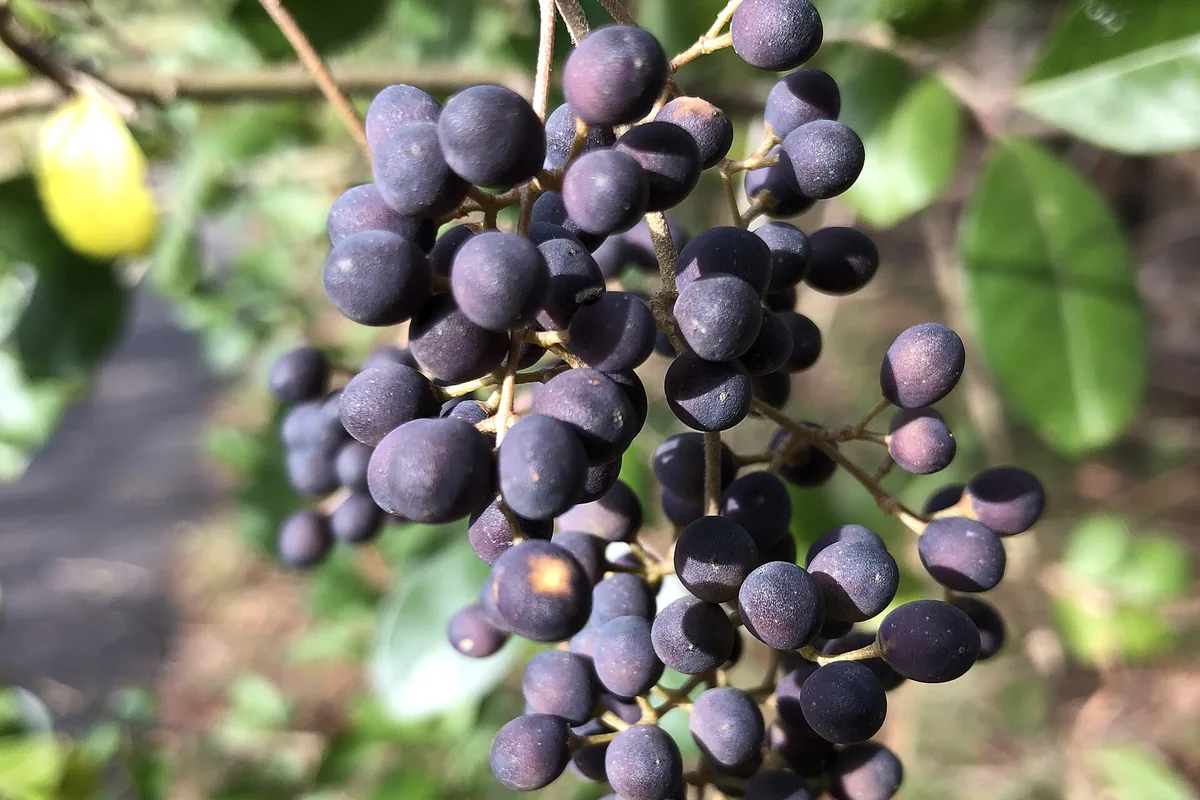
Four privet species grow across the Mid-Atlantic and they’re hard to tell apart. You don’t need to. They behave the same and get the same treatment.
The fruit is dark purple or blue-black, about a quarter inch across, with a single seed. It ripens over winter, so you can see it next to the following year’s flowers. The stems are tan-gray with opposite leaves, and the branching is four-ranked. Look at a stem lengthwise and the branches form an X. Birds spread it almost year-round.
Flowering dogwood and blackhaw are native lookalikes, and both have opposite branching too. Check the bark. Dogwood and blackhaw have heavily textured bark low on the stem, often like reptile scales.
Pull small plants and get every root, since fragments can resprout. Cut stumps can be treated any time of year. Privet is persistent and comes back after several rounds, so plan on follow-up.
Oriental bittersweet
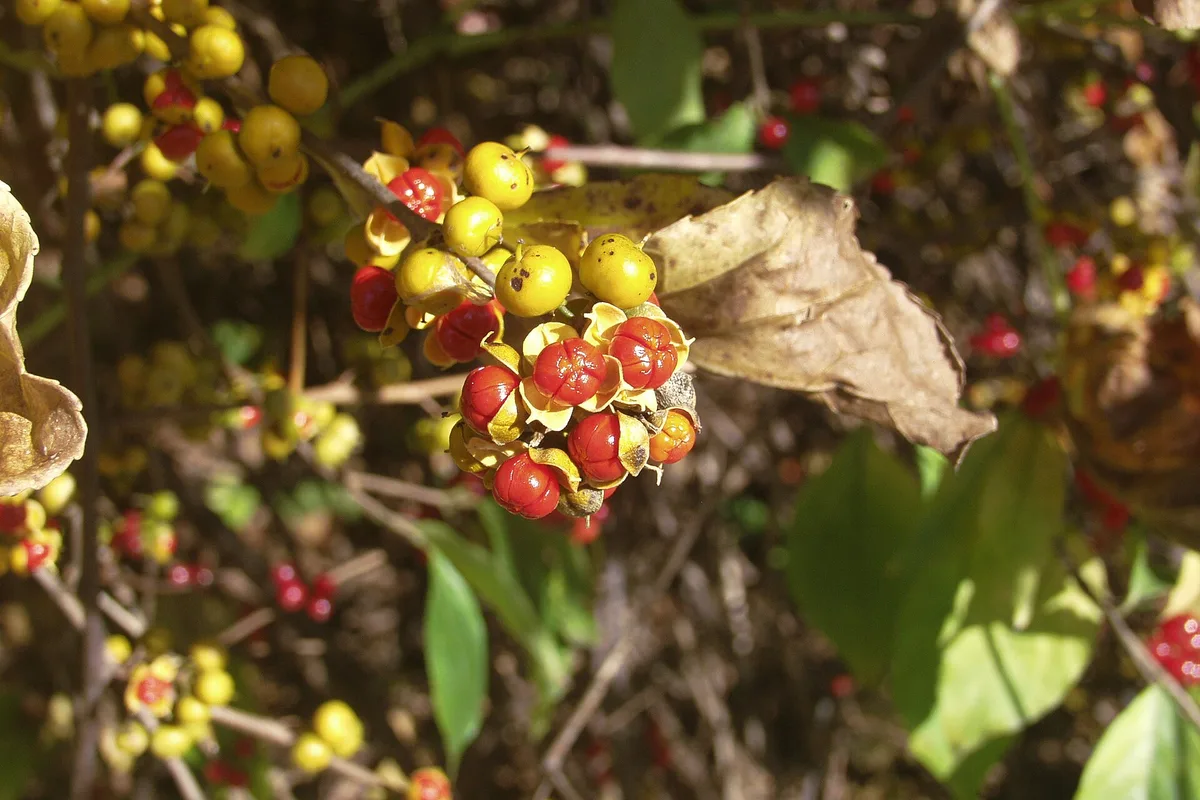
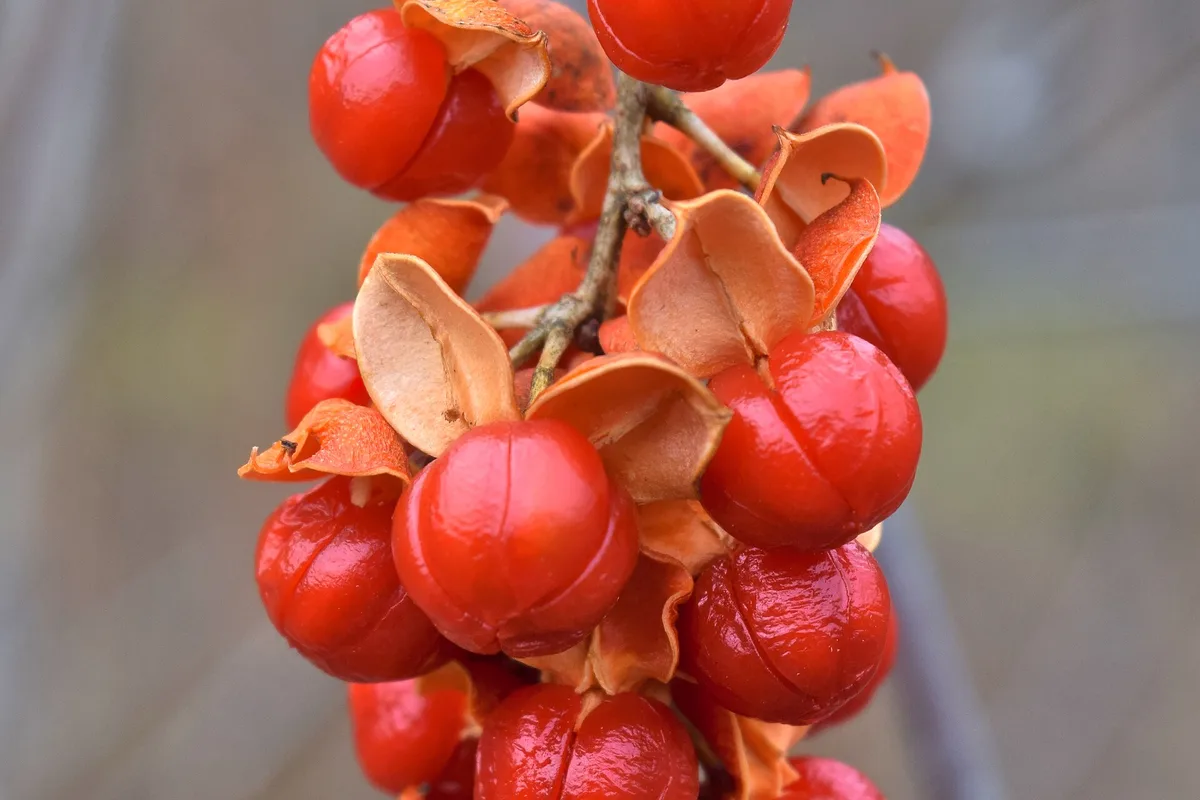
This is a twining vine that smothers whatever it climbs. The fruit has a yellow-orange husk that splits open in fall to show red, and it stays on the vine all winter. The leaves turn yellow in late summer, before native plants change, so it stands out from a distance. The bark of big stems is cracked and fish-netted, and there are no tendrils or barbs.
American bittersweet is the native lookalike, and it’s the one you don’t want to kill by mistake. It’s far less common and listed as rare or vulnerable in several states. The tell is where the fruit grows. American bittersweet sets fruit only at the ends of the stems. Oriental bittersweet sets it all along the stem, at the leaf junctions.
Nurseries sometimes sell oriental bittersweet labeled as American, so check the fruit placement before you buy. And skip the fall wreaths. Their seeds stay viable after drying and can sprout when the wreath ends up in the yard.
Control takes patience. Cut the vines at the ground and again at eye level, which leaves a gap so you can see what’s alive. Don’t pull cut vines down out of trees, because that can hurt the tree. Cut resprouts repeatedly, or treat them with a foliar spray. Foliar sprays go on from July 1 until fall color, and mowing can make it worse by encouraging root sprouts.
What to do this fall
Walk the fence lines and yard edges now, while the fruit makes everything easy to find. Photograph anything you’re not sure of and take it to your local extension office before you cut, because some of the lookalikes are native and one is rare.
Pull the small ones, and cut and treat the big ones in the window that fits each plant. Birds will keep dropping new seeds, so expect to repeat this. A few isolated plants are easy to remove, so a yearly check keeps it from getting out of hand.
Herbicide products and rules depend on your state, and the label is the law. Your county extension office can tell you what’s approved and when.
Then fill the gap. Our native plants and yard as habitat pages are good places to start, and if you think natives are hard, this piece answers that.
Sources
- North Carolina Extension Gardener Plant Toolbox, Elaeagnus umbellata (autumn olive).
- Penn State Extension, Autumn Olive.
- Penn State Extension, Oriental Bittersweet.
- Penn State Extension, Privet.
- Illinois Extension, Identify and Manage Invasive Bush Honeysuckle, Christopher Enroth, 2024.