Take the leaves out of a patch of yard and you get almost half as many moths and butterflies by spring. That’s what University of Maryland researchers found when they counted what emerged from one-square-meter plots in 20 suburban yards. Plots without leaves produced 45% fewer.
Urban trees in the U.S. drop an estimated 28 million metric tons of leaf litter a year, measured dry. Then we spend a few weekends pushing it around with a machine that sounds like a jet engine with a grudge, bag it, and send it away.
Here’s the part nobody tells you at the hardware store. That layer of leaves is not trash. It’s a nursery, a pantry, and a winter coat for a huge number of the insects that make your yard work.
So, are leaf blowers bad for wildlife? Yes, mostly because they make it effortless to strip a whole yard down to bare soil. The harm we can measure is the missing leaves. The harm from the machine itself (airflow, noise, vacuum mode) is plausible, but no study has put a number on what a blower kills on contact, since the Maryland work measured leaf removal, not blowers.
Three questions hiding in one
“Leaf blowers kill wildlife” can mean three different things, and the evidence is different for each.
Leaves removed. This one has direct experiments. In the Maryland plots, fewer moths, butterflies, beetles, and spiders emerged in spring where the leaves were gone.
Animals hit by the machine. Blowing, vacuuming, and shredding could kill or displace animals living in the litter. The evidence here is thin. We couldn’t find a study that counts blower deaths, so the sections below mark what’s documented, what’s an expert’s warning, and what’s the closest experiment.
Leaves moved, not removed. Raking or blowing leaves into a bed keeps them whole and on your property, and Xerces and the National Park Service both prefer that to shredding. A Maryland forest experiment found piling and keeping leaves helped insect communities, but that was a forest, not a yard. Nobody has tested relocation in yards.
A fallen leaf isn’t dead habitat
Most insects don’t fly south. They stay put. They spend winter in the exact yard where they spent the summer, tucked into the ground, the leaf litter, hollow stems, and bark, barely alive, waiting for warm weather.
The leaf layer does three jobs at once. It insulates, so a hard freeze doesn’t reach everything underneath. It hides, because a cocoon that looks like a dead leaf is hard to find when it’s under a hundred real ones. And it feeds, since the leaves slowly rot into food for the tiny creatures at the bottom of the food chain, and those feed everything above them.
Insects get through winter in one of four forms: as an egg, as a larva (a caterpillar or grub), as a pupa (the cocoon or chrysalis stage), or as an adult. All four show up in a pile of leaves. That’s why a clean lawn in December can mean a quiet yard in June.
Meet the animals spending winter beneath your feet
These are the neighbors you’re sweeping up. Each claim below links to its source.
| Animal | Winter stage | Where it is |
|---|---|---|
| Woolly bear caterpillar | Larva | Tucked into leaf piles, out of the cold and away from predators |
| Luna moth | Pupa | A cocoon disguised as a dead leaf, mixed in with the real ones |
| Firefly | Larva (glow worm) | Born and raised in the leaf duff on the ground |
| Bumblebee queen | Adult | Burrowed only an inch or two into the soil, with leaves as her blanket |
| Red-banded hairstreak | Egg | Laid on fallen oak leaves, which become the first meal of the caterpillars |
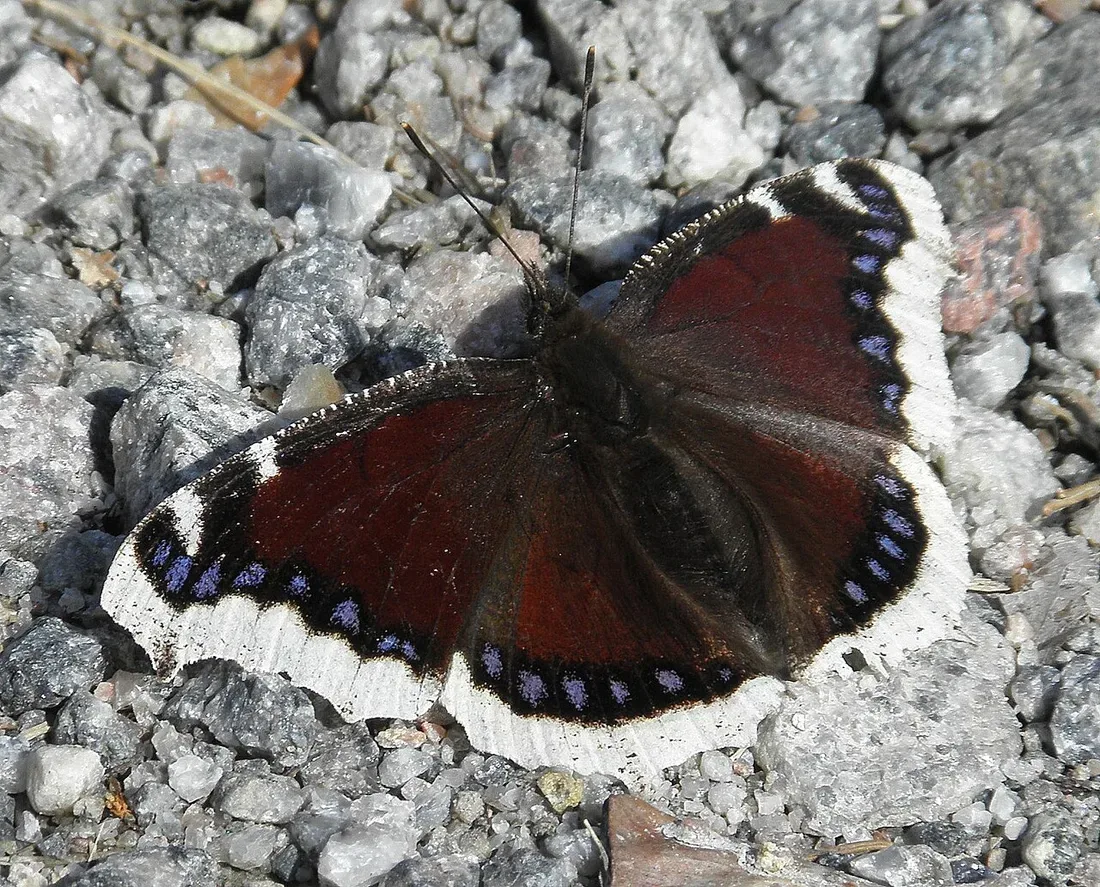
| Mourning cloak | Adult | Dormant in leaf litter all winter |
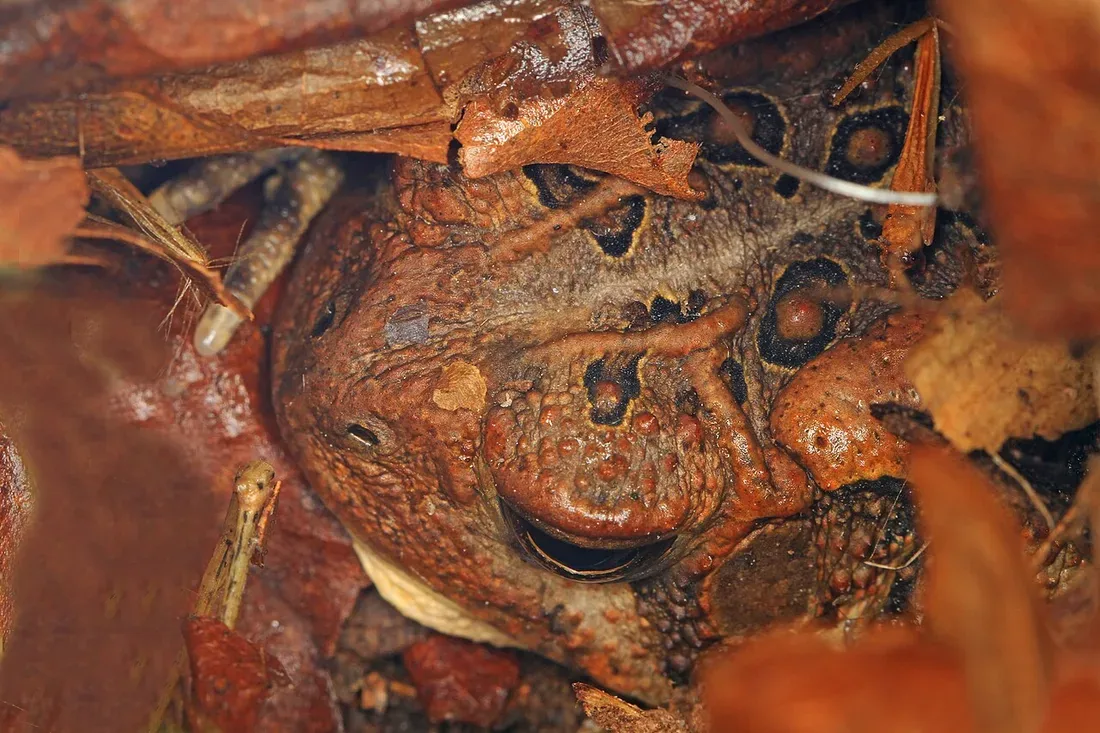
| American toad, wood frog, box turtle | Adult | Toads live in the litter; wood frogs and box turtles overwinter under it |
| Beetles and spiders | Mixed | Throughout the litter and the soil under it |
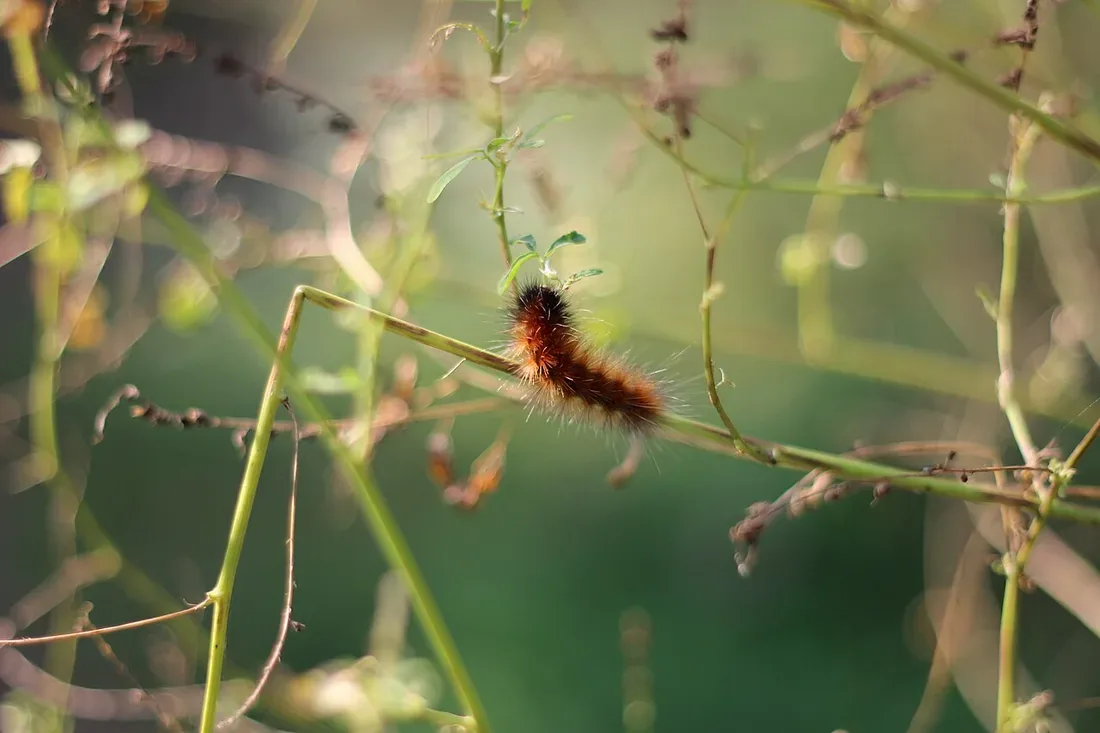
Woolly bears. You know them as the fuzzy black and rust-colored caterpillars crossing the road in October. They spend winter curled up under leaves and, according to Xerces, use leaf piles for protection from cold and predators. In spring they spin a cocoon and become Isabella tiger moths.
Luna moths. Giant, pale green, gorgeous. Their cocoons look like dried leaves, because that is the whole trick. Rake the leaves into a bag and you’ve bagged the disguise along with the moth.
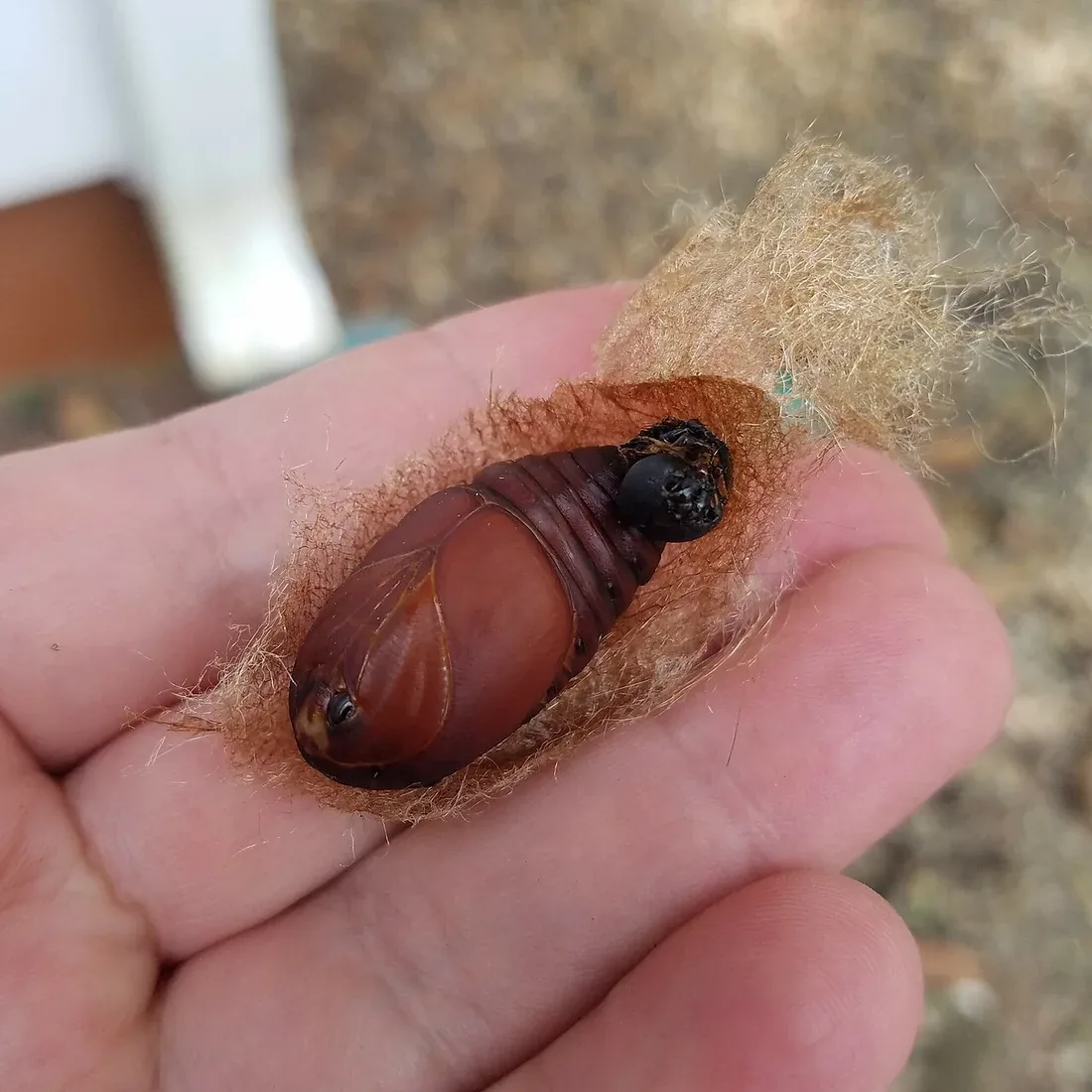
Fireflies. Here’s the one that gets people. The glowing adult you love in June is the short part of the life cycle. Most of a firefly’s life is spent as a larva, a little glow worm that hunts snails and slugs. The Fish and Wildlife Service says they are born and raised in the duff and need the leaves that naturally litter the floor. In colder regions they can spend two years as larvae. We cover why fireflies are disappearing and how to build a firefly sanctuary in separate guides.
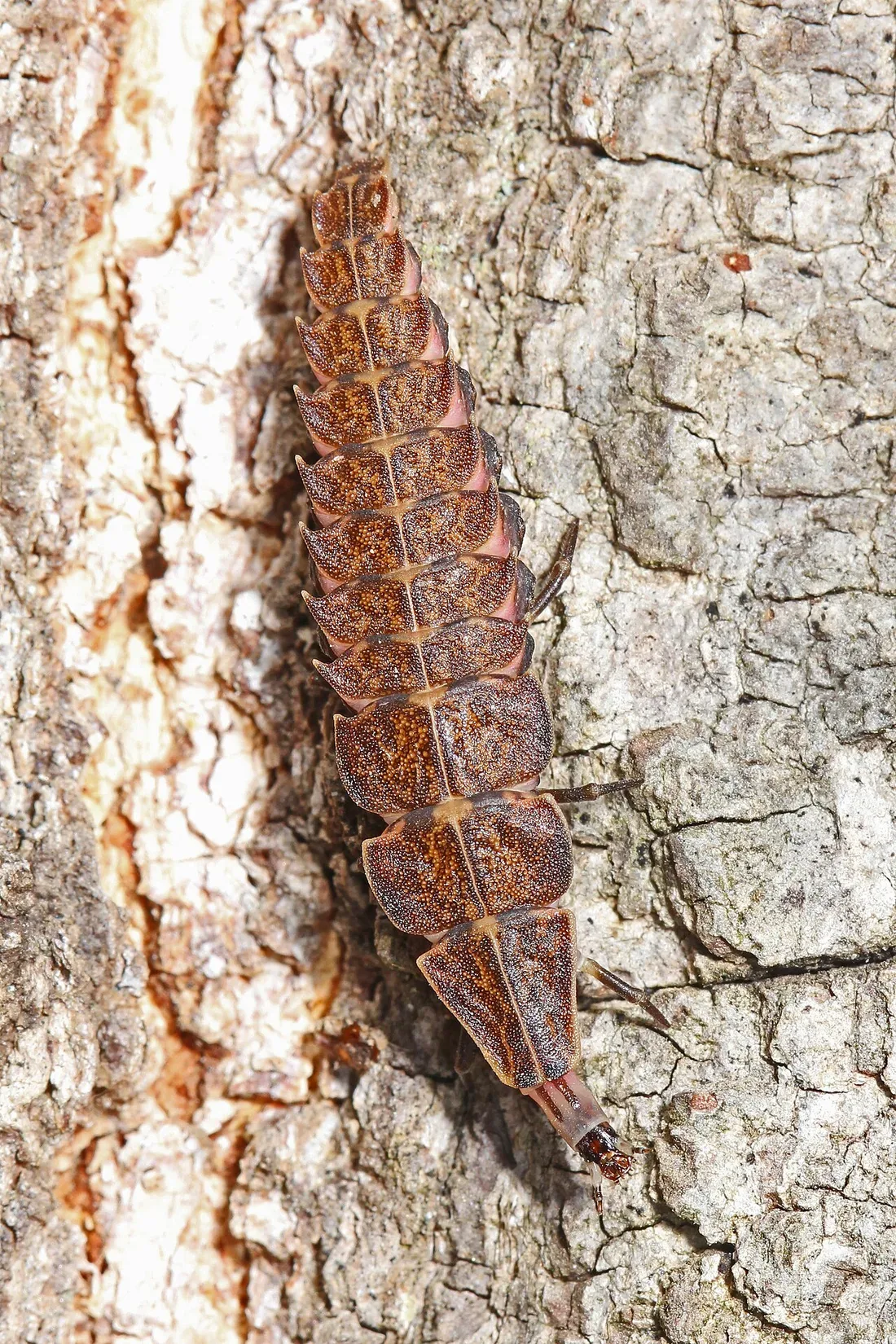
Bumblebee queens. Only the mated queen survives winter. She digs in just an inch or two, alone, and sleeps there until spring. An extra thick layer of leaves, Xerces notes, is welcome protection.
Red-banded hairstreaks. This small butterfly lays its eggs on fallen oak leaves. When the caterpillars hatch, those leaves are lunch. Remove the leaf and you remove the egg and the first meal. Once they hatch, caterpillars also need the right host plants close by.
Mourning cloaks. Not every butterfly spends winter as an egg or a cocoon. Mourning cloaks spend it as adults, dormant in the leaf litter until spring, and University of Maryland entomologists note that removing the litter can disturb them.
Beetles and spiders. Less cute, hugely useful. They’re predators and recyclers. In the Maryland study they were among the groups that dropped when leaves were removed, which we’ll get to.
Toads, frogs, and turtles. Rutgers Cooperative Extension lists reptiles and amphibians among the animals that depend on leaf litter. American toads spend much of their lives in it, using it as camouflage, while wood frogs and eastern box turtles spend winter under it.
Birds and small mammals. The same Rutgers factsheet says birds, chipmunks, and shrews forage in fallen leaves for insects and seeds, and that ovenbirds build their nests in the leaf layer on the ground.
What a leaf blower adds to the problem
A rake is slow, so most people rake the lawn and quit. A blower is fast, so people blow out the beds, the fence line, and the ground under the shrubs too, and landscaping crews do it every week of the season. That’s our reasoning, not a study’s finding. It’s also why the machine matters even before you count what its airflow does.
Going roughly by what the Maryland work found, from least to most harmful:
- Leaving them: costs nothing and does the most good.
- Moving them (rake or blow): keeps leaves whole and on your property, which is what the National Park Service and Xerces recommend over shredding. It works when they land in a bed or under a tree.
- Blowing them out of the yard: scatters and exposes what’s in the layer, and moves the leaves, and whatever is in them, off your property.
- Raking and bagging: the insects leave with the leaves. That’s the removal the Maryland plots tested.
- Vacuuming and shredding: leaf vacuums and mulching mowers chop the leaves, and the insects on them. In a Maryland forest experiment, shredding hurt insect communities about as much as removing leaves.
Airflow. Reported outlet speeds run high. Humane World for Animals says up to 200 miles per hour, and Audubon says up to 280 and adds that the blast erodes topsoil and sends pollen, fertilizer, and herbicides adrift. Those are nozzle figures, so they say little about the air a few feet away. We couldn’t find a study measuring what that airflow does to a cocoon or a queen bumblebee’s burrow. The Swiss Animal Protection group warns, in German, that strong turbulence can kill small animals outright. That’s an expert’s judgment, not a count.
Vacuum mode. This one has the clearest mechanism. The same Swiss group says small animals get pulled into leaf vacuums and chopped up alive. That’s another warning with no body count behind it. The closest data we have is the Maryland forest experiment, where shredding leaves hurt insect communities about as much as removing them.
Noise. Audubon says some gas blowers produce more than 100 decibels of low-frequency sound. What that does to wildlife hasn’t been measured. Humane World says the effects of landscaping noise on wildlife remain unquantified, but research on other short bursts of noise gives hints: airplanes disrupt toad choruses and make toads easier prey,.
Germany’s Federal Environment Ministry has gone further than most. It says private homeowners should skip leaf blowers and vacuums altogether where possible, and that public use should happen only when indispensable. As the BBC reported in 2019, a ban isn’t planned, since EU and competition law get in the way. The ministry’s concern is for insects, small animals, and soil life.
What the Maryland study measured
Max Ferlauto and Karin Burghardt at the University of Maryland ran the study that gets cited most. Over two years, in 20 pesticide-free suburban yards, they marked out one-square-meter plots in two kinds of spots. In the tidy, regularly raked parts of yards, they added leaves to some plots. In low-maintenance corners where leaves had always been left alone, they removed leaves from some plots. Then they set emergence traps and counted everything that crawled or flew out in spring.
The results, from the paper published in Science of the Total Environment in 2025:

The biggest hit landed on moths and butterflies. Species richness fell by about 40%, and the species that lost the most were the ones that overwinter as larvae, overwinter in the dead leaves themselves, or spend their larval life feeding inside leaves. Leaf miners, in other words. The tiny wasps that parasitize leaf miners, a family called Eulophidae, took the worst hit among the wasps. That matters, because parasitic wasps are natural pest control. Across the five groups they tracked, emergence dropped 17% overall.
The paper also found that leaf removal made spring soil temperatures swing more, and that moth and butterfly emergence went up with more leaf biomass. The authors conclude that keeping leaves supports insects in both high and low-maintenance parts of a yard.
What it doesn’t show. The study counted how many insects emerged in spring, not how many died, and it didn’t test any tool. The yards were pesticide-free and in Maryland, so a yard in Oregon or Florida could look different. And it tells us what happens when leaves are removed, not what happens when they’re moved somewhere else on your property.
The damage doesn’t stop with the insects
Insects are food. Fewer caterpillars means fewer meals for chickadees and warblers feeding young in spring. Fewer beetles and spiders mean fewer predators keeping the rest in check. You can pull one thread out of a food web, but you don’t get to choose what else comes with it.
Then there’s the dirt. A second Maryland study from the same lab looked at soil in 13 suburban yards between Washington, D.C. and Baltimore. Where leaves had been left to pile up year after year, the soil held up to 32% more organic carbon and the leaves broke down 21% faster than where leaves were routinely removed. Leaving leaves for just two years didn’t bring the damaged soil back. Years of raking left a deficit, and it doesn’t refill quickly.
A tidy yard without hauling wildlife to the landfill
You don’t have to give up a lawn. You just have to stop treating every square foot the same.
Ferlauto also ran an experiment in a research forest at the Smithsonian Environmental Research Center near Annapolis, testing which leaf strategies work. Piling and retaining leaves had similar positive effects on insect communities. Shredding and removing them had similar negative effects. It was a forest, not a backyard, but he thinks the result carries over to homes.
So here is a workable plan:
- Leave leaves where they fall in beds, along fences, under trees, and in any corner nobody walks through.
- Rake or blow leaves off the lawn itself, then move them into those beds or under trees. Xerces says too many leaves can smother grass, but that in soil they suppress weeds, hold moisture, and add nutrients.
- Don’t shred them with a mower or a chipper, and don’t bag them up if you can avoid it.
- Pile some leaves and sticks loosely in a back corner. Our guide to building a brush pile shows how.
- If you need to clear a path or a patio, do that and leave the rest.
- If there are kids or pets who use the lawn, keep that part tidy. Then rewild the rest.
Ferlauto’s line is the one to keep: “I’m a big advocate of ‘do what you can, where you can.’ It doesn’t have to be all or nothing.”
The same plan, spot by spot, with timing:
| Spot | What to do | When | Why |
|---|---|---|---|
| Garden beds and under shrubs | Leave the leaves, or add the ones from your lawn. Keep them shallow enough not to smother plants. | Through winter. Hold cleanup until late spring. | Habitat and free mulch. Rutgers warns that too many leaves can smother roots, like over-mulching. |
| Under trees | Leave them where they fall. | Through winter. | Xerces says leaf litter protects overwintering animals. |
| Lawn | Rake or blow the heavy cover into beds or under trees. Skip the mulching mower. | As leaves pile up in fall, before a thick layer sits on the grass. | A thick layer can smother grass. Shredding harms insects about as much as removal. |
| Driveways, walks, and steps | Clear them. | Whenever they get slick. | They aren’t habitat, and wet leaves are slippery. |
| Gutters, street, and storm drains | Keep leaves out. Never blow them into the street. | Before fall rain. | See the next section. |
| Where the lawn meets the woods | Don’t build deep leaf piles here. | In fall, when you’re moving leaves. | Deep piles here had more tick nymphs in a New Jersey study. |
| Back corner | Pile loose leaves and sticks. | Any time in fall. Leave it through spring. | Shelter and overwintering sites. |
When clearing leaves is the right call
Leaving every leaf alone isn’t the goal. A few places really do need clearing.
Your lawn. Xerces says a thick layer can smother grass. Move the leaves to beds and trees. Don’t bag them.
Streets and storm drains. Leaves in a bed help. Leaves in a gutter are a different story. In two matched Madison, Wisconsin neighborhoods, the USGS found that fall leaf litter made up 56% of the annual phosphorus in stormwater (winter left out) when leaves stayed on the streets, versus 16% when the city collected them in time. Phosphorus feeds algae in streams and lakes. The Madison streets were lined mostly with Norway maple and green ash, so numbers elsewhere will differ. The practical point still holds: blowing leaves to the curb gets you the worst of both worlds.
The woods edge and ticks. A New Jersey study found that leaf blowing piled deep leaves along forest edges on residential lots, and those piles had at least three times as many blacklegged tick nymphs as natural edges or forest. A Connecticut study of 42 properties looked at tick habitat more broadly. Nymph density was highest in wooded areas next to lawn edges with leaf litter, and also next to stone walls, and it found no significant drop where leaf litter had been removed. The designs differ, so they don’t cancel each other out. Together they point to the same practical move: keep deep leaf piles off the border where you walk.
Diseased or pest-infested plants. University of Maryland Extension says leaves and debris can be left, relocated, or reused as habitat unless they come from a diseased or pest-infested plant. Those are the exception.
What about spring cleanup?
Spring is where people undo the good work. You’ll hear that you should wait until temperatures stay above 50°F. That rule is a rough guide, not a biological threshold, and insects don’t read thermometers. Xerces warns against jumping in on the first warm day. The University of Maryland Extension’s advice is simple: wait as long as you can. Oregon State Extension suggests waiting until May to protect cavity-nesting bees. We go deeper on leaf timing in our guide to what to do with leaves on your lawn, and the same logic applies to cutting back native plants.
If you keep the blower, or hire a crew
The blower isn’t the villain. Using it to strip a yard is the problem. If you’re keeping yours, or a crew runs one for you, these cut most of the damage:
- Use it to move leaves into beds and under trees, not into the street or a bag.
- Aim it at hard surfaces and the lawn. Leave beds, fence lines, and the ground under shrubs alone.
- Skip vacuum and mulching modes.
- Hold off on spring cleanup until late spring.
What to tell a lawn service or your HOA: “Please leave the leaves in the beds and under the trees. Blow what’s on the lawn and walks into the beds, not the street. No vacuum or mulching mode, and no spring cleanup until late spring.”
The moth that flies past the porch light next June is, right now, a cocoon in your leaves. So is the firefly larva, the bumblebee queen, and the spiders that hunt your garden pests. They all got there on their own and they all need almost nothing from you. Mostly they need you to put the blower back in the garage. If you want to do more this season, we also cover how to support butterflies in the fall.
Questions people ask
Do leaf blowers kill insects directly?
We couldn’t find a study that counts it, so nobody can give you a number. The measured harm is from removing leaves. Swiss animal welfare experts warn that strong airflow and vacuum mode can kill small animals, but that’s a warning, not a measurement.
Do leaf blowers hurt birds?
They remove the litter where ground-foraging birds look for insects, and where ovenbirds nest, per Rutgers. The effect of blower noise on wildlife hasn’t been quantified, according to Humane World.
How loud is a gas leaf blower?
Audubon says some produce more than 100 decibels of low-frequency sound that carries through walls.
Will leaving leaves kill my grass?
A thick layer can, according to Xerces. That’s why you move leaves off the lawn and into beds and under trees, instead of leaving a deep blanket on turf.
Rake or blow?
Either one keeps the leaves whole, and both Xerces and the National Park Service prefer that to shredding. What matters most is where the leaves end up. Move them to a bed, not a bag.
Are electric blowers safer for wildlife than gas?
We couldn’t find a study that compares the two on insect mortality, so we won’t pretend to know. Xerces names electric blowing as an acceptable alternative to shredding. Electric is quieter and has no exhaust. What it does to the leaf layer is the same.
Does mulching with a mower kill insects?
The Maryland researchers say shredding or mulching leaves causes as much damage as bagging them, and that running leaves through a mulcher or chipper destroys the insects clinging to them.
Will leaves bring ticks?
It depends where you put them. A New Jersey study found at least three times as many blacklegged tick nymphs in deep piles of blown leaves along forest edges than in natural edges or forest, and the authors suggest keeping leaves out of the lawn-and-woods border. A Connecticut study of 42 properties found no significant drop in nymph density where leaf litter was removed. Don’t heap leaves where you walk, and keep the pile off the forest edge.
How long should I leave leaves?
Through winter and into late spring. Xerces says to wait until late in the season, and the longer the better.
Can I compost leaves without harming overwintering insects?
If the leaves have insects in them, not really. Ferlauto says putting leaves in compost bags kills the insects on them. A leaf pile left in a corner is the safer version of composting.
Sources
- Ferlauto, M. and Burghardt, K. (2025). Removing autumn leaves in residential yards reduces the spring emergence of overwintering insects. Science of the Total Environment 970.
- Ferlauto, M. et al. (2024). Plants, People, Planet, and the University of Maryland summary, Stop Raking Leaves This Spring and Keep the Carbon in Your Soil.
- University of Maryland Entomology, Rake Less, See Butterflies More, and How To Preserve Beneficial Hibernating Insects in Your Yard.
- Xerces Society, Leave the Leaves, and Don’t Spring Into Garden Cleanup Too Soon.
- National Wildlife Federation, Fireflies.
- University of Maryland Extension, Waiting on Spring Garden Cleanup to Support Beneficial Insects.
- U.S. Fish and Wildlife Service, Save the Fireflies.
- German Federal Environment Ministry, Schaden Laubbläser und Laubsauger der Natur, and BBC News, Germany’s leaf blower debate (2019).
- Oregon State University Extension, Should I wait to clean up my garden?
- National Park Service, Leave the Leaves.
- Tick study: Leaf blowing and host-seeking Ixodes scapularis nymphs on residential properties, New Jersey.
- Nowak, D. J., Greenfield, E. J. and Ash, R. M. (2019). Annual biomass loss and potential value of urban tree waste in the United States. Urban Forestry & Urban Greening.
- Selbig, W. R. (2016). Evaluation of leaf removal as a means to reduce nutrient concentrations and loads in urban stormwater. U.S. Geological Survey.
- Rutgers Cooperative Extension, Why Leave the Leaves and How to Do It (FS1369).
- Audubon, Why Cities Are Taking Action to Limit Loud, Polluting Lawn Care.
- Humane World for Animals, Birdsong, Interrupted.
- Schweizer Tierschutz STS, Laubbläser töten Tiere (in German).
- Connecticut tick study: Evaluation of landscaping and vegetation management to suppress host-seeking Ixodes scapularis nymphs on residential properties in Connecticut, Environmental Entomology.
- University of Maryland Extension, Waiting on Spring Garden Cleanup (cited above for leaving or relocating debris).
- Photo credits are in each caption and in the media library.