You hear scratching in the wall at 2 a.m. and your first thought is to make it stop. Fair. Mice in a wall are a real problem, and a female can have 5 to 10 litters of five or six pups a year, so waiting makes it worse.
The mouse doesn’t deserve a slow death just because it wandered into your house. But it can’t stay there, either. What works is exclusion: find how they get in, close it, and get the ones already inside out.
This guide leads with exclusion. It says plainly that live capture rarely fits indoors, and that snap traps plus sealing are the realistic path for most homes. Poison and glue traps get no recommendation, and you’ll see why.

Short version: confirm it’s mice, find the routes, trap with snap traps in most homes (live capture only in narrow cases), and seal the gaps once the walls are clear.
First, make sure it’s actually mice
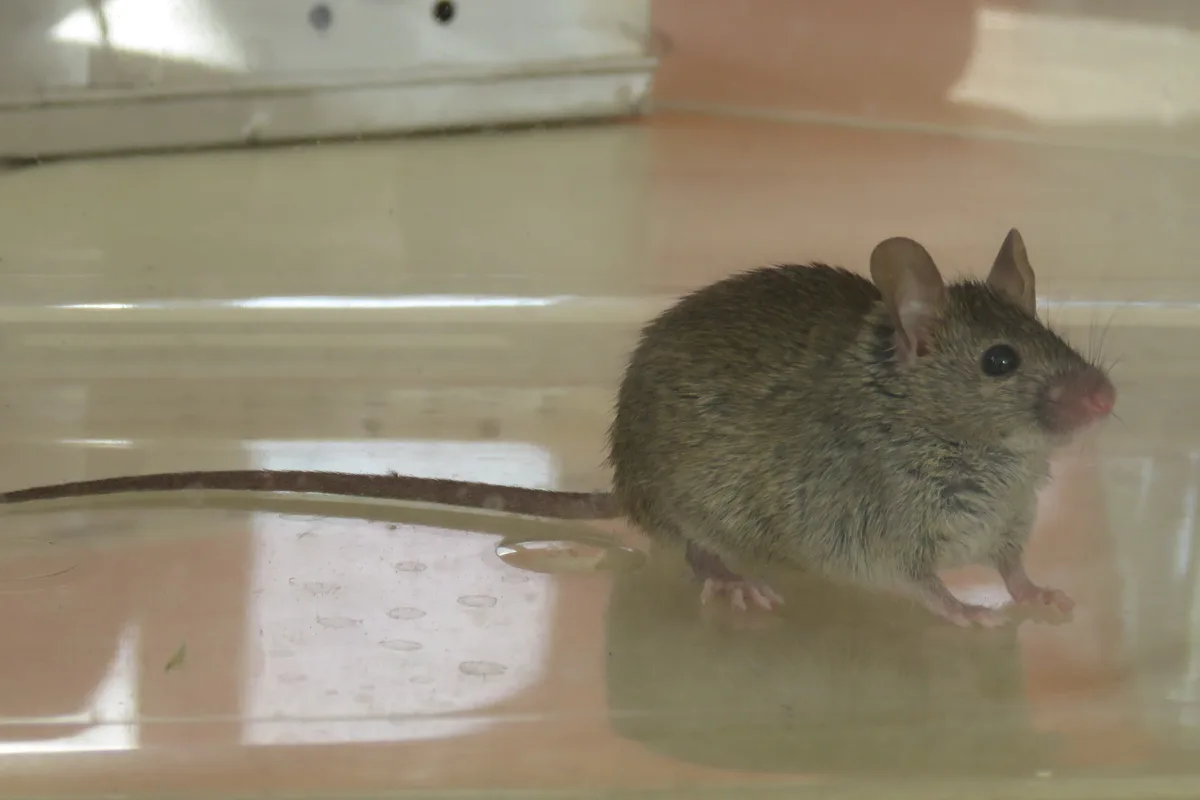
A house mouse is small, gray to light brown, with big ears and a tail that has almost no fur. A deer mouse has bigger eyes, a white belly with a clear line between the colors, and a furry tail. Both can end up in a wall. The difference matters, and the next section explains why.
Signs that fit mice. Droppings, gnaw marks, nests of shredded paper or fiber, and a musky smell in older infestations. Mice are mostly active at night, so scratching after dark fits. To check, sprinkle flour or baby powder along the wall where you suspect they run, and look for tracks in the morning.
Heavy thumping, noise in broad daylight, or much larger droppings point to something else, and that needs a different plan. If you aren’t sure what you have, ask a local wildlife professional before you set anything.
How to get mice out of your walls humanely
Humane here means the mouse leaves alive when that’s realistic, and the way back in gets closed. Work in this order.
Step 1: Find where they get in and out. Mice squeeze through a hole about the width of a pencil, roughly a quarter inch. Check around pipes and wires, vents, door sweeps, the foundation, and the garage. Mark every gap, but leave the ones that might be an exit open for now. Sealing comes once the walls are clear, and the steps are in the mouse-proofing section below.
Step 2: Decide whether live capture fits, and where the mouse would go. The deer mouse is the most common carrier of the hantavirus that causes hantavirus pulmonary syndrome in the United States. People get it by breathing in dust from fresh urine, droppings, or nesting material, or from saliva, urine, or feces getting into cuts or the eyes, nose, or mouth. HPS is severe, and 38 percent of people who develop breathing symptoms may die.
It is also rare. CDC counted 890 hantavirus cases in the United States from 1993 through 2023, and 94 percent were west of the Mississippi River. The point isn’t to panic. It’s that the way you handle a trapped mouse matters.
CDC advises against live traps, which can scare rodents into urinating and raise your chance of getting sick. Gloves don’t cover that risk, because the danger is dust in the air. A 1999 CDC journal letter on deer mice carries the title “A Reason Not to Live Trap Deer Mice in Residences”.
Release has its own problem. In the 1999 deer mouse study, researchers trapped 19 mice in a Colorado bunkhouse, tagged them, and let them go. Five came back, one from 1,200 meters (about three-quarters of a mile), all within 24 hours. That was a small study of deer mice, not house mice. UC IPM reports that house mice moved as much as a half mile can find their way home, and that released house mice are likely to be killed by predators or die of exposure.
Put those together and live capture almost never fits indoors. The native mice you could release are the hantavirus hosts, and the house mouse, which isn’t a meaningful carrier, rarely survives release. Native mice that moved in for fall or winter can be returned outside, and a mouse raised indoors has a slim chance, especially in cold weather. In California, relocating live wildlife, including house mice, off the property where you caught it takes a state permit. Check your own state’s rules, and UC IPM goes further and recommends that live-trapped mice be humanely euthanized.
For most homes, a well-placed snap trap that kills quickly is kinder than a release the mouse is unlikely to survive, and it avoids the live-trap hantavirus problem. Live capture is a narrow option, only for a mouse you’re confident is native, with a legal release spot on your own property near cover, and the precautions below.
Step 3: Trap along their routes. Set traps flat against the wall where the tracks and droppings are, and check them every day. If you do live-trap, set it where the tracks run, check it first thing in the morning, last thing at night, and at least once more during the day, and release right away. Wear gloves, don’t breathe in over the trap, and disinfect it before reuse.
Pups. A female caught in the trap may have young in a nest, and that’s true whether the trap is live or snap. Mouse pups are weaned at about 21 days and then start leaving the nest, so they walk into traps too. Keep trapping and hold off sealing until you’ve had a week with no catches. Call a humane wildlife professional if you can still hear pups but trapping has stopped producing. A nursing mother means young in a nest, and pups left alone will starve.
How to get mice out of the wall itself
Mice in a wall may never walk out onto a trap on the floor. Walls are just where they travel and nest. The goal is to give them a way to meet a trap or leave.
Think like a climber. Mice are excellent climbers that run up any rough vertical surface, jump up to 12 inches, and run along wires and cables. Traps don’t all belong at floor level. Put some on ledges, shelves, and on top of stored boxes where mice are active, away from kids and pets. Note where the scratching travels, along plumbing runs and outlets, since those mark the routes.
Use the openings you can reach. Set traps where the wall opens up: behind appliances, under sink plumbing gaps, along the baseboard where it meets a gap, and at the basement or attic end of the wall. Place them against the wall, with the bait end touching it.
Try an access hole. Victor’s method is to drill a nickel-sized hole in the drywall just a few inches above the floor, cut a matching hole in the side of a cardboard box, put a baited trap in the box, and secure the box against the wall. Mice reach it through the hole and the trap stays out of reach of kids and pets. Victor’s version uses a snap trap. A live trap in that box brings back the hantavirus cautions above. Drill away from outlets and switches, since that’s where wires run, and stop if you hit anything. Patch the hole once the wall is clear, or you’ve made a new way from the wall into the room.
One-way doors. A one-way door lets an animal leave and blocks the way back in. It’s the gentlest exit for wildlife living in a structure, but they’re sold as a humane way to remove larger animals such as raccoons, squirrels, and bats, and a door fitted while there are young inside can strand them. Mice that nest close to a food stash may also have little reason to leave. For mice, ask a wildlife professional whether a door fits your case.
If you can’t reach any route. Don’t cut open the wall and chase them. Set traps at every reachable end of the wall, keep the possible exits open, and give it a couple of weeks. If scratching continues, call a professional who does exclusion and trapping, not bait.
Wiring risk. UC IPM notes that mice gnaw on electrical wires in walls, and many fires of unknown origin are believed to be caused by rodents gnawing wires. If you smell burning, see sparking, find a hot outlet, or have a breaker that keeps tripping, stop and get an electrician. Don’t open a wall around energized wiring yourself.
Snap traps: the realistic path for most homes
When live capture doesn’t fit, which is most of the time, a snap trap is the least bad lethal option. CDC recommends them, and UC IPM calls trapping a great first step.
Place them flat on the floor against the wall, in a T shape with the wall, and in the spots mice already use: behind the stove and fridge, at the back of cabinets, and near the entry points. Use a pea-sized dab of chunky peanut butter as bait. Nesting material also works as bait. Wide-trigger traps work better. Check them daily.
Disposing of a dead mouse safely. In deer mouse areas, the dead mouse is the exposure. Wear gloves. Spray the dead rodent, the nest, and the area around it with disinfectant, let it soak for 5 minutes, then bag it with the used trap. Put the bag in a covered garbage can, and wash your hands afterward.
This is the stopping point for lethal methods. We don’t recommend poison, glue boards, or drowning.
Why you should never use mouse poison
Poison is slow. The common second-generation anticoagulants stay in tissue, a poisoned rodent keeps feeding for several days, and the body carries residues afterward. Non-target wildlife and pets can be poisoned if they eat rodents that have consumed certain poisons, and EPA’s review covers why.
It also fails inside your house. Mice stay within about 30 feet of the nest, so poisoned mice often die in the structure, in your wall. UC IPM adds that bromethalin can move through the food chain to predators. The animals that eat mice are the ones at risk.
CDC lists rodenticides as a later step for persistent infestations. We don’t, because exclusion and traps solve the same problem without poisoning anything else.
Do peppermint oil, ultrasonic repellents, or other home remedies work?
Ultrasonic devices. Ultrasonic sound has very limited use. It’s directional and doesn’t carry behind objects, mice get used to repeated sounds, and there’s little evidence that sound, magnetic, or vibration devices drive out established mice. A wall is exactly where the sound won’t reach.
Peppermint oil, vinegar, and ammonia. They’re all over the internet, but no agency or extension source we found shows any of them clears an established colony. A smell can’t close a quarter-inch hole.
Glue boards. Adult mice often avoid them, and a mouse that does get stuck can suffer for hours. They get no recommendation here.
How to tell when all the mice are gone
CDC’s indicator is a week with no rodents caught and no new signs. That guidance is written for rats, so a week is the minimum for mice. Keep checking past it.
Re-run the flour test along the old routes. No new tracks, no fresh droppings, and no night noise means the wall is clear. Keep checking past the first week.
How to mouse-proof the gaps for good
Wait until the walls are clear. UC IPM treats traps and exclusion as a pair, and sealing a wall with mice still in it just traps them. Until then, close only the gaps you’re sure aren’t their only way out, and keep an exit or a trap at any spot where mice may still be inside.
Then finish the rest. Use wire screen or coarse steel wool, since mice chew through foam, plastic, and rubber, and check around pipes and wires, vents, door sweeps, the foundation, and the garage. Patch any access holes you drilled in the drywall. Keep outside food sources gone and trim shrubs back about 18 inches from the foundation.
How to clean up safely after mice
Because of hantavirus, the cleanup method avoids stirring up dust. Wear gloves. Spray droppings and nesting material with a bleach solution or an EPA-registered disinfectant until it’s very wet. Let it sit for 5 minutes, then wipe it up with paper towels. Do not sweep or vacuum.
Put contaminated insulation in plastic bags. Wash your hands afterward. If mice got into your HVAC ducts, CDC says to call a professional.
When to call a professional
Call someone if you can’t find the entry points, the noise is heavy or constant, you suspect pups, the infestation keeps coming back, or mice have reached the ducts or wiring. Ask any company up front whether it uses rodenticide, and say you don’t want it. A good exclusion company seals holes and traps. It doesn’t just drop bait.
FAQ
Will mice leave on their own? Rarely, and they breed fast. Give traps and exclusion a couple of weeks, not months of waiting.
Can I seal the holes with mice still inside? Not until the walls are clear. Sealed mice can’t leave, and a dead mouse in a wall is a smell problem you’ll find later.
Is it humane to release a house mouse outside? Sometimes, and not for every mouse. Indoor-raised house mice have poor odds outdoors, and some states restrict relocation. A native mouse that moved in this fall has better odds, but deer mice carry the hantavirus risk described above, which is why snap traps are the realistic path for most homes.
How far away should I release a mouse? No distance is reliably far enough. Deer mice came back from 1,200 meters, and house mice have found their way back from a half mile. Release on your own property, near cover.
Does peanut butter work as bait? Yes. CDC says chunky peanut butter works best on a snap trap, in a small amount. Nesting material works too.
What if a mouse dies in the wall? Expect a smell for days to a few weeks. Orkin puts a mouse’s full decomposition at about one to two weeks, depending on temperature, ventilation, and humidity. Your options are to ventilate and wait, or find the strongest spot and open the wall there, which a professional can do. Poison is the main reason mice die where you can’t reach them.
Are mouse droppings dangerous? Yes, they can be. Deer mice carry hantavirus, and virus in fresh droppings and urine can get into the air when disturbed. That’s why the cleanup method is to wet them down and wipe them up, not sweep or vacuum.
How small a hole can a mouse get through? About a quarter inch, or the width of a pencil.
How long until I know they’re gone? A week with no catches and no new signs is the CDC marker, and it’s written for rats. Keep the flour test going to be sure.
Mice are food for owls, foxes, and snakes. Keep that food web outside your house, and keep poison out of it.
Sources
- CDC, About Hantavirus.
- CDC, Trap Up (rodent control).
- CDC, Seal Up (rodent control).
- CDC, Clean Up (rodent control).
- Calisher CH et al. CDC Emerging Infectious Diseases (1999), Navigational Instinct: A Reason Not to Live Trap Deer Mice in Residences.
- UC Statewide IPM Program, House Mouse Pest Notes.
- Humane World for Animals, What to do about wild mice.
- Humane World for Animals, Humane rodent solutions.
- US EPA, Rodent Control Pesticide Safety Review.
- Victor, How to get mice out of your walls.
- Skedaddle Humane Wildlife Control, Be careful using one-way doors to remove wildlife.
- Orkin, What to do if an animal dies in your wall.
- CDC, Reported Cases of Hantavirus Disease.
- Orkin, House mouse life cycle.