Owls aren’t out to get you. They can hurt you, though, if you walk under the wrong tree at the wrong time of year. Both things are true.
Real attacks are rare, and nearly all of them come from a parent defending a nest or a territory. Maine wildlife biologists, Oregon wildlife officials, and Seattle Parks all describe the same pattern. Once you know it, it’s easy to avoid.
What Actually Triggers an Owl Attack
Owls don’t attack people for food. A great horned owl sizes up a rabbit. It doesn’t size up a jogger. Attacks on people are defensive, and the trigger is a nest, young, or a mate nearby.
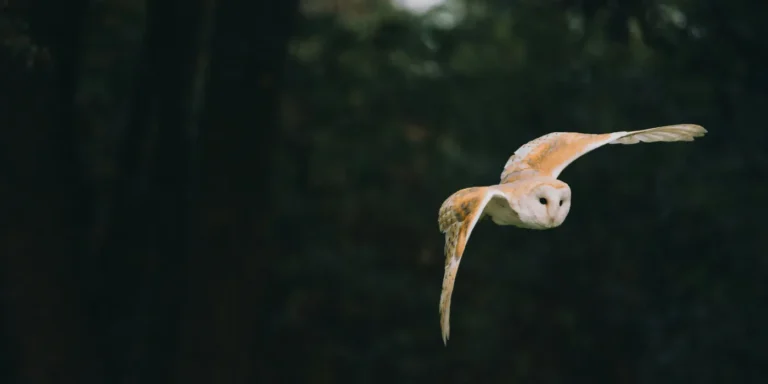
Great horned owls and barred owls are the two species most often reported, and Maine says they defend territory, homes, mates, and young. They’re big, common, and fine with nesting in parks, cemeteries, golf courses, and suburban tree lines. Cornell says barred owls are territorial all year and even more aggressive during nesting season, especially the females, sometimes striking intruders with their feet.
Salem, Oregon is the famous case. In early 2015, a barred owl at Bush’s Pasture Park went after joggers, snagging hats and clawing at least one scalp. Nobody was seriously hurt. When the city posted a warning about another owl in the same park in December 2023, ODFW told KPTV it was likely defending its territory during breeding season.
Seattle has its own version. After an owl dive-bombed a visitor and took their hat, Seattle Parks put up warning signs at Lincoln Park. The department said it looked like one owl, and that most of the attacks happened at one trail intersection.
Why does it seem to be happening more? Wildlife Conservation Society biologist Jonathan Slaght told NPR that shrinking dense forest pushes nests closer to people. An amped-up owl doesn’t care what walks by, he said, whether it’s a fox, a deer, or a human.
So how hurt do you get? Usually it’s scratches. A Washington woman who was hit twice by a barred owl got her scalp cleaned and a tetanus shot. Serious eye injuries show up in the medical literature as rare case reports, like this one from a European tawny owl.
The Nesting Season Window
Great horned owls nest early. In Maine, pairs form from mid-January to mid-March, and they’re the earliest-nesting bird in the state. Barred owls start courting in late winter. Their egg laying typically happens in early spring, and starts as early as December in the far south.
Exact dates shift with latitude, so a Florida owl and a Maine owl aren’t on the same calendar. Fall matters too. Washington wildlife officials say barred and great horned owls can get touchy when the days get shorter in the fall as well as in spring.
Time of day matters just as much. Washington Fish and Wildlife says dive-bombs are more likely at night and in the early morning and late evening. Owls may also hoot repeatedly first, which works like a warning.
The good news is it ends. Maine says to stay away from a nesting area until the young are flying, about three to four weeks after the eggs hatch. After that, the parents ease up.
We’ve written about how to attract owls to your yard. If you do get a nest nearby, treat winter and spring like you would a cranky neighbor’s driveway. Give it space.
What to Do If an Owl Comes at You
Tap what’s happening and the card below will tell you what to do.
An owl is acting up. Now what?
Tap what’s happening.

Based on guidance from Maine wildlife officials, USFWS, Seattle Parks, and ODFW. Details and sources are below.
A few details behind that advice. U.S. Fish and Wildlife Service says to carry an open umbrella or a flagged stick above your head, because raptors go after the tallest object instead of the person. Never use it as a weapon. Maine says to wave your arms slowly overhead and wear a hat or helmet if you have to walk past a nest.
Don’t reach toward a nesting owl, and don’t hang around under an active nest to watch or photograph it. Keep moving, calmly and steadily.
The Bigger Picture
The right takeaway isn’t to fear owls or run them out of your yard. It’s to understand a seasonal, mostly avoidable behavior and adjust around it.
Owls eat a lot of rodents, and they’re one of the first animals hurt when people poison those rodents. We’ve covered how rat poison harms owls, and that’s a far bigger problem for owls than owls swiping a hat is for people.
Removing a problem owl isn’t an option anyway. It’s illegal, and it’s usually unnecessary. A sign, a detour, and a few weeks of patience handle it.
Read More: Do Owls Eat Cats? What’s Documented vs. What’s Myth
Owl Attack FAQ
Which owl is most likely to attack a person? Great horned owls and barred owls are the two most often reported. Maine lists both as common nest defenders, and Cornell notes barred owls sometimes strike intruders with their feet during nesting season.
Can an owl seriously hurt a person? Most of the time it’s scratches and a scare. Talons are needle-sharp, so deep punctures are possible, and a doctor can tell you whether you need a tetanus shot. Serious eye injuries appear only as rare case reports.
Why do owls go after runners and walkers? Nobody knows exactly. Seattle Parks said it sees no pattern in who gets picked. Washington officials say attacks are most likely at night and in the early morning and late evening, which are also popular running hours.
Are owls protected if they attack someone? Yes. Owls are covered by the Migratory Bird Treaty Act, and USFWS says it’s illegal to take, possess, or move them or their nests and eggs without a permit. Active nests can’t be touched or removed. If an owl is a repeat problem on a trail, call your local or state wildlife agency.
What should I do if I find an injured owl? Don’t try to pick it up or keep it. Maine says only licensed rehabilitators can legally transport and keep owls, so call one near you right away.
Need a rehabilitator near you? Use our state-by-state wildlife rehabilitator finder.
Sources
- Maine Department of Inland Fisheries and Wildlife, Owls: How to Avoid or Resolve a Wildlife Conflict.
- U.S. Fish and Wildlife Service, Aggressive Birds.
- Cornell Lab of Ornithology, Barred Owl Life History, and Smithsonian National Zoo, Barred Owl.
- Audubon, No, Barred Owls Are Not Trying to Kill You (2015).
- KPTV, Officials warn of cranky owl at Salem park (2023).
- The Seattle Times, Watch out for dive-bombing owls in Lincoln Park, Seattle says (2025).
- NPR, An owl twice attacked a Washington woman (2022).
- Leifert, D., Haefliger, I., and Pruente, C., Imitation of Typical Birdcall Causes Ocular Perforation by a Tawny Owl Attack. JAMA Ophthalmology.