Are Raccoons Dangerous? The Risks vs. The Myths
- Give A Shit About Nature
- May 12, 2026
- Raccoons, Wildlife
- 0 Comments
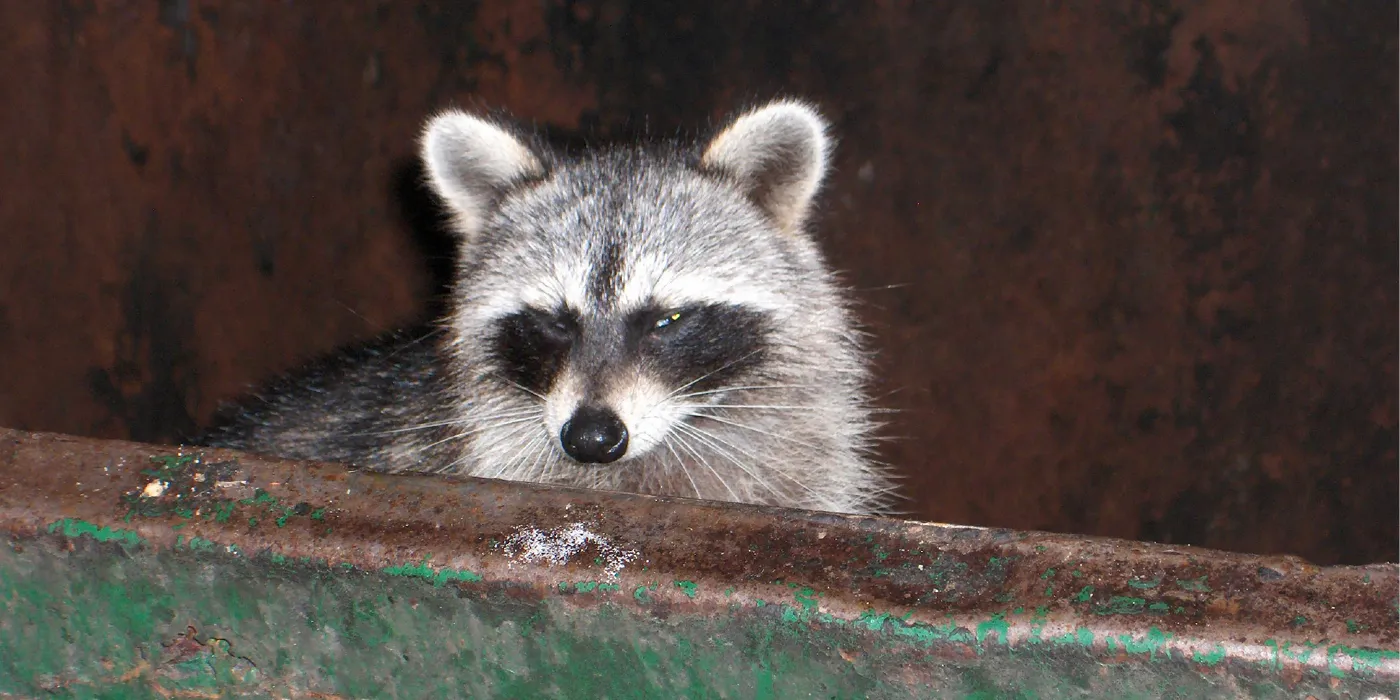
The raccoon tipping over your trash can at midnight isn’t coming for you. It’s planning to eat whatever’s in there and leave before anyone notices. Raccoons are opportunistic foragers that have learned suburban environments very well, and that intelligence makes them more resourceful than dangerous.
But raccoons are genuinely worth taking seriously — just for different reasons than most people think. The risk from raccoons is not primarily about bites and attacks. It’s about disease, and it’s real enough to warrant some basic precautions.
Are Raccoons Aggressive?
Healthy raccoons avoid direct human confrontation. Biology Insights’ review of raccoon behavior puts it directly: raccoons are generally not aggressive toward humans and typically retreat when they sense people nearby.
The scenarios where they become defensive are predictable: cornered with no exit, defending young, or sick with rabies or distemper. None of those involve a raccoon that’s simply passing through your yard.
A raccoon active during the day is not automatically sick. Nursing mothers often forage in daylight when demand is high. The warning signs worth paying attention to are erratic movement, stumbling, circling, extreme lethargy, or complete absence of fear — those behavioral patterns warrant a call to animal control, not a closer look.
Read next: How to Get Rid of Raccoons Without Trapping (Trapping Backfires)
The Disease Picture
Raccoons are one of the primary rabies reservoirs in the eastern United States. This is not a theoretical concern. UCSB’s wildlife safety guidance is unambiguous: a bite or scratch from a raccoon warrants immediate medical attention, full stop, because rabies post-exposure prophylaxis is effective but needs to start quickly. If there’s any possibility of exposure, don’t wait.
Beyond rabies, raccoon feces carry Baylisascaris procyonis, raccoon roundworm, which is arguably the more underappreciated risk. Mid-Atlantic Wildlife Control’s veterinary summary describes it plainly: roundworm eggs shed in raccoon droppings can survive in soil for years, and if accidentally ingested — by a child playing in contaminated soil, most commonly — the larvae can migrate through the body and cause severe neurological damage. Human cases are rare but serious when they occur. The practical response is never cleaning up raccoon feces with bare hands, wearing gloves and a mask when dealing with areas where raccoons have been defecating regularly, and keeping children away from those areas.
Leptospirosis, transmitted through urine, and canine distemper, which can spread to unvaccinated dogs, round out the main disease concerns. Keeping pets’ vaccinations current is the relevant precaution for most of these.
Why the Trash and Garden Problems Are Connected to Safety
Raccoons that regularly access food from humans become habituated. We’ve written specifically about raccoon trash behavior and what actually deters them — the main takeaway being that the animal’s remarkable dexterity means most standard bin lids are not actually a barrier. Bungee cords, locking lids, and storing bins in a secured space until collection morning are the approaches that work.
The habituation connection to safety is direct: a raccoon that’s lost its wariness of human spaces is more likely to be encountered at close range, and close-range encounters create the conditions where defensive behavior becomes possible. A raccoon foraging confidently near humans, expecting food, and then not finding it is a very different situation from one that scatters at the first sign of anyone outside.
Removing food attractants matters for the same reason. Unsecured compost, fallen fruit, bird feeders that spill seed at the base, and pet food left outside are all raccoon magnets. Eliminating those sources reduces how frequently raccoons are in close proximity to your household. The same principle applies to making your yard safer for wildlife at night generally — designing for coexistence rather than for collision.
Pets and Raccoons
Dogs that chase raccoons, corner them, or encounter a mother defending young are in a different situation than humans who give raccoons space. Canine distemper spread from raccoons to unvaccinated dogs is a documented and serious risk. Keeping pets’ vaccines current — specifically rabies and distemper — is the most important protective action for anyone with outdoor pets in raccoon territory.
Keeping cats indoors at night protects them from raccoon encounters the same way it protects them from owls and other nocturnal wildlife. A cat that has access to the same spaces raccoons use at night is in the overlap zone where defensive encounters happen. It’s a simple habit change with benefits in multiple directions.
Read Next: Keeping a Pet Raccoon: The Legal Reality, State by State
The Bigger Picture
Raccoons are not animals you need to fear on an evening walk. They’re animals with real disease risks that warrant basic hygiene, secured food sources, vaccinated pets, and immediate medical attention after any contact that involves a bite or scratch. That’s a proportionate response to the actual risk profile — not panic, not indifference.
The same thoughtfulness about coexisting with wildlife that applies to coyotes, bobcats, and opossums applies here. Understanding what actually presents risk, and addressing that specifically, is more useful than a generalized fear of wild animals doing what wild animals do.
Read More: Are Coyotes Dangerous to Humans? What the Data Actually Says
FAQ
Will a raccoon attack me if I approach it? A healthy raccoon will typically flee before it would attack. The scenarios where raccoons become defensive are specific: cornered, protecting young, or sick. Giving raccoons space and not attempting to approach or feed them avoids most of those scenarios.
Should I be worried about a raccoon in my yard during the day? Not automatically. Nursing mothers often forage in daylight. The red flags are erratic movement, stumbling, extreme lethargy, or complete absence of normal wariness. Those symptoms in any combination warrant a call to animal control rather than closer investigation.
What do I do if a raccoon bites me? Wash the wound thoroughly with soap and water and get to a doctor or urgent care immediately. Rabies post-exposure prophylaxis is effective but time-sensitive, and the treating physician will assess what’s needed.
Are raccoons dangerous to dogs? The disease risk — primarily rabies and distemper — is the main concern for dogs in raccoon territory. Keeping rabies and distemper vaccinations current is the key precaution. Dogs that chase or corner raccoons risk defensive bites; a raccoon defending itself or its young can cause real injury to a dog.
Read More: Are Opossums Aggressive? The Truth About Their Reputation