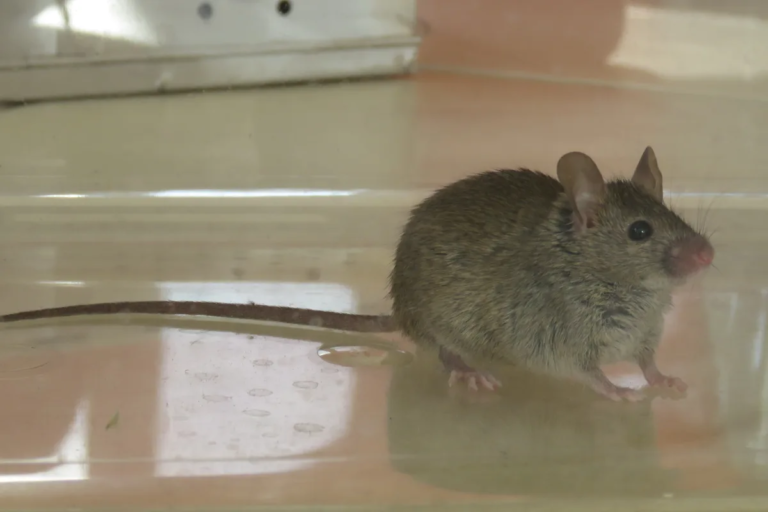
Rats at bird feeders tend to produce a specific kind of dismay in people — not just annoyance, but a creeping guilt, like somehow you did something wrong by wanting to feed the birds. The honest reassurance here is that your feeder probably didn’t bring rats to your yard. They were likely already there, working the compost bin or the neighbor’s unsecured garbage, and your feeder just gave them a reason to be visible in a new spot.
That framing matters because it changes what you need to do. You’re not trying to un-attract rats from your neighborhood. You’re trying to make your specific feeder setup not worth their time.
There are really two things that give rats access to bird food: getting onto the feeder itself, and finding spilled seed on the ground below it. Address both and you’ve solved the problem. Most people try to address one and wonder why the other keeps happening.
The ground is the main issue
Rats are not great climbers compared to squirrels, and they don’t particularly need to be — because birds are messy eaters and the ground under most feeders is essentially a free buffet. Seed hulls, cracked pieces, discarded millet, and whatever the birds toss aside while sorting through a mixed blend all accumulate below, and rats can dine on that indefinitely without ever touching the feeder.
This is why the single most effective change most people can make has nothing to do with the feeder itself. It’s switching to hulled seed — sunflower hearts, shelled peanuts, hulled nyjer — so that what falls to the ground is either eaten immediately by ground-feeding birds or is so small it barely registers. No hulls means no pile. No pile means much less incentive for rats to hang around.
Alternatively, a seed-catching tray mounted on the pole just below the feeder collects what spills before it hits the ground, and you empty it every few days. It’s not glamorous, but it works. Some people combine both — hulled seed in a tray — and find the area nearly self-maintaining.
Sweeping or raking the ground under the feeder regularly is the lowest-tech option and genuinely helps, even if it’s imperfect. The less free food at ground level, the less rewarding the location is for rats.
A baffle on the pole stops climbers
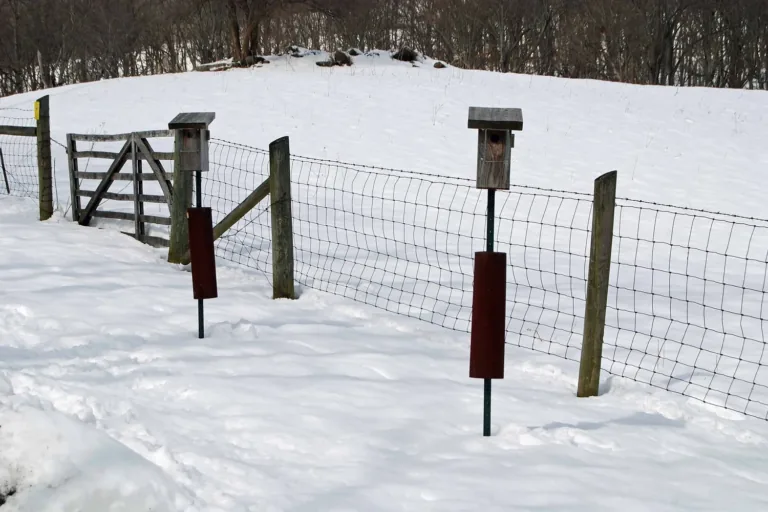
For rats that are actually climbing to the feeder rather than just foraging below it, a pole-mounted baffle is the reliable solution. A tubular or dome baffle positioned on the pole below the feeder creates a barrier rats can’t navigate around — they climb the pole, hit the smooth curved surface of the baffle, and can’t get past it.
The placement matters. The top of a pole baffle needs to be about five feet off the ground to prevent rats from simply jumping over it, and the pole should be positioned at least eight to ten feet from anything nearby — fences, trees, garden structures — that a rat could climb and then leap across from. Rats aren’t squirrel-caliber athletes, but they’re resourceful, and a baffle on a pole two feet from a wooden fence isn’t a real barrier.
Standard shepherd’s crooks are often too short to get the geometry right — feeder high enough, baffle positioned properly. If you’re setting up a new pole system, get one with enough height to work with the baffle at the correct height and still have the feeders clearly above it. Most Wild Birds Unlimited dealers have pole systems specifically designed for this, and it’s worth getting the geometry right once rather than improvising.
For feeders hung from trees or structures rather than poles, a large dome baffle hung above the feeder can help, particularly against roof rats that descend from above. It needs to be wide enough that a rat sliding down the line or chain can’t just reach around it to grab the feeder.
Seed storage matters more than people think
A surprising number of rat problems start in the garage, shed, or wherever the seed bag is kept rather than at the feeder itself. Rats can chew through plastic bags, cardboard boxes, and thin plastic containers without much effort. If your fifty-pound bag of sunflower seed is sitting on the garage floor in its original paper bag, you’ve already given rats an excellent reason to explore that space.
Metal containers with tight-fitting lids are what you want. A galvanized metal trash can with a lid that actually seals is inexpensive, rodent-proof, and holds a large volume of seed. The point isn’t just protecting the seed — it’s removing an additional food source that draws rats to your property in the first place and then makes it easy for them to find their way toward the feeder.
Take feeders in at night if needed
Rats are predominantly nocturnal. If you’re not willing or able to do the full baffle-and-pole setup right away, the simplest interim step is bringing feeders inside after dark. No seed available at night means no nocturnal foraging. Birds won’t know the difference — they don’t feed at night anyway — and you’re simply removing the window when rats are most actively looking for food.
This isn’t a permanent solution, and it’s one more thing to remember to do, but it genuinely works as a short-term measure while you get the longer-term setup in place.
What doesn’t really work
Repellent sprays, cayenne pepper, essential oils, and various scent deterrents get recommended constantly and work inconsistently at best. Urban rats have been adapting to human environments for centuries and are considerably less deterred by strong smells than most people hope. A few applications of peppermint oil might slow things down briefly, but it won’t solve a genuine rat problem.
Poison is the other tempting option and a genuinely bad one in this context. Rodenticides don’t just kill rats — they move through the food chain. A rat that ingests poison becomes a slow, easy-to-catch animal, and the owls, hawks, foxes, and other predators that catch it ingest the poison too. This is exactly how rodenticides end up killing owls — through secondary poisoning of the animals doing natural rodent control. If you value having raptors in your area, which are your most effective long-term rat management tool, rodenticides work against you.
Glue traps are similarly worth avoiding near any wildlife-adjacent area. They catch indiscriminately and cause prolonged suffering. Snap traps, placed in enclosed boxes where non-target animals can’t access them, are a more humane option if trapping is needed.
The practical setup that works
Put together, the most effective rat-resistant feeding setup is straightforward: a smooth metal pole with a properly positioned baffle, hulled seed or a seed-catching tray to minimize ground spillage, seed stored in a sealed metal container, and feeders brought in overnight if the problem is particularly persistent. None of these are expensive, and the combination covers the two ways rats access bird food — climbing up and foraging below.
If you’re already doing all the right things to support winter birds and don’t want rats to force you to take the feeders down, this setup lets you keep feeding without the problem compounding through the season.
Frequently asked questions
Did my bird feeder attract rats to my yard? Probably not. Rats were likely already in the area, drawn by other food sources — compost, garbage, pet food left outside. Your feeder made them more visible in a specific spot, but removing the feeder won’t remove the rats. It will just move them back to wherever they were before.
Do I need a special rat-proof feeder? Not necessarily. The combination of a pole baffle and hulled seed addresses the two main access points. That said, some feeders are enclosed in wire cages that limit access by size — these can help, though determined rats will work around cage-style feeders with larger openings.
Will taking the feeder down solve my rat problem? It will reduce one food source, but rats are opportunistic and usually have others. If you want to continue feeding birds, the baffle-and-clean-seed approach lets you do so without the rats. If you stop feeding entirely, expect the rats to redirect to whatever else is available nearby rather than disappear.
How far should a feeder be from fences or structures? At least eight to ten feet horizontally from anything a rat could climb, with the baffle top at five feet above ground level. Most standard shepherd’s crooks don’t provide enough height to make this geometry work — a taller pole system is worth the investment if rats are a consistent issue.