Northern cardinals are one of the most instantly recognizable birds in North America, and also one of the most desired backyard visitors. The male’s red plumage against winter snow is practically a symbol of the season. People put up feeders specifically hoping to attract them.
What most of those feeders are missing isn’t the right seed. It’s the other 90 percent of what cardinals actually need to live somewhere permanently — dense cover, nesting habitat, and insects.
A feeder without habitat gets occasional cardinal visits. The right habitat gets a resident pair that raises multiple broods in your yard, returns year after year, and fills your mornings with some of the best singing in North American birdsong.
Here’s how to get there.
Cardinals don’t migrate, which changes everything
This is the fact that most cardinal guides skip over, but it reframes the entire approach.
Cardinals are year-round residents across their range, which covers virtually all of the eastern and central US, extending south into Mexico and Central America. They don’t leave in fall and return in spring. The pair that nests in your yard in May is still there in January, huddled in a dense evergreen thicket at night.
That means attracting cardinals isn’t really about timing a feeder. It’s about making your yard good enough habitat that a pair wants to claim it as territory. Cardinals that find what they need in your yard will return to the same territory year after year — sometimes for multiple breeding seasons. The goal is residency, not a visit.
The thing most yards are missing: dense cover
The single factor most often responsible for a yard that sees occasional cardinals rather than resident ones is lack of dense shrubby cover near the ground.
Cardinals are low-to-the-ground birds. They nest in dense shrubs and vine tangles between 1 and 5 meters high, almost never in open tree canopy. They forage by hopping between thickets, making short reluctant flights from cover to cover. Cornell Lab of Ornithology’s life history account describes them as looking for “dense shrubby areas such as forest edges, overgrown fields, hedgerows, backyards, and marshy thickets.” They’re birds of the edge and the understory, not the open lawn.
A yard that’s mostly maintained turf with a few ornamental shrubs trimmed into neat balls offers almost nothing. Cardinals need the kind of structure that reads as slightly messy — layered, dense plantings with branches they can disappear into quickly when a hawk passes over.
Specific plants that cardinals favor for nesting and shelter include dogwood, hawthorn, viburnum, native hollies, sumac, spicebush, elderberry, wild grape, and dense evergreens like Eastern red cedar, arborvitae, and native hollies. All of these also produce fruit or berries that cardinals eat, making them doubly valuable.
Early-season nests (March and April) go almost exclusively into evergreens, which provide thermal protection and cover when deciduous plants are still leafless. Summer nests shift to dense deciduous shrubs. Having both types means cardinals can start nesting earlier in your yard than in ones with only one type of cover.
This is where the native plant case matters specifically for cardinals. Native understory shrubs support exponentially more insect life than ornamental alternatives — which leads to the next issue.
Nestlings eat almost entirely insects
This surprises most people. Cardinals at feeders eat seeds. Cardinals raising young feed them almost exclusively insects.
Audubon’s field guide is explicit: “Young are fed mostly insects.” The diet includes beetles, crickets, caterpillars, grasshoppers, ants, flies, leafhoppers, and spiders. The protein in insects is what allows nestlings to grow from hatchlings weighing 3 grams to fledglings in about nine days.
This means that a yard treated with broad-spectrum insecticides, or one dominated by ornamental plantings that support almost no insect life, can offer a pair everything they need to claim territory and start a nest — and then fail to support the brood. The keystone plant research shows that native oaks, cherries, and willows support hundreds of caterpillar species; most non-native ornamentals support fewer than five. Cardinals nesting in yards dominated by non-native plants are working significantly harder to find food for their young.
Stopping pesticide use and planting native species that support insect diversity isn’t just about pollinators. It directly determines whether a cardinal pair successfully raises young in your yard.
Cardinals do not use nest boxes
This one saves people money and redirects effort more productively.
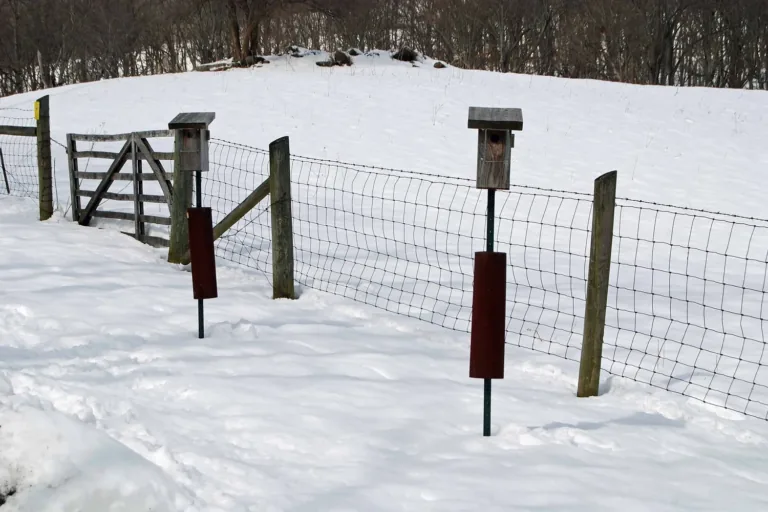
Cardinals are open-cup nesters, not cavity nesters. They build a loose cup of twigs, bark strips, vine leaves, rootlets, and grass, tucked into a fork in a dense shrub or low tree branch. No matter how it’s marketed, no birdhouse attracts cardinals for nesting. The correct approach is providing the dense shrubby cover where they naturally nest.
Feeders: what actually works
Once habitat is addressed, feeders meaningfully supplement a cardinal’s food supply — especially in winter when seeds are more reliable than insects, and in early spring before much is blooming.
Black oil sunflower seeds are the single most effective cardinal food. Cardinals have unusually large jaw muscles relative to most songbirds, giving them the bill strength to crack seeds that other backyard birds can’t handle. Black oil sunflower’s thin shell and high oil content make it ideal.
Safflower seeds are the tactically interesting alternative. Cardinals eat them readily. Most squirrels won’t. Many invasive house sparrows won’t. Switching entirely to safflower in a feeder is the cleanest way to make a feeder more specifically attractive to cardinals while reducing competition from less desirable species.
Feeder type matters. Cardinals are large birds that perch while eating, and they prefer a stable platform with room to land and turn around. Tube feeders with small perches work poorly for them. Tray feeders, hopper feeders with platforms, and large platform feeders work well. Cardinals also readily forage for spilled seed on the ground beneath feeders — particularly during winter when they may arrive in loose flocks of a dozen or more birds.
Placement: Cardinals are wary birds. They won’t visit a feeder placed in the open center of a lawn with no nearby cover. Position feeders within 3 to 5 meters of dense shrubs or trees — close enough for a quick retreat, far enough that a cat or hawk can’t ambush from the same cover.
Cardinals feed at dawn and dusk. They’re often the first birds at a feeder in morning and the last in evening. Keeping feeders filled through these windows matters more than midday stocking.
Native fruit-bearing plants: the longer game
Feeders require maintenance, can run out, and provide a limited diet. Native plants that produce berries and fruits address food needs year-round with no upkeep after establishment.
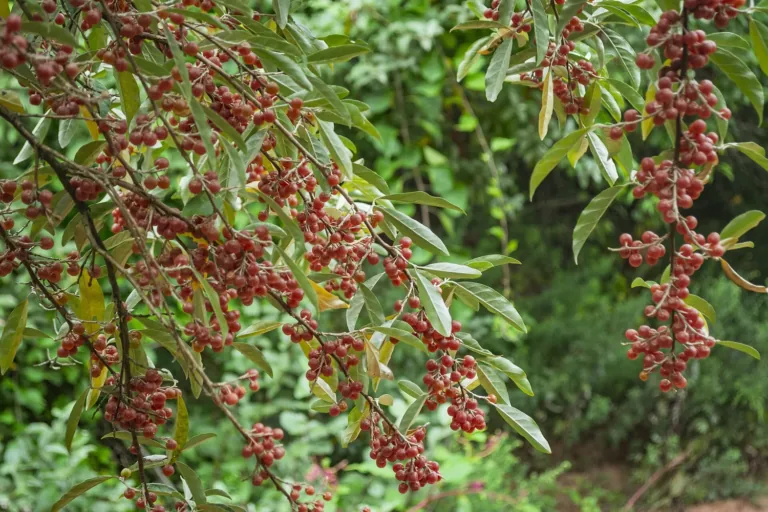
Cardinals eat heavily from dogwood berries, native hollies (berries persist into winter, critically), serviceberry, sumac, elderberry, blackberry, hackberry, and wild grape. Serviceberry in particular fruits early in the season, is highly nutritious, and attracts more bird species per planting than almost any other native shrub.
These plantings serve double duty: they provide food and nesting/shelter structure simultaneously. A dense viburnum or native holly isn’t just a berry source — it’s where cardinals nest, where they sleep on cold nights, and where they disappear when predators approach.
Water year-round
Cardinals drink and bathe regularly, and a reliable water source can tip the balance in favor of your yard over a neighbor’s.
A standard birdbath works — keep it clean and refreshed, with a rough surface or stones for footing. Shallow is better than deep; no more than 5 to 8 cm at the deepest point. Cardinals are ground-level birds and prefer baths they can wade into gradually.
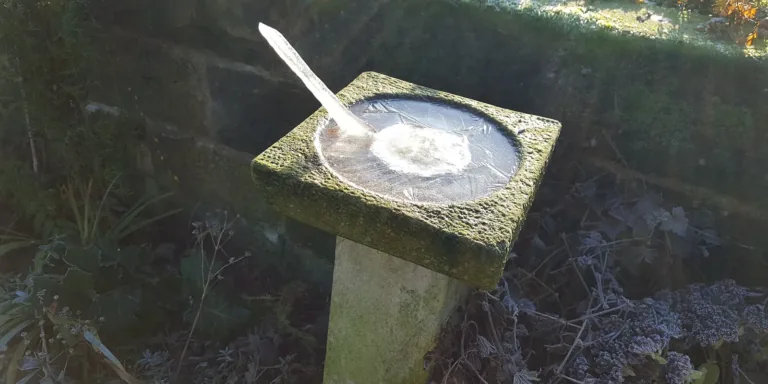
In cold climates, a heated birdbath that prevents freezing is one of the highest-value winter additions you can make. When natural water sources freeze, a yard with liquid water attracts birds from a wide area. This is one of the same principles that makes keeping bird feeders up in winter so effective — you’re providing something scarce when it matters most.
Reducing predator pressure
Cardinals’ low, dense-cover nesting strategy makes them vulnerable to cats. They’re slow, reluctant flyers making short hops between thickets — exactly the hunting profile that outdoor cats exploit most effectively.
Studies from the Smithsonian and U.S. Fish and Wildlife Service put free-ranging cat predation in the billions of birds annually in the US. Cardinals are specifically mentioned in the University of Florida’s extension guidance as especially vulnerable because of their short, low foraging flights. Keeping cats indoors, particularly during nesting season from March through August, is a concrete protection for any nesting pair in your yard. This is the same reason making your yard safe for wildlife at night matters for cardinals as well as nocturnal species.
Window collisions are also a meaningful source of cardinal mortality. Male cardinals are particularly prone to attacking their own reflections in windows and mirrors during breeding season — hours spent on this behavior is energy diverted from feeding and territory defense. The same window treatments that reduce collisions generally reduce this behavior too. Our window collision article covers the practical fixes.
What a cardinal-friendly yard actually looks like
To be direct: a well-maintained suburban lawn with a tidy feeder and a few ornamental shrubs is not cardinal habitat. Cardinals visit it. They don’t live there.
Cardinal habitat has layers. It has dense shrubs and vine tangles in the 1 to 3 meter zone. It has native plantings that support insects. It has food-bearing plants whose berries persist into winter. It has water. It has evergreen structure for winter roosting and early nesting. And it has enough of all of this to feel like cover — dense enough that a 20-gram bird can disappear into it in one hop.
You don’t need to convert your entire yard. A well-planted back corner with a mix of native shrubs, some structural density, a feeder positioned at its edge, and a birdbath nearby is enough to support a resident pair. The rewilding framework — dedicating a portion of your yard to ecological function rather than visual tidiness — is exactly the approach that produces resident cardinals rather than occasional visitors.
Frequently asked questions
What is the best bird seed to attract cardinals? Black oil sunflower seeds are the most effective. Safflower seeds are a strong second choice with the advantage of being largely ignored by squirrels and house sparrows.
Do cardinals use birdhouses? No. Cardinals are open-cup nesters that build in dense shrubs, not cavities. No birdhouse attracts them for nesting. Providing dense native shrubs is the correct approach.
Why do cardinals keep hitting my window? Male cardinals (and sometimes females) mistake their reflection for a rival during breeding season and attack it repeatedly. This is harmless to the glass but wastes the bird’s energy. Window films, exterior screens, or removing the visual reflectance from outside typically reduces it.
Do cardinals migrate? No. Northern cardinals are year-round residents throughout their range. Once a pair establishes territory in your yard they may stay through multiple years and multiple breeding seasons.
When do cardinals nest? The breeding season is exceptionally long — from late March through August in most of the range, with some pairs raising three broods per season. First nests go into evergreens; later broods often into deciduous shrubs.
How long does it take to attract cardinals? Depends on habitat. If the cover and food structure are right, a pair may arrive within weeks. In yards that currently lack dense shrubby cover, establishing the right plants takes a season or two — but the long-term payoff is a resident pair, not just a visitor.