When the first hard freeze hits, the question shows up: should the feeders go out, stay up, or come down? You’ll hear confident answers on both sides, that birds need us all winter or that we shouldn’t feed them at all.
Our answer is yes, if you can keep it clean and safe. Feeders matter most when winter turns harsh. The Cornell Lab’s FeederWatch team sees an effect on survival when there is a big snow or a severe cold snap. A crowd of birds around one spot also brings risks, from disease to window strikes to cats. A well-kept feeder can make a real difference. A dirty or badly placed one can do more harm than good.
This guide covers when feeding helps, what to put out, and how to keep it safe. It also covers when taking the feeder down is the better call.

Should you feed birds this winter?
In most yards, yes. If you can keep feeders clean, you’re helping, and most of all in hard cold, when natural food is hardest to find. Where winters stay mild, the main payoff is the birdwatching.
The exceptions are bears, repeated window strikes, backyard poultry, sick birds, and a feeder you can’t keep clean. Deal with those first, or take the feeder down.
What science actually says about feeding birds in winter
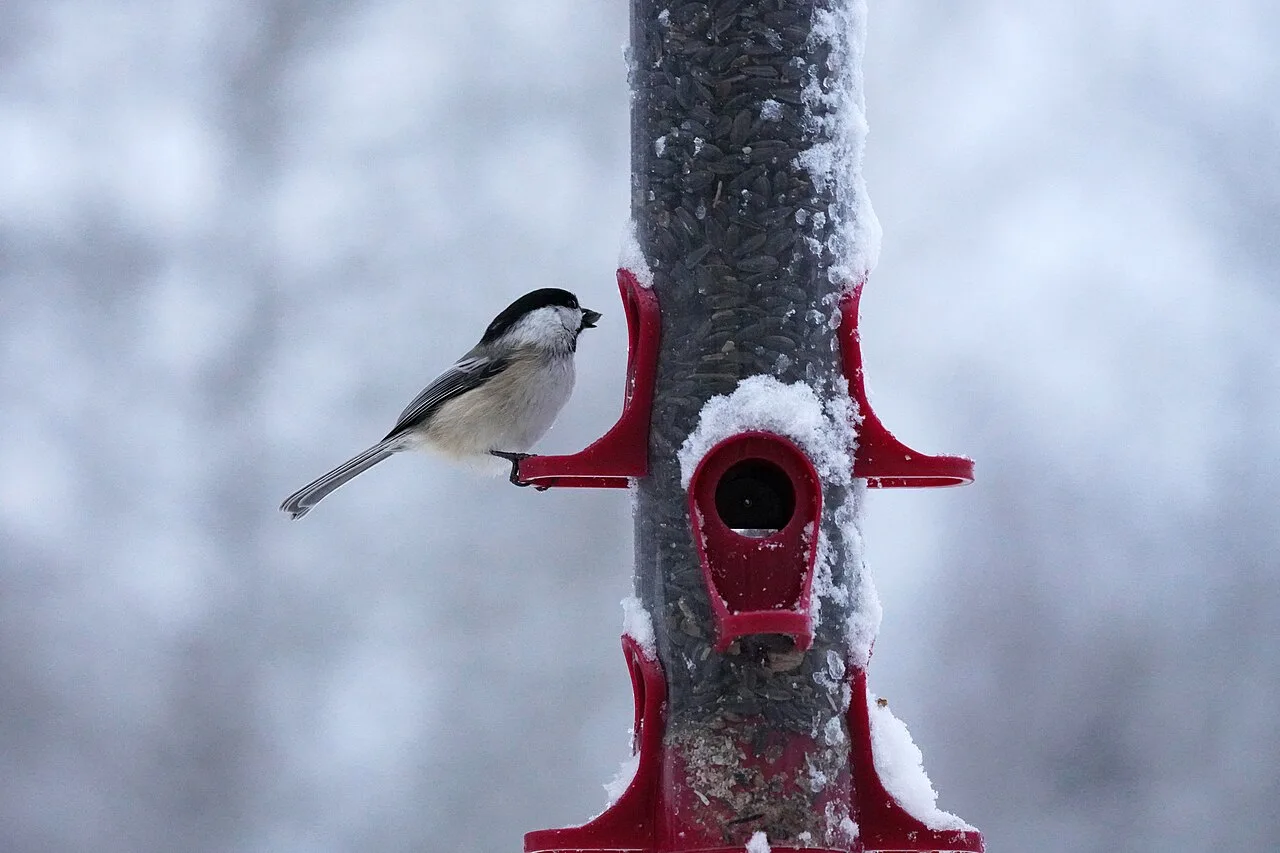
In a Wisconsin study over three winters, 418 chickadees with supplemental food survived the winter at 69%, against 37% for 158 without it. That sounds like feeders nearly double survival, but the story is narrower. That gap came almost entirely from stretches of extreme cold, five days or more below 0°F.
The cold explains why. Chickadees burn a lot of energy, nights are long, and natural food is scattered and hard to reach. A chickadee that arrives at a cold night with a full tank has a better shot at morning.
In milder weather the two groups survived at about the same rate. If your winters rarely see days of deep cold, as in much of the South, the survival case is thin. Feeding is then mostly about getting to watch birds, which is a fine reason.
The same team found that birds still get most of their food on their own. Feeders supplied about 21% of daily energy needs for the chickadees studied.
Then there is the dependency worry. A 2021 Oregon State University study clipped some chickadees’ flight feathers to make foraging more costly. Those birds did not lean harder on feeders. Our full write-up of that research has more detail.
None of this says a feeder is life support. It is a supplement, and it matters most when the weather turns brutal.
What should you feed birds in winter?
Start with black-oil sunflower. It’s the most widely useful single food, and chickadees, cardinals, titmice, nuthatches, and finches all eat it from a tube or hopper feeder. FeederWatch lists the main options and who eats them.
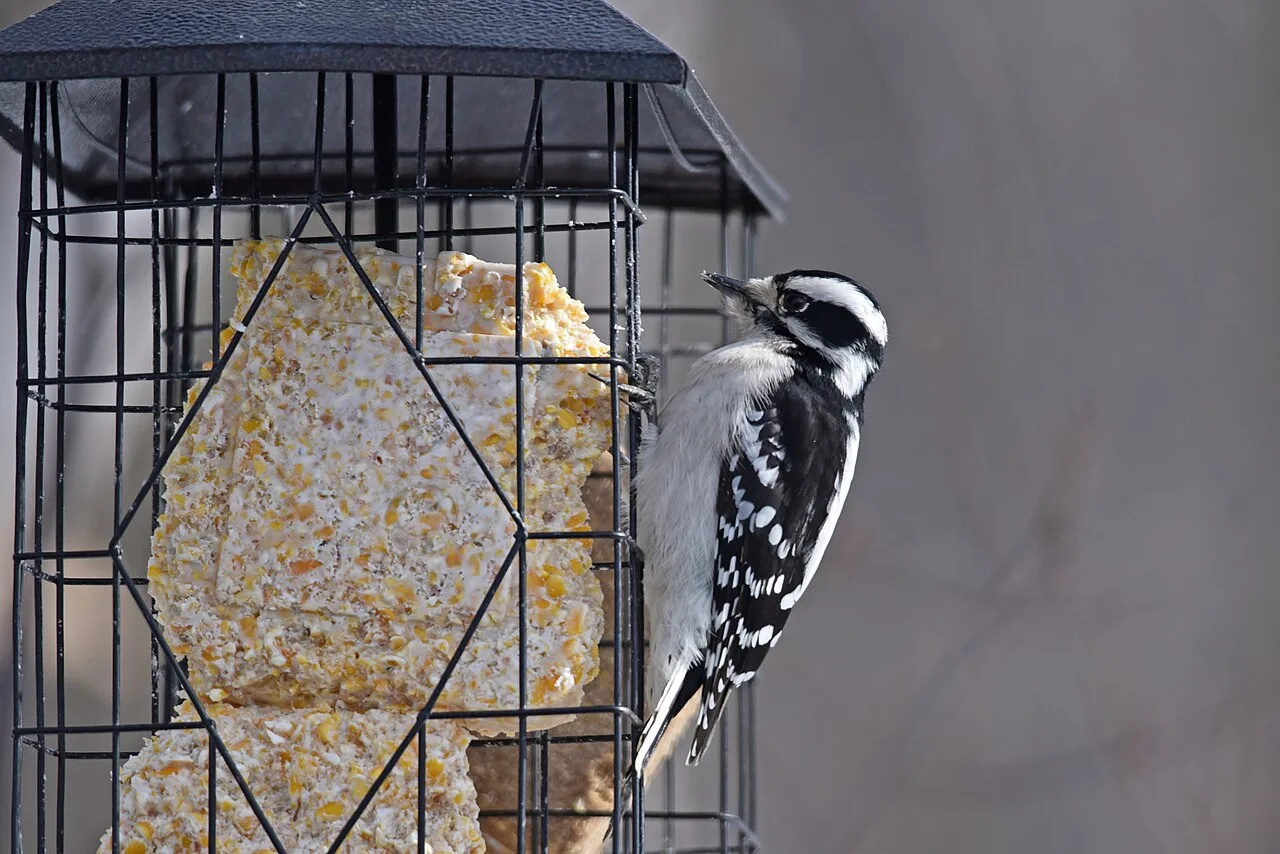
Suet is a strong pick for woodpeckers and other insect-eaters, but it isn’t the most important food for every species. A suet cage is easy to clean and keeps the cake in one place.
Skip the cheap filler mixes. Milo is often a major part of inexpensive mixes, most birds don’t favor it, and it often goes to waste, especially in the East. That’s money on your lawn, and spilled seed is a hygiene problem.
Leave out bread and processed salty snacks. Never put out moldy or spoiled seed, salted or seasoned nuts, rancid fats, or anything that looks contaminated.
Where to put your winter bird feeder
Windows. The old rule is to put feeders within 3 feet of the glass or beyond 30 feet. Distance helps, but there is no safe distance unless the windows are treated. Exterior patterns, screens, or bird-safe glass do more than placement. Our guide to why birds fly into windows covers the fixes.
Cover. Birds want shelter nearby, and shrubs hide cats too. Missouri Department of Conservation suggests hanging feeders about 10 feet from trees and shrubs, close enough for a quick escape and far enough that a cat can’t ambush.
Cats. Don’t count on feeder placement to protect birds from cats. Keep pet cats indoors or in an enclosure, and don’t set up a feeding station near cats that roam.
A feeder you can clean. Pick one that comes apart, drains, and keeps seed dry. Decorative wooden feeders look good and are hard to sanitize. If you can’t scrub it, don’t hang it.
Winter feeding tips: timing, snow, and squirrels
Timing. Birds tend to feed early in the morning and late in the day, so fill feeders the evening before or first thing. In late winter, when natural food is most depleted, birds can be especially hungry, though severe weather matters more than the date.
Snow and ice. Food is especially hard to find after heavy snow, and a full feeder doesn’t help if ice blocks the ports or tray. Brush off snow and knock off ice. Clear a patch of ground under the feeder for juncos and other ground feeders.
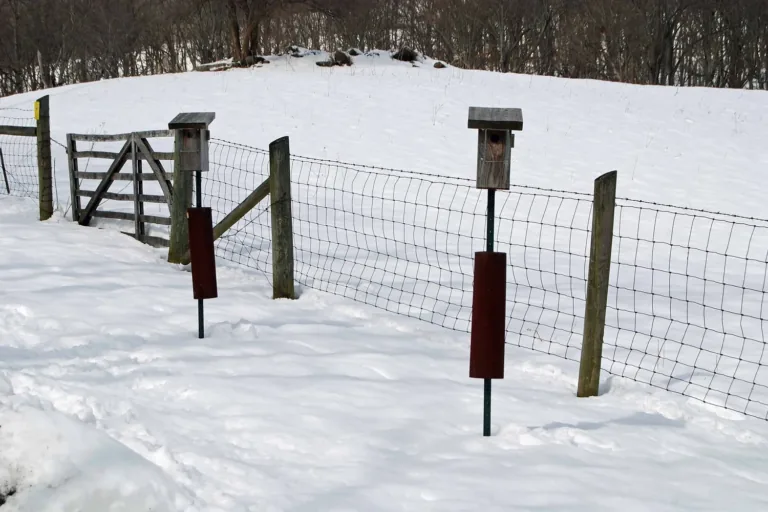
Squirrels. A pole with a baffle is a humane fix. Put the pole at least 8 to 10 feet from anything solid, with the baffle 4 to 5 feet off the ground.
How to keep a winter bird feeder safe and clean
Crowded feeders can spread disease. Salmonellosis, house finch eye disease, and trichomoniasis are the usual worries, and they don’t all spread the same way. Salmonella moves mainly through droppings in food and water. Cleaning and spacing help with all of them.
Clean about every 1 to 2 weeks. All About Birds recommends cleaning about once every two weeks, and more often with heavy use or wet weather. Empty out old food, take the feeder apart, scrub it with warm water and dish soap, and rinse.
Disinfect when you need to. FeederWatch suggests a 10% bleach solution, 1 part bleach to 9 parts water. Soaking for 10 minutes is an effective step after scrubbing. Never mix bleach with other cleaners, vinegar included. Rinse well and let everything dry completely before you refill.
Keep the ground clean. Rake up hulls, spilled seed, and droppings. Wet debris holds germs and draws rodents.
If you see a sick bird. Crusted or swollen eyes, fluffed-up lethargy, or birds that don’t flee are warning signs. FeederWatch recommends taking down the feeders the sick bird used for a couple of weeks and cleaning them and the area. You could also change the feeder design or step up cleaning. One catch: removing a feeder can send birds to the neighbors’, so a short pause isn’t a perfect fix. Don’t handle the bird. Only licensed rehabilitators and vets can treat wild birds.
When feeding birds can do more harm than good
Bears. Winter doesn’t guarantee bears are asleep. In bear country, it is best to avoid bird feeders altogether (MassWildlife). Bringing feeders in at night isn’t a fix. If bears live near you, take the feeders down and follow your state agency’s advice.
Rodents. Spilled seed feeds mice and rats. Use a tray to catch it, put out smaller amounts, sweep up often, and store seed in a sealed container. If mice have already moved in, see how to get rid of mice in walls.
Sick birds. Change your habits when you see illness, as above. Bird flu is a smaller concern for songbirds. Cornell reports relatively few documented cases in typical feeder birds and no official recommendation to take feeders down unless you also keep domestic poultry. If you keep poultry, follow USDA biosecurity guidance and your state’s current advice.
Sometimes the wildlife-friendly choice is to take the feeder down, and that’s a good decision.
Water might be the most overlooked part of winter bird feeding
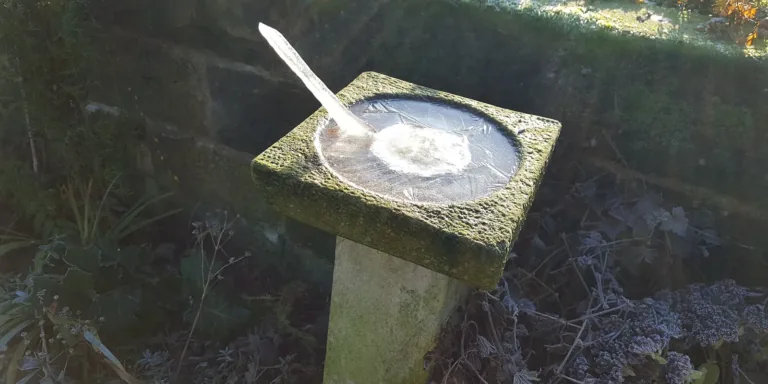
Open water is hard to find in a freeze, and it draws birds that never touch seed, like robins and waxwings. A heated birdbath gives them a reason to visit.
Use a heater rated for outdoor use, keep the water shallow with good footing, and put the cord and outlet where they can’t get wet. Dump and refill often, and scrub the basin from time to time. More on that in our guide to reliable winter water sources.
Do you have to feed all winter once you start?
Some extension guides still say to commit to feeding birds all winter or not at all. It’s well meant, but the research doesn’t back it as a rule.
You can generally stop. The Oregon State study found no sign of dependency, and earlier work found birds kept getting most of their food naturally. Birds that visit your feeder will switch to other sources.
You don’t need to taper off. In severe weather a source they already use may be especially helpful, so ask a neighbor to top it up while you’re away. A dirty, unsafe, or bear-attracting feeder is better down than kept up out of guilt.
For birds that want shelter on cold nights, our winter roost box guide helps too.
The best long-term winter bird feeder is a garden
Plants feed birds without refills. Leave seed heads standing on purple coneflowers, black-eyed Susans, native sunflowers, goldenrods, and native grasses. Goldfinches, sparrows, and juncos work them over all winter.
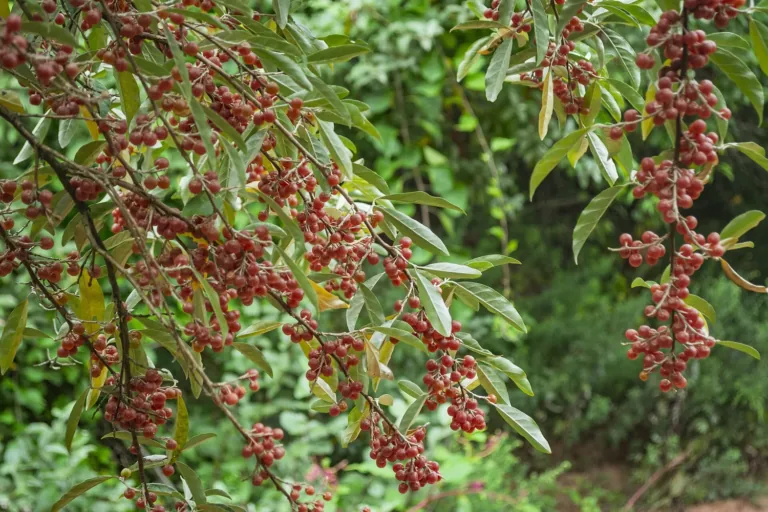
Add shrubs and trees with fruit that lasts. UNH Extension lists native options including winterberry, smooth and staghorn sumac, hawthorn, and red-osier, gray, and silky dogwoods. Oaks bring acorns, and American holly is a fit in some regions. Choose natives for your area, and check which ones thrive near you.
Leave the leaves and a little woody debris. Cornell notes that winter gardens give birds food, water, and cover, and the litter shelters the insects many birds eat. Our native plant garden guide is a good start, and here’s why native plants beat the alternatives.
Keep both if you can. Habitat can do more for birds than another feeder.
Frequently asked questions
When should I start feeding? Whenever you can keep it up, usually once natural food gets scarce in your area. Weather matters more than the calendar.
When should I take feeders down in spring? When natural food is plentiful in your area, or sooner if bears wake, rodents show up, or birds look sick.
Will birds starve if I forget to refill? Generally not. Feeders are a supplement.
Should I feed during a snowstorm? It can be especially valuable. Brush snow off the feeder, clear a patch of ground below, and put out only what you’ll clean up.
Will feeders stop birds from migrating? No. A feeder won’t stop a healthy bird from migrating. Day length is the main trigger, and that goes for hummingbirds too. Cornell suggests keeping hummingbird feeders up for several weeks after the last one leaves, for stragglers. If hummingbirds are still around in your area, keep a feeder up and change the nectar at least every 3 to 5 days. Where nights drop below freezing, nectar turns slushy near 29°F and freezes solid at 25°F. Keep two feeders and swap them, or bring one in overnight and put it back out before dawn.
Can I feed suet all winter? Generally yes, if it’s fresh and clean in cold weather.
Will feeders attract hawks? Sometimes. Hawks hunting at feeders is natural predation, and it’s no reason to harass them. If it bothers you, pause feeding for a bit.
Should I take feeders down because of bird flu? It depends on your species, local outbreaks, and whether you keep poultry. Check Cornell’s guidance and your state wildlife agency.
What if birds aren’t using my feeder? It can take a while for birds to find it. Try a better spot, a different food, or fresh seed.
Feeding is optional, and a garden without feeders can still be excellent habitat. You don’t have to feed birds to care about them. They were surviving winters long before anyone hung a plastic tube full of sunflower seeds. But the science shows supplemental food can help, especially when the weather turns brutal.
If you’re going to feed birds, do it well. Keep the food fresh, the feeder clean, the windows safe, and the cats inside. And if you want to do even more, make your yard a place where birds can find food and shelter without you. A feeder can help a bird through a cold night. A good habitat helps it through the year.
Sources
- Ecology, Brittingham and Temple 1988, Impacts of Supplemental Feeding on Survival Rates of Black-Capped Chickadees.
- Journal of Wildlife Management, 1992, Use of Winter Bird Feeders by Black-Capped Chickadees.
- Aldo Leopold Foundation, Is Winter Bird Feeding Good for Birds?.
- Oregon State University, Birds won’t become dependent on you feeding them.
- All About Birds, How to Clean Your Bird Feeder.
- Project FeederWatch, Frequently Asked Questions.
- Project FeederWatch, Sick Birds and Bird Diseases.
- Project FeederWatch, Food types.
- CDC, Cleaning and disinfecting with bleach.
- MassWildlife, Frequently asked questions about black bears.
- All About Birds, Avian Influenza Outbreak: Should You Take Down Your Bird Feeders?.
- American Bird Conservancy, When window collisions hit home.
- Cornell Lab Academy, Winter Bird Feeding 101 with Project FeederWatch.
- Ohio State University Extension, Tips from the yard: winter bird feeding considerations.
- Washington State University Extension, Feeding hummingbirds in winter.
- All About Birds, Should I stop feeding birds in fall so they can start their migration?.
- NDSU Extension, Inviting songbirds to your yard.
- Missouri Department of Conservation, How to feed your feathered friends.
- Audubon, How to stop squirrels from raiding your bird feeders.
- Project FeederWatch, Bird Notes: Winter bird feeding.
- UNH Extension, Native trees and shrubs that provide berries for birds.
- Cornell Lab, Bird-friendly winter gardens.