Growing milkweed is legal almost everywhere in the U.S. The Monarch Joint Venture says no state lists milkweeds as noxious weeds, and the Xerces Society says the same.
What’s left are local rules: a few North Dakota counties, some city codes, and HOAs. Pick your state below to see what applies.

Why anyone thought milkweed was a weed
Common milkweed (Asclepias syriaca) spreads by roots as well as seed. We cover whether native plants take over separately. Xerces says it’s the most clonal milkweed, and that a few of the nearly 100 U.S. species colonize disturbed ground.
Milkweeds also contain cardenolides, which can poison livestock. Xerces says they’re toxic only in large amounts and that cattle eat them only when there’s nothing else to graze. Hay is a risk too, because the plant stays toxic when dry.
That’s the case farmers and weed boards made. It’s also why old weed laws and city codes sometimes lumped milkweed in with poison ivy.
The laws that changed
Illinois bars counties and municipalities from classifying milkweed as a noxious or exotic weed. Michigan wrote milkweed out of its noxious weed definition in 2024. Columbus and Toledo both dropped it from city weed rules.
- 2017Columbus, Ohio removes milkweed from its health code noxious weed definition.
- 2018Illinois law takes effect barring counties and municipalities from classifying milkweed as a noxious or exotic weed (June 1). Toledo, Ohio drops milkweed from its noxious weed list.
- Mar 2024Michigan changes its noxious weed law to exclude milkweed, any species of Asclepias.
- 2024Illinois passes the Homeowners’ Native Landscaping Act, which limits what HOAs can ban.
- Aug 2024Columbus fixes a leftover in its housing code after a resident got a violation for a pollinator garden.
- Jun 2025Florida adds tropical milkweed to the UF/IFAS non-native plant assessment as invasive, and to Category II of the Florida Invasive Species Council list. Neither list is a law.
The city took milkweed out of its health code in 2017, but a leftover in the housing code stayed on the books until 2024. A resident with a pollinator garden got a violation before anyone noticed. If your city has a weed ordinance, read it.
Where milkweed is still on a list
In North Dakota, Renville, Sheridan, and Wells counties list common milkweed as a noxious weed, per the state’s county list.
Hawaii’s restricted noxious weed seed list includes Asclepias milkweeds. That’s a rule about seed, not a ban on planting.
California rates balloon plant (Asclepias physocarpa), a non-native relative, as a C-rated weed. It isn’t a monarch garden plant.
If your county or city has a weed ordinance, it won’t show up in a state list.
Tropical milkweed is a different question
Tropical milkweed (Asclepias curassavica) isn’t illegal in any state we found. In June 2025, UF/IFAS added it to its Florida non-native plant assessment as invasive, and the Florida Invasive Species Council moved it to Category II.
The council says its list isn’t regulatory. Only plants on the federal or Florida noxious weed lists, the prohibited aquatic plant list, or local ordinances are regulated by law.
The worry is the parasite Ophryocystis elektroscirrha (OE). The Monarch Joint Venture says all milkweeds can host it, but tropical milkweed that lives year-round in warm places is linked to higher infection rates. It recommends native milkweeds when possible.
The lookalike that is illegal
Black swallow-wort and pale swallow-wort are invasive vines. Monarchs lay eggs on them, but the Monarch Joint Venture says the caterpillars can’t survive on them and starve.
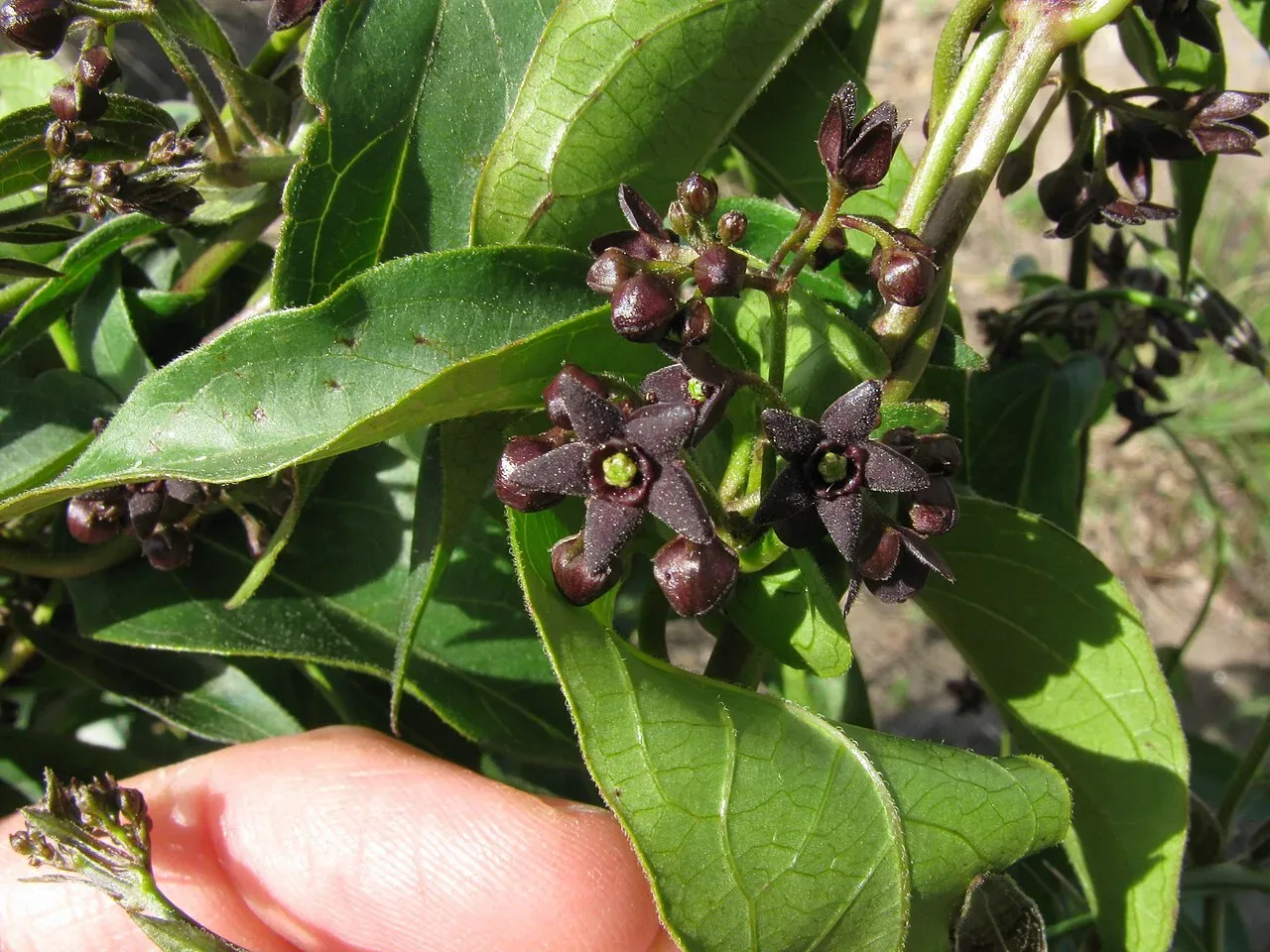
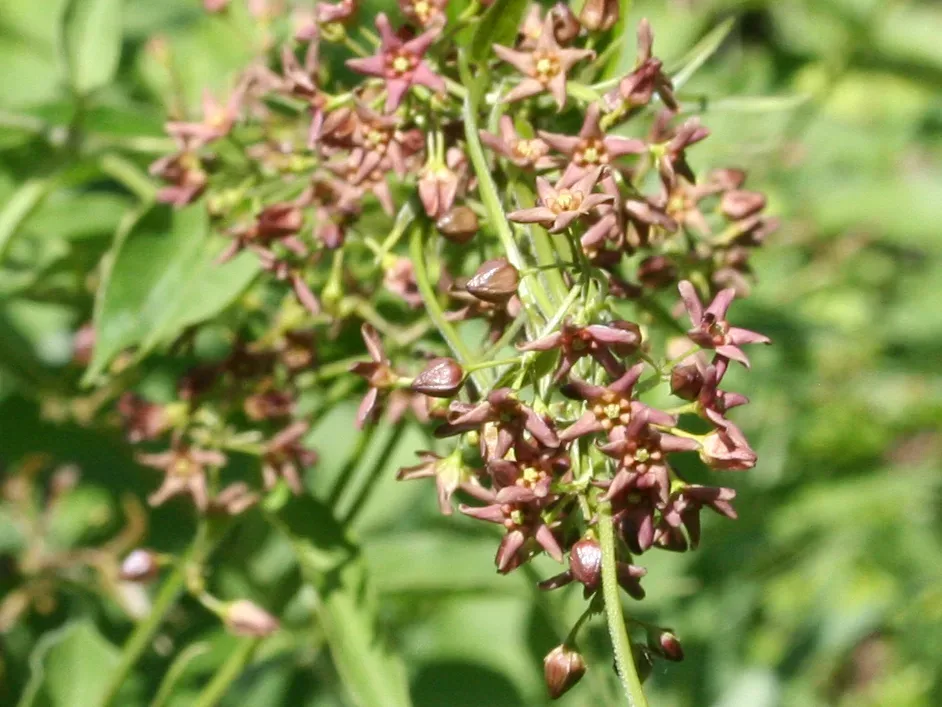
Swallow-wort is regulated in some states. New York lists both on its regulated invasive species list. Minnesota lists black swallow-wort as a noxious weed. Wisconsin prohibits black swallow-wort in most counties.
The flowers are the giveaway: black swallow-wort’s are purple, and pale swallow-wort’s are light pink, per the Minnesota DNR. If you’re buying plants labeled milkweed, check the Latin name. Swallow-worts are Cynanchum or Vincetoxicum, not Asclepias.
HOAs are their own problem
State weed law doesn’t stop an HOA from writing its own landscaping rules. Height limits and “no weeds” clauses are the usual trouble.
A couple of states have stepped in. Illinois’s Homeowners’ Native Landscaping Act says associations can’t prohibit Illinois native species on a maintained lawn and can’t impose height limits on a planned native landscape. Washington’s law says governing documents can’t prohibit pollinator habitat, but allows reasonable rules on placement and appearance.
Everywhere else, your covenants decide. Read them before you plant, and ask the board for a written exception if milkweed isn’t named.
Pick the right milkweed
The right species depends on your site. Use the picker, then read about swamp milkweed if you’ve got a wet spot, or growing milkweed in pots if you don’t have ground.
Before you plant
Check three things: your state’s noxious weed list, your city or county weed ordinance, and your HOA covenants. Your county extension office can answer the first two quickly.
Buy native milkweed, check the Latin name, and skip tropical milkweed if you live somewhere without a hard winter frost. Adult monarchs need nectar too, so see the native plants that attract monarchs, and once it’s in the ground, here’s what’s eating your milkweed.
Sources
- Monarch Joint Venture, Milkweed FAQ.
- Xerces Society, Are Milkweeds Really Weeds?.
- Illinois DNR, Milkweed Misconceptions.
- Illinois General Assembly, 55 ILCS 5/5-1057.5.
- FindLaw, 65 ILCS 5/11-20-6.5.
- Illinois General Assembly, Public Act 103-0704, Homeowners’ Native Landscaping Act.
- Michigan Legislature, 2024 Public Act 13.
- NBC4 Columbus, The other weed being legalized in Columbus.
- North Dakota Department of Agriculture, County and city listed noxious weeds.
- Cornell LII, Haw. Code R. 4-67-3.
- California Department of Food and Agriculture, California Noxious Weeds.
- UF/IFAS Hillsborough County Extension, Tropical milkweed is now a Category II invasive.
- Florida Invasive Species Council, 2026 plant list, Categories I and II.
- NY DEC, Regulated and prohibited invasive species list.
- Minnesota Department of Agriculture, Noxious weed list factsheet.
- Cornell LII, Wis. Admin. Code NR 40.04.
- Washington State Legislature, RCW 64.38.057.
- Clemson HGIC, Butterfly milkweed.
- Iowa State Extension, All about milkweed.
- University of Illinois Extension, Swamp milkweed.