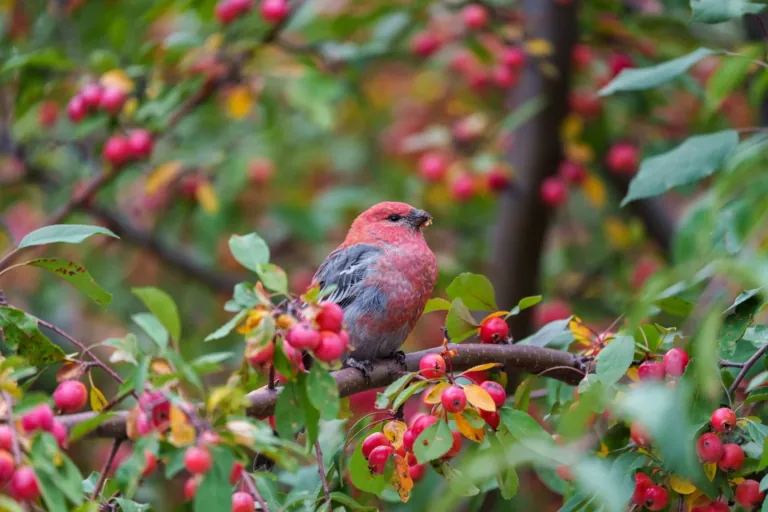
In April 2009, dozens of cedar waxwings turned up dead in a yard in Thomas County, Georgia. University of Georgia pathologists examined five of them and found guts distended with nothing but nandina berries, plus bleeding in the lungs and other organs that matched cyanide poisoning.
In 2020, a curator at the UNC Chapel Hill Herbarium found several dead waxwings in February within sight of a nandina planting. That led to a year of monthly cyanide tests on campus and in nearby gardens. Nandina leaves and green berries release cyanide fast. Ripe red berries release it slowly, and berries that hang on for two months or more mostly lose their punch. Waxwings still get into trouble, because a flock swallows berries by the beakful and can strip a bush in minutes.
Heavenly bamboo isn’t bamboo, and it isn’t harmless. It’s a barberry-family shrub listed as invasive in North Carolina that has spread into natural areas across the Southeast. You can get rid of it. Cutting it to the ground won’t do it, because the roots keep going.

Dig out small plants. Cut big ones and treat the stumps. Or keep cutting regrowth until the roots give up. Each one comes down to finishing the roots, so here’s how to do all three without leaving a living piece behind.
How to Identify Nandina
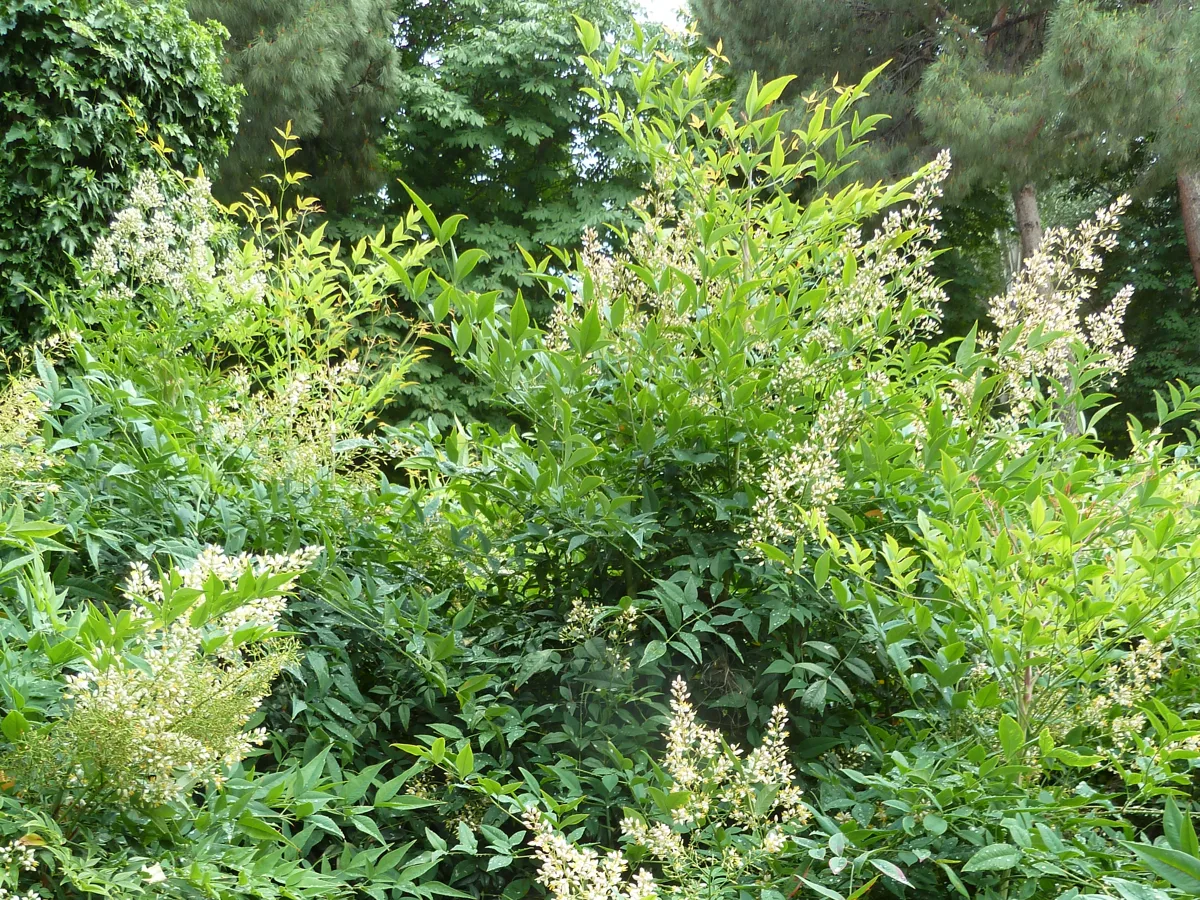
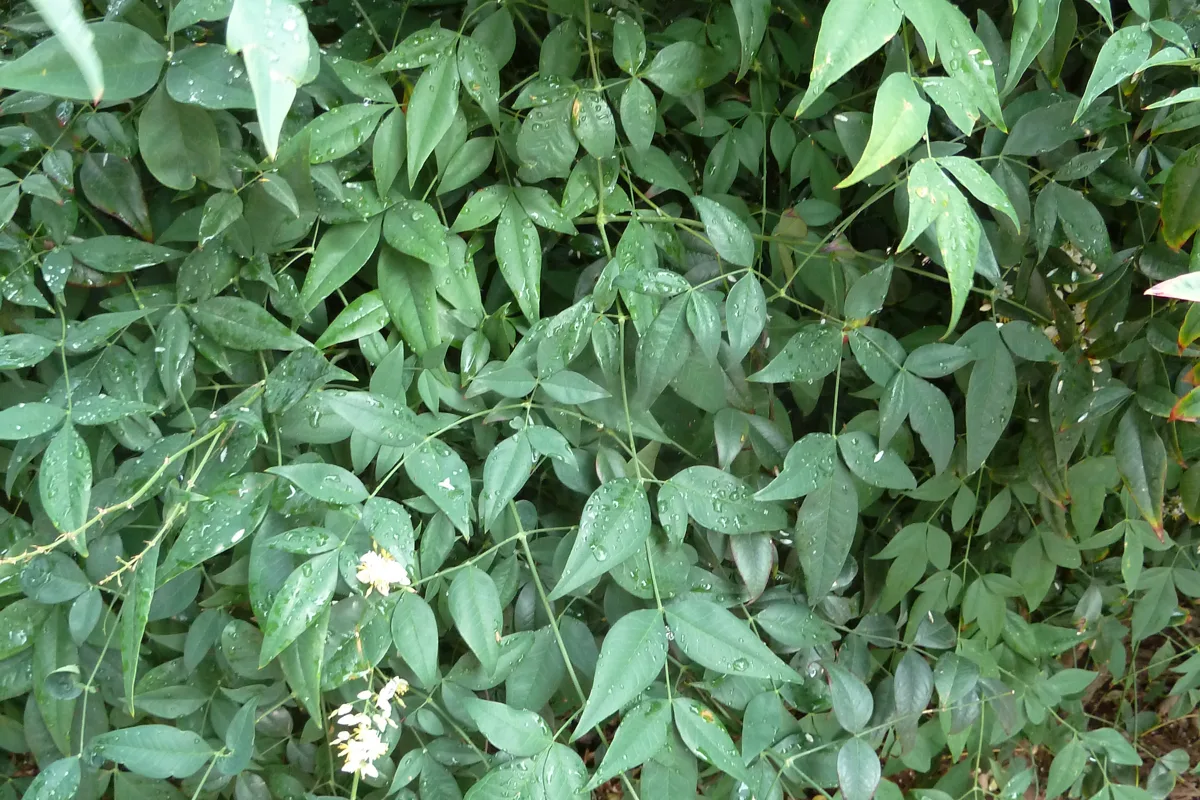
Before you dig anything, make sure it’s nandina. It’s an upright evergreen shrub with cane-like stems, and the leaves give it away. Each leaf is divided two or three times into smaller leaflets, so one leaf can run a foot or two long. That airy look is where the bamboo nickname comes from.
Growth habit. Nandina grows as an upright clump. In late spring it sends up loose plumes of small white flowers.
Leaves. Look for smooth, pointed leaflets spread along thin stalks. New growth is often reddish before it turns green.
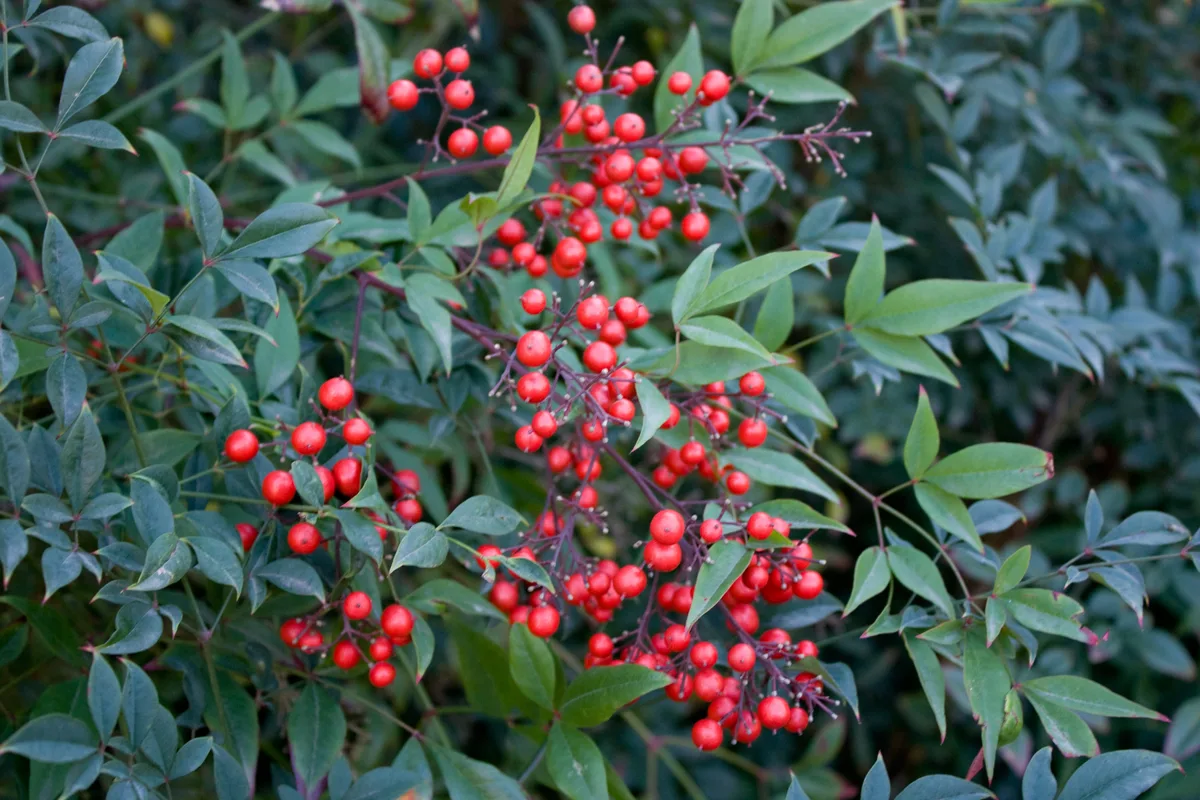
Berries. Bright red berries hang in clusters at the stem tips in fall and stay on into winter. They are the easiest way to spot nandina from across a yard.
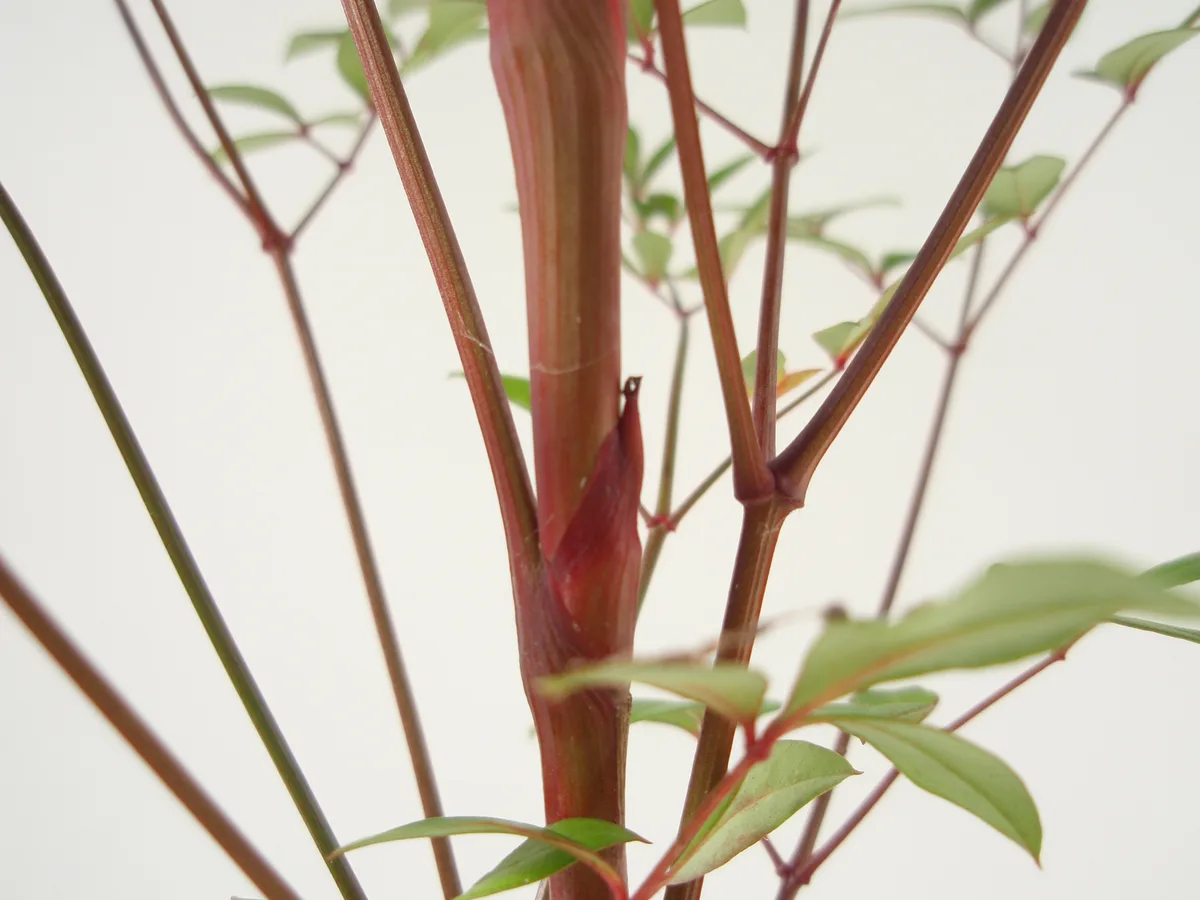
Canes. The stems are cane-like and grow in a clump from one base. Every cane in a clump comes off the same crown and root system, which is why trimming the tops doesn’t finish the job.
Some cultivars are dwarf, with red winter foliage and few or no berries, so a plant that doesn’t match every photo here can still be nandina.
Why You Should Consider Removing Nandina
Birds carry the berries into woods, and the plant also sends up shoots from underground stems, so one clump becomes a thicket. In forests and woodlands it forms dense thickets that outcompete native plants. Its berries are fine for a bird that eats a few. For a waxwing that eats a few dozen, they’re not.
Where you live matters. Nandina is a documented invader in the Southeast and in Missouri’s woodlands, so check your state’s invasive plant list before you assume it’s a problem near you. Sterile and low-fruiting cultivars are a different story. Florida trials of 26 selections found several that met the noninvasive designation, which makes them a better pick if you can’t part with nandina. If you’re hunting for other invaders, our guide to invasive plants that birds spread covers more.
How to Remove Nandina: 3 Methods That Work
Method 1: Dig out small plants. Digging is the most dependable fix for seedlings and small shrubs. Pull seedlings when the soil is moist, because nandina can resprout from any piece of root left behind. Bigger plants are harder for exactly that reason.
- Water dry soil first, or work after rain, so roots slide out instead of snapping.
- Dig a circle wider than the visible stems.
- Lift out the root crown and as much of the attached root system as you can.
- Follow any creeping underground stems and take the shoots they connect to.
- Check the spot through the growing season and dig any sprout that shows up.
Method 2: Cut and treat large plants. For big, established clumps, Missouri’s conservation department recommends cutting and treating the stems instead of digging. A clump has a lot of root, and a systemic herbicide carries the dose down into it. You cut the stems for access, and the herbicide does the root work.
- Find every stem in the clump.
- Cut each one close to the ground with loppers or a pruning saw.
- Within minutes of each cut, put a systemic herbicide labeled for cut stumps or woody brush on the fresh surface. Glyphosate and triclopyr are the two active ingredients extension offices point to.
- Keep it on the cut surface. Glyphosate kills whatever else it touches, including the plants you want.
- Come back for resprouts and treat them again.
A systemic herbicide gets absorbed and moves through the plant. A contact-only product just burns the leaves, which isn’t much better than cutting them off. That’s why a systemic product labeled for the job matters. The herbicide section below covers how to pick one.
Method 3: Remove nandina without herbicide. If you can’t dig the whole root system and don’t want to spray, you can wear the plant out.
- Cut every stem to ground level.
- Check often for new shoots.
- Remove each flush of regrowth promptly, before the leaves can feed the roots again.
- Keep going until nothing comes back.
This works because the roots run on stored energy, and every cut forces the plant to spend more of it on new shoots. It works slowly. Maryland’s extension office says well-established, vigorous plants can take a year or more.
Best Herbicide for Nandina
Extension guidance keeps landing on two active ingredients, glyphosate and triclopyr. Glyphosate is non-selective, so it hurts any plant it touches. In warm months, triclopyr foliar sprays won’t harm grasses or sedges, which helps when nandina is growing through a lawn edge.
Roundup is a brand, not an ingredient, and different Roundup products contain different things. Read the active ingredient and the label’s permitted uses. Maryland’s extension office says any formulation labeled for this use in a home landscape is fine, and that the brand matters less than the label.
I’m not giving you a dilution, on purpose. Missouri, Mississippi State, and Texas all publish different mixes for nandina because they’re written for different products, and some products come pre-diluted. Your bottle’s label is the only number that applies to you.
What’s the Best Time of Year to Kill Nandina?
For cut-stump treatment, Missouri’s guidance is late summer, early fall, or the dormant season. It says to avoid spring, when sap is rising, and expect some resprouting that needs a follow-up treatment.
Digging works any time the soil is workable. Missouri reserves foliar sprays for dense infestations, using triclopyr in warm months and glyphosate in winter, while the leaves are still green and native plants are dormant. Whatever the season, cut berry clusters off before they ripen so they can’t feed birds or seed the neighborhood.
What Doesn’t Work Against Nandina?
Cutting it down once. Without a treated cut or follow-up cutting, nandina resprouts from the roots.
Mowing. Repeated mowing can knock back shoots, but it’s the slow version of Method 3 without the discipline.
Vinegar, salt, and boiling water. They burn the leaves above ground and leave the roots alive. Salt also stays in the soil and can hurt the plants you want to keep.
Pulling out only the visible stems. The crown and underground stems stay behind and send up new shoots.
How to Dispose of Nandina After You Remove It
Disposal is about three things. Don’t spread seed, don’t let roots take hold somewhere else, and keep pets and livestock away from the pile.
- Cut off fruit clusters and bag them so the seeds can’t spread.
- Follow your local yard-waste rules for the bags.
- Don’t put berries or root pieces in a cold compost pile.
- Keep cuttings and berries away from pets and livestock. The leaves and berries are toxic to them.
- Clean your tools, and check any soil you move for root pieces.
Seeds from berries already on the ground can sprout later, so expect to retreat the spot.
What to Plant Instead of Nandina
Pick species that are native where you live. These four are native to the eastern United States, and all of them feed wildlife. If waxwings are the reason you’re here, UNC’s botanists suggest eastern red cedar as their preferred native food. Our guide to planting one native tree has more ideas.
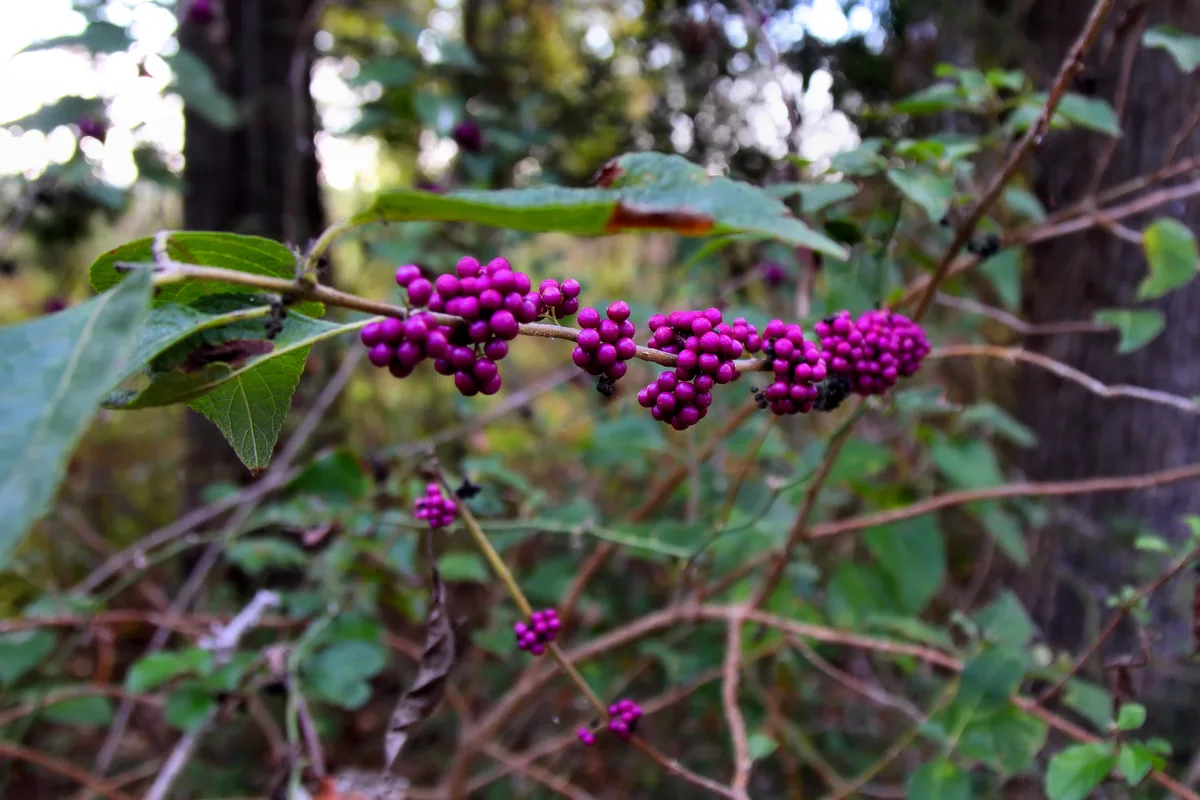
American beautyberry. A shrub native to the central and southeastern United States, with purple berries in fall that songbirds and small mammals eat.
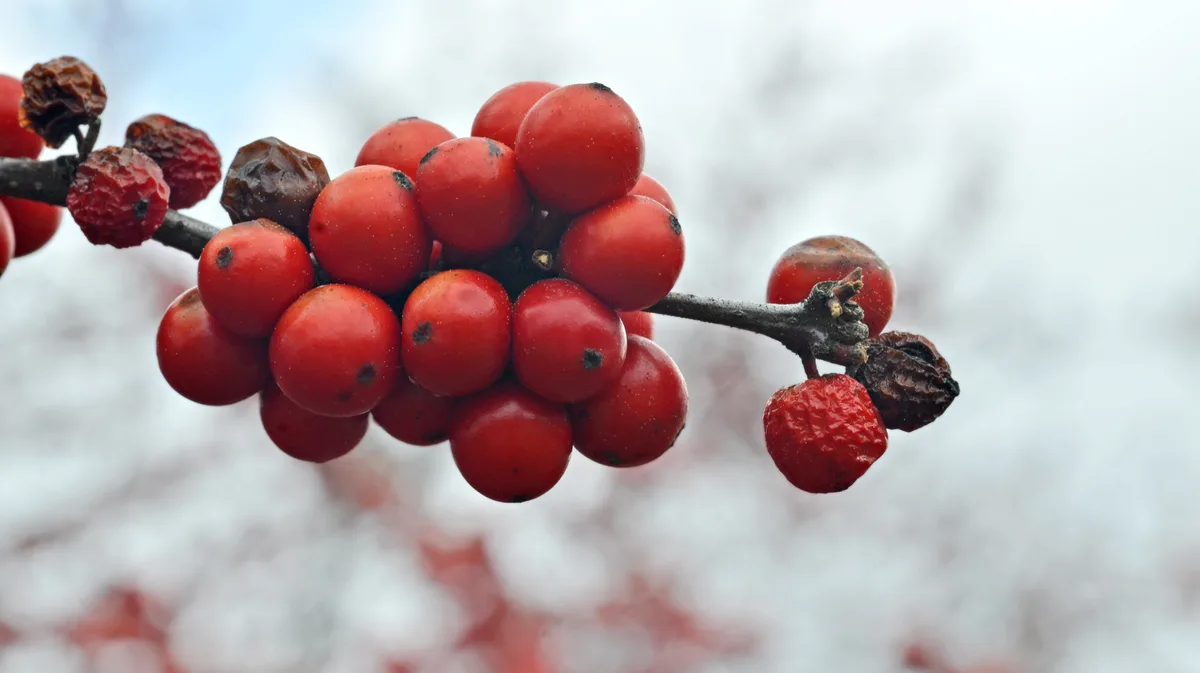
Winterberry holly. A deciduous holly that holds red berries into winter. It likes moist, acidic soil, and you need a male plant nearby to get berries on the females.
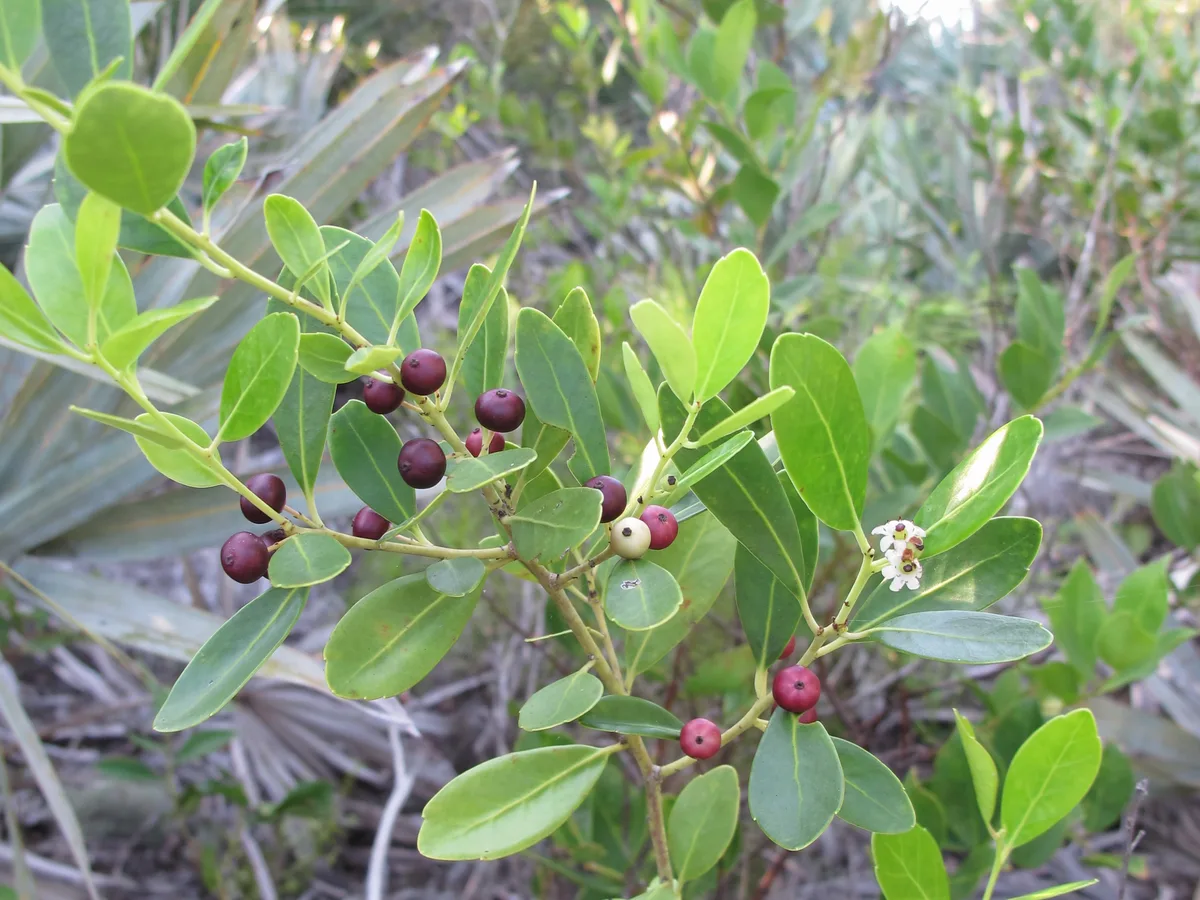
Inkberry holly. A broadleaf evergreen for year-round leaves instead of red berries. It suckers to form colonies, so give it room.
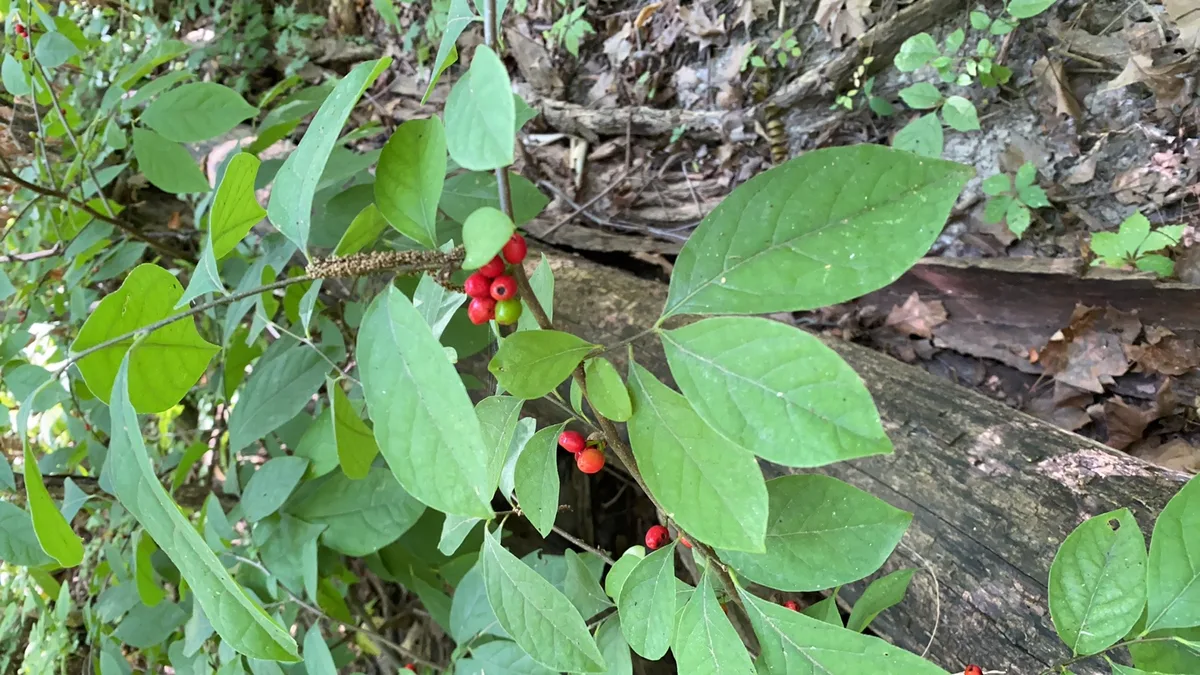
Spicebush. A deciduous shrub that does best in part shade and moist soil, and a larval host plant for spicebush swallowtails. Pair a male and a female for the red berries. More shade options are in our native plants for shade list.
FAQ
Will nandina grow back if you cut it down? Yes. Established nandina resprouts from its roots, so cutting alone doesn’t kill it. You have to treat the cut stems, dig out the roots, or keep removing regrowth until the plant runs out of stored energy.
How deep are nandina roots? There isn’t one depth. A plant has a root crown, lateral roots, and creeping underground stems, and bigger plants have substantial root systems. What matters is that a piece left behind can resprout, so dig wide and follow the roots.
Does Roundup kill nandina? Some glyphosate products can control it, but Roundup is a brand that covers products with different ingredients. Check that your product lists glyphosate or triclopyr and that the label allows woody brush or cut-stump use.
Can you remove nandina without chemicals? Yes. Dig out the root system, or cut every stem and keep removing regrowth. Digging is quicker on small plants. Repeated cutting can take a year or more on big ones.
Are all nandina varieties invasive? No. Sterile and low-fruiting cultivars carry less risk of spreading by seed, and Florida trials found several that met the noninvasive designation. Check which cultivar you have before you decide.
Will nandina roots damage my foundation? I couldn’t find a source that says they do. The documented problems are regrowth and spread, not structural damage. Plant any shrub a reasonable distance from your foundation anyway.
Sources
- Woldemeskel M, Styer EL. University of Georgia College of Veterinary Medicine, Toxicity Due to Nandina domestica in Cedar Waxwings.
- Woldemeskel M, Styer EL. Veterinary Medicine International (2010), Feeding Behavior-Related Toxicity due to Nandina domestica in Cedar Waxwings.
- Zona S, McCormick CA. North Carolina Botanical Garden, Nandina Fruits Can Be Toxic to Birds.
- Zona S. Utah State University Digital Commons, Fruits of Nandina domestica are (Sometimes) Cyanogenic and (Sometimes) Hazardous to Birds.
- North Carolina Extension Gardener Plant Toolbox, Nandina domestica.
- UF/IFAS Gardening Solutions, Nandina.
- Missouri Department of Conservation, Heavenly Bamboo Control.
- University of Maryland Extension, Ask Extension, Removing heavenly bamboo trees.
- Mississippi State University Extension Service, Herbicidal Control of Invasive Tree, Shrub, and Vine Species in Mississippi.
- Texas Invasive Species Institute, Nandina domestica – Heavenly bamboo.
- HortTechnology (ASHS), Summary of 26 Heavenly Bamboo Selections Evaluated for Invasive Potential in Florida.
- North Carolina Extension Gardener Plant Toolbox, Callicarpa americana.
- North Carolina Extension Gardener Plant Toolbox, Ilex verticillata.
- North Carolina Extension Gardener Plant Toolbox, Ilex glabra.
- North Carolina Extension Gardener Plant Toolbox, Lindera benzoin.