Most butterfly gardening advice starts with a list of flowers. Plant these, get butterflies. It’s not wrong, but it’s incomplete — and it’s the reason so many people put in a garden full of blooms and still wonder why the butterflies don’t stay.
Nectar flowers bring adult butterflies in to feed. Host plants are what keep them. They’re what females need to lay eggs, what caterpillars need to survive, and what ultimately determines whether your yard produces the next generation or just feeds passing visitors.
Understanding that distinction changes everything about how you garden for butterflies.
Why it matters more now than ever
Butterfly populations across the United States fell by 22 percent between 2000 and 2020, according to a landmark 2025 study published in the journal Science that aggregated data from more than 76,000 surveys and 12.6 million individual butterfly records across 35 monitoring programs. Two-thirds of studied species showed declines of more than 10 percent. 107 species declined by more than 50 percent.
The three main drivers are habitat loss, pesticide use, and climate change. All three operate at scales far beyond any individual yard. But the lead author of that study put the most actionable advice plainly: “The most important thing people can do is use fewer pesticides in their own yards.”
That, combined with the right plants, is the lever individual gardeners actually have.
The two types of plants butterflies need
Nectar plants feed adult butterflies. They’re the showy, colorful flowers that get photographed with butterflies on them. They provide energy for flying, mating, and migration.
Host plants are where females lay eggs, and where caterpillars develop. These are species-specific — each butterfly species has a narrow list of plants its caterpillars can eat, usually plants it co-evolved with over thousands of years. A monarch caterpillar can only eat milkweed. Spicebush swallowtail caterpillars need spicebush or sassafras. Fritillaries need native violets. Eastern tiger swallowtails use cottonwood, birch, tulip tree, and black cherry.
Without host plants, butterflies may visit your yard to feed, but they won’t reproduce there. You’re running a diner, not a home.
The reason this matters so much is that it’s exactly where most butterfly gardens fall short. Nectar plants are easy to find at any garden center. Host plants — which are almost always native species — are much harder to source and rarely end up in gardening advice aimed at beginners.
This is also why native plants do so much more for pollinators than non-native alternatives. It’s not primarily about nectar. It’s about whether butterflies can complete their life cycles there at all.
Start with sun
Before selecting a single plant, identify the sunniest parts of your yard.
Butterflies are ectotherms — they regulate their body temperature from external sources. They need warmth to fly, to feed, and to mate. A garden in full shade won’t attract butterflies no matter what you plant there.
Full sun means at least six hours of direct sunlight per day. Most nectar plants and the majority of butterfly host plants also require or strongly prefer these conditions. If you’re working with a partly shaded yard, focus your butterfly garden on whatever section gets the most direct afternoon sun.
Wind protection matters too. Butterflies prefer calm, sheltered spots over exposed areas where they have to fight the breeze to stay on a flower. A south-facing garden with a fence, hedge, or wall on the north and west sides creates a warm, sheltered microclimate that butterflies gravitate toward.
Host plants by butterfly species
Rather than a generic plant list, the most useful approach is to identify which butterfly species are already present or likely in your area, then plant their specific hosts.
A few of the most widespread butterfly-host plant relationships in North America:
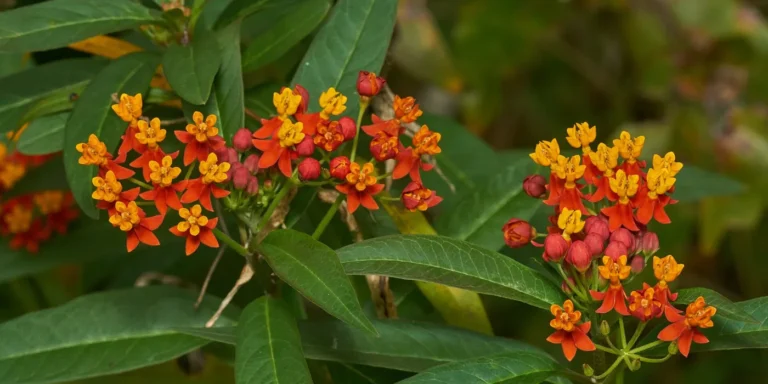
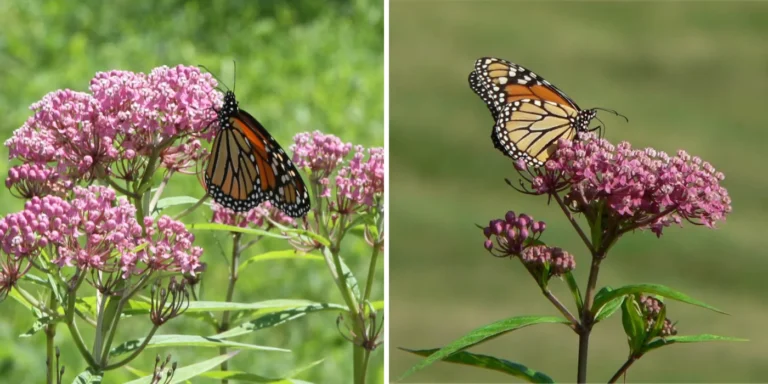
Monarchs need milkweed (Asclepias spp.) — this is non-negotiable. Common milkweed (Asclepias syriaca), swamp milkweed (Asclepias incarnata), and butterfly weed (Asclepias tuberosa) are all excellent choices. Note that tropical milkweed (Asclepias curassavica), widely sold at garden centers, can interfere with monarch migration if left standing in warm climates through winter — native milkweeds are strongly preferred.
Eastern tiger swallowtails use cottonwood, tulip poplar, wild black cherry, birch, and willow as caterpillar hosts. These are all large trees, which is exactly why a mature native tree in your yard or neighborhood does far more for butterflies than a flower bed — as we cover in why oak trees matter so much for local biodiversity.
Eastern black swallowtails lay eggs on members of the carrot family — dill, parsley, fennel, and native plants like golden Alexanders (Zizia aurea). This is the butterfly whose caterpillars gardeners sometimes discover on their herb plants. Leave them.
Spicebush swallowtails need spicebush (Lindera benzoin) or sassafras. Spicebush is an excellent native shrub for shaded areas and produces berries that birds eat in fall — a multi-purpose plant that also features in the case for serviceberry and other native shrubs.
Fritillaries (multiple species) need native violets (Viola spp.). This is one of the most commonly missed host plants in butterfly gardens because violets are often pulled as weeds. Leaving native violets in your lawn or garden beds directly supports fritillaries.
Red admirals and question marks use nettles (Urtica spp.) — not everyone’s first choice, but a small patch in an out-of-the-way corner is genuinely valuable.
Painted ladies are less particular, using a wide range of hosts including thistles, mallows, and borage.
The Xerces Society’s butterfly conservation resources and the NWF Native Plant Finder are both excellent for finding host plants specific to your region.
Nectar plants: what actually works
For adult nectar, diversity and bloom succession matter more than any single species. Butterflies need fuel from spring through fall. A garden with only summer blooms leaves early-spring migrants unfed and fall migrants unable to build reserves for overwintering or long-distance travel.
Spring: Native columbine, golden Alexanders, native violets, wild geranium, and early willows and cherries provide the first nectar when butterflies emerge or arrive from the south.
Summer: Native milkweeds, bee balm (Monarda), native coneflowers (Echinacea), native sunflowers (Helianthus), black-eyed Susan (Rudbeckia), mountain mint (Pycnanthemum), and native thistles are all heavily used.
Fall: This is the critical window that most butterfly gardens neglect. Native asters (Symphyotrichum spp.) and goldenrod (Solidago spp.) are the two most important fall nectar sources in North America. For migrating monarchs and other butterflies building fat reserves before winter, these plants are irreplaceable. We cover this in more detail in the dedicated article on supporting declining butterfly populations in the fall.
Plant in masses rather than in ones and twos. A cluster of a dozen goldenrod plants is visible to a passing butterfly from much farther away than a single plant, and the energetic payoff of visiting justifies the detour. “The kid-in-a-candy-store approach may not yield the best results,” notes Jaret Daniels of the University of Florida’s McGuire Center for Lepidoptera. “Select several really good plants and buy a few of each.”
What about butterfly bush?
Butterfly bush (Buddleia davidii) deserves an honest mention because it’s one of the most popular plants sold specifically for butterflies, and the reality is more complicated than the marketing.
Butterfly bush does produce abundant nectar and attracts adult butterflies reliably. On that front it delivers.
The problems are two: it’s invasive in many regions of the United States and several other countries, spreading aggressively and displacing native vegetation. And it’s not a host plant for any native butterfly species. So it feeds visiting adults while simultaneously crowding out the native plants those butterflies need to reproduce.
Native alternatives like native Joe-Pye weed (Eutrochium), mountain mint, and native asters provide comparable or better nectar while also supporting the food web rather than working against it. If you already have butterfly bush and are in a non-invasive region, the choice is yours. If you’re choosing what to plant, native alternatives are the better option on every ecological measure.
Puddling: the mineral source most gardeners miss
Adult male butterflies have a behavior called puddling — gathering at moist soil, puddles, or wet sand to extract minerals, salts, and amino acids. You’ll sometimes see dozens of swallowtails gathered at a muddy puddle or damp ground around a dripping faucet.
You can create a puddling station intentionally. A shallow dish, terra cotta saucer, or dug-out depression filled with wet sand placed in a sunny spot near your nectar plants works well. Some gardeners add a small amount of wood ash or salt to the wet sand to increase the mineral concentration.
It’s a small addition that requires almost no effort and provides something flowers can’t.
Flat rocks for basking
Butterflies regulate their temperature by basking with wings spread toward the sun. A few flat rocks placed in sunny spots in your garden create basking sites that butterflies use regularly, especially in the morning before the air has warmed.
Position them in the sunniest part of the garden, angled slightly south if possible. You’ll often find butterflies there first thing on sunny mornings.
The pesticide problem
Nothing in a butterfly garden matters much if pesticides are in regular use. Insecticides kill caterpillars at every life stage — eggs, larvae, and pupae. They also kill the insects caterpillars eat and the predators that keep pest populations in balance.
The 2025 Science study found that pesticide use — including non-agricultural uses in lawns and gardens — is one of the three main drivers of butterfly decline. Researchers estimated that 20 to 25 percent of tracked pesticide use occurs in non-agricultural settings: golf courses, road rights-of-way, and private yards.
This includes systemic neonicotinoids, which are often pre-applied to plants sold at garden centers and expressed through the plant’s pollen and nectar. A plant labeled “butterfly-friendly” at a big-box retailer may have been treated with insecticides before sale. Ask your supplier, or buy from native plant nurseries that don’t use systemic treatments.
The same principle applies to your lawn. Broad-spectrum lawn treatments don’t distinguish between target pests and the caterpillars you’re trying to support. A yard where butterfly plants are surrounded by regularly treated grass is a yard working against itself.
Don’t clean up in fall
One of the most consequential butterfly gardening decisions happens in autumn, and it involves doing less rather than more.
Many butterfly species overwinter in your garden as eggs, pupae, or adults sheltering in leaf litter, hollow stems, and dead plant material. Swallowtail chrysalises attach to plant stems and fence posts. Mourning cloaks and question marks overwinter as adults in brush piles and bark crevices. Fritillaries overwinter as tiny first-instar caterpillars in the leaf litter beneath violet plants.
Cutting everything back in October removes all of that.
The better approach is to leave standing stems, seed heads, and leaf litter through winter and do any cleanup in late March or April after overnight temperatures are consistently above 10°C (50°F). This gives overwintering stages time to complete development and emerge safely.
This is the same reason we recommend leaving leaves in the garden rather than bagging them — the “mess” of a winter garden is actually a functioning habitat. A brush pile in a corner of the yard extends this further, providing additional overwintering cover for butterflies, moths, and the broader insect community.
Finding your regional species
The butterflies you can attract depend heavily on where you live. A gardener in Florida has access to species that will never appear in Minnesota, and vice versa. Region-specific guidance is far more useful than generic national lists.
The North American Butterfly Association has local chapters in many areas and publishes regional species lists. The Butterflies and Moths of North America database lets you search by location for species documented in your county. The Xerces Society has detailed regional conservation guides.
If you’re starting a broader native plant habitat that supports butterflies alongside other pollinators and birds, starting a native plant garden from scratch covers the full process from site assessment through establishment. And if you’re building out the habitat piece by piece, the articles on keystone plants, pollinator highways, and rewilding your yard all contribute to the same goal from different angles.
Frequently asked questions
Why aren’t butterflies visiting my garden even though I have lots of flowers? The most common reasons are insufficient sun, pesticide use nearby, absence of the host plants that would make butterflies want to stay and reproduce, and lack of the specific species’ preferred nectar plants. Try adding sun-loving native plants in your sunniest spot, confirm no pesticides are being used, and identify which butterfly species are in your area so you can add their specific host plants.
Is it okay to plant non-native nectar plants like lavender or lantana? Non-native nectar plants can feed passing adult butterflies, but they don’t support caterpillars and contribute nothing to the reproductive success of native butterfly populations. They’re not harmful in moderation, but native plants that serve as both nectar sources and host plants deliver far more value per square foot.
How long before butterflies start using my garden? Adult butterflies can find nectar plants within days. Host plants take longer — females need to locate them, and you may not see eggs or caterpillars until the following season. Patience is part of butterfly gardening. A garden that looks sparse in year one often has noticeably more activity by year two or three as local populations find and begin using the habitat.
What’s the best single plant to add for butterflies? Milkweed if monarchs are in your region — it’s both host and nectar plant and supports one of the most iconic and declining species in North America. If monarchs aren’t present, goldenrod is the highest-value fall nectar plant across most of the continent and supports more specialist insects than almost any other herbaceous native. If you have room for a tree, any native cherry or black cherry (Prunus serotina) hosts hundreds of caterpillar species including multiple swallowtails.
Do butterfly houses work? No, not really. Research consistently finds that the small wooden “butterfly hibernation boxes” sold at garden centers are not used by overwintering butterflies, because their internal structure doesn’t match what butterflies actually seek. Spending that money on native plants or a bag of leaf mulch to leave in place over winter does far more good.