Can you keep a toad as a pet? Sometimes, but usually it’s better not to, for you and the toad. Rules vary by species and place, and a healthy wild toad is almost always better off where you found it. You can have a toad in your garden without owning it, which in my opinion is the thing to do.
But maybe it’s the toad under the porch light or the one a kid just cupped in both hands. It seems comfortable, and the leap to “what if I kept it” isn’t a strange one.
Below: what to do first, what the law looks like, what captivity takes, what to do if the toad is already inside, and how to make your yard a place a toad wants to live.

Found a toad? Here’s what to do first
A healthy toad outdoors. Leave it where it is. It already knows where to hide, where to hunt, and where to spend the winter. A toad in your garden is evidence the habitat works.
A toad in a dangerous spot. A driveway, a pool deck, a window well. Move it the shortest practical distance to nearby shelter in the same kind of habitat. Carrying it to a park across town puts it somewhere it doesn’t know.
A toad you’ve already put in a container. If you caught it very recently, it looks healthy, and it hasn’t been near other captive amphibians or used equipment, a prompt return to the exact spot may be right, where the law allows. Keeping it for weeks is a different situation, covered below.
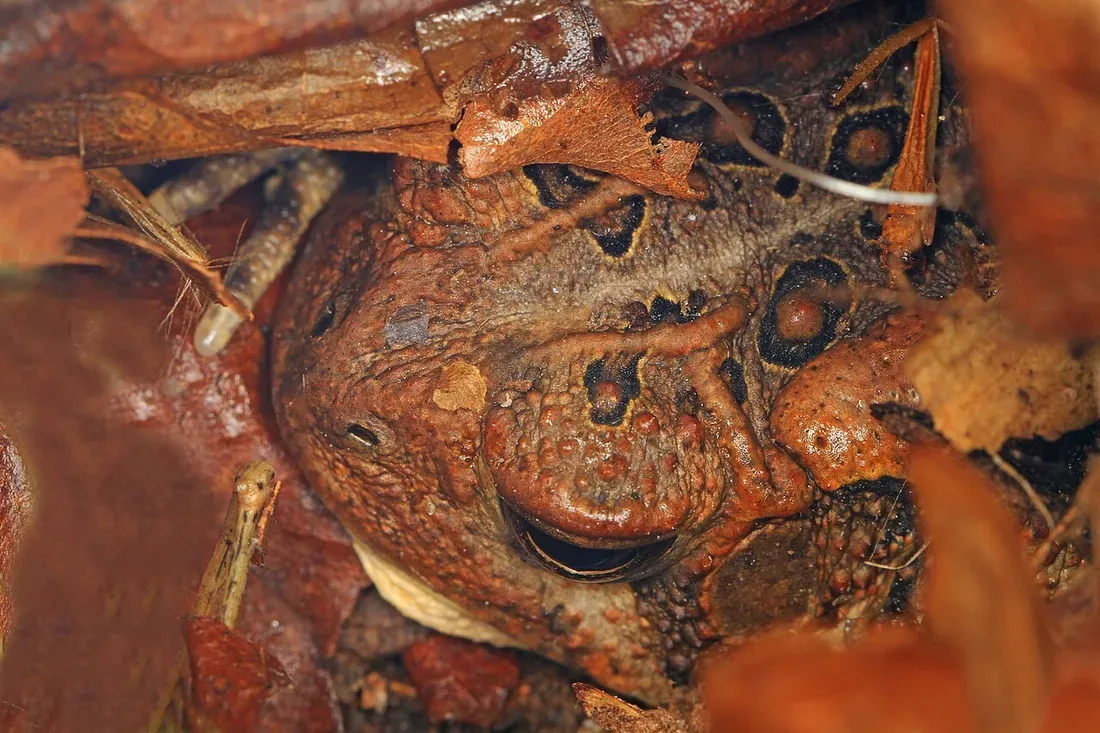
A possible cane toad. Cane toads are huge (6 to 9 inches), with big glands behind the eyes. In Florida, FWC treats them as an invasive species that can be removed and humanely killed on private property with landowner permission, and they can’t be relocated and released. Hawaii has them too, introduced decades ago for insect control. They’re native to the lower Rio Grande Valley in South Texas, so don’t assume the same rules there. Identify it properly first, because a native southern toad is smaller and worth keeping around.
An injured or visibly sick toad. Don’t treat it at home. Contact a licensed wildlife rehabilitator who handles amphibians. Our rehabilitator finder can help you find one.
Handle toads as little as you can. They absorb things through their permeable skin, and the glands behind their eyes secrete a milky toxin. Keep your hands away from your eyes and mouth, and wash them afterward. Amphibians can also carry Salmonella, so keep children under 5 from handling them.
Is it legal to keep a wild toad as a pet?
Legal and advisable are separate questions. Rules for native wildlife are mostly set by states, so the answer depends on your state, the species, and where it was collected. Federal rules, public land rules, and local ordinances can add more. Three examples point in different directions.
Massachusetts is permissive for a few common toads. You can keep 2 American toads and 2 Fowler’s toads taken from the wild as personal pets, but you can’t sell, barter, or trade them, and pets kept this way can’t be released.
North Carolina has a general exception. People can hold fewer than 25 amphibians without a collection license, as long as none are endangered, threatened, or of special concern.
California works by species. Only the amphibians listed in state regulation can be taken, and only with a sportfishing license. The list includes the western toad, and no amphibians can be taken from state parks or national parks.
The federal Lacey Act separately makes it unlawful to transport or sell wildlife taken or possessed in violation of state law. Whether it applies depends on the facts, so check before you cross a state line with a wild animal.
So identify the species, then check your state wildlife agency’s current rules before you collect anything. Don’t assume a captive-bred toad is legal everywhere either. Possession and import rules can still apply.
Why keeping a wild toad usually isn’t a great idea
You’re removing it from a habitat that already works. A wild toad has a home range, shelter spots, and hunting grounds it knows, plus a seasonal rhythm tied to temperature and rain. Taking one doesn’t collapse an ecosystem. It does pull an animal away from everything it has figured out.
Captivity creates problems you may not notice. Humidity, temperature, substrate, food, and handling all matter, and a quiet toad isn’t proof it’s comfortable.
Wild animals can carry germs. CDC says reptiles and amphibians are more likely than other pets to carry harmful germs, including Salmonella, even when they look healthy. That’s no reason to fear the toad in your yard. It’s a reason to wash your hands and keep young kids from handling one.
What if you’ve already taken the toad home?
You just picked it up today. If it’s a native toad, looks healthy, hasn’t been housed with other amphibians, and your rules allow it, putting it back at the exact spot may be the best move, where the rules allow it. Rules differ. Maryland lets a wild-taken amphibian go back at or near the point of capture if it wasn’t held with any other reptile or amphibian and wasn’t held more than 30 days, or with written authorization. Others go the other way: Massachusetts says pets taken from the wild can’t be released, and Idaho Fish and Game says wildlife taken into captivity can’t be returned to the wild, while Idaho’s rule bars releasing a native amphibian held with another from a different location without advance authorization. Check your agency before you drive anywhere.
You’ve kept it for weeks or months. Release gets more complicated. The toad may have picked up something in captivity, may be in poor condition, and release rules may apply. Don’t drive it to a pond or forest and let it go. Call your state wildlife agency, an amphibian-experienced vet, or a rehabilitator first.
If it’s cold out. Toads spend winter in burrows and leaf litter. One kept warm indoors may not have started that. Don’t release it into freezing weather. Ask your wildlife agency, an amphibian-experienced vet, or a rehabilitator how to overwinter it.
What does caring for a pet toad actually require?
This is a reality check, not a husbandry manual. For details, see PetMD’s vet-reviewed toad care sheet. Care varies by species, but expect all of this.
- A secure, escape-proof enclosure.
- Moist, burrowable substrate and hides.
- The right temperature and humidity, with seasonal changes.
- Water treated with dechlorinated water.
- Live insects as food.
- Limited handling, with moistened gloves if it has to happen.
- An amphibian-experienced vet.
- A commitment that can run 10 years or more, depending on the species.
Small and quiet doesn’t mean low-maintenance.
The better option: make your yard a toad’s home
The toad you found may already have chosen your property. Your job is to make that a good choice. With food, moisture, and shelter, toads may stay in a garden for many years.
Give it a place to hide. Let leaf litter build up under trees, shrubs, and beds. It keeps the ground cool and gives toads somewhere to hibernate. Add dense groundcover, rocks, logs, or a brush pile near the beds.
Build a simple toad house. Use a clay flowerpot. Turn it over and prop one side with stones for a doorway, or half bury it on its side. Put it in a shady, damp spot, like under a bush or near a downspout, and leave the bottom open so the toad can burrow. Then leave it alone.
Provide water without creating a hazard. Toads absorb water through their skin. Set a shallow dish in a quiet, shady spot, slightly recessed so a toad can hop in and out. Keep it full, and scrub off algae when it shows up.
Stop making your yard toxic. Pesticides and pollutants pass through toads’ permeable skin and can disrupt development and reproduction, or even kill them, and they thin out the insects toads eat. Use fewer chemicals and plant natives that support insects.
Let the toad decide. Don’t catch it and carry it back. A toad that stays is a sign the habitat works. One that leaves made its own call. Either way, a garden toad eats slugs, snails, and insects. If your dog is curious about it, read which toads are dangerous to dogs.
A toad in a terrarium is an animal you’re responsible for indefinitely. A toad in your garden is a neighbor.
What if you really want a pet toad?
Buy a captive-bred toad from a reputable breeder, and get documentation of its origin. Before you buy, check the husbandry, local possession rules, lifespan, and vet costs. And never release a captive-bred amphibian into the wild without explicit authorization.
Frequently asked questions
Can you keep an American toad as a pet? Sometimes. Massachusetts, for example, allows 2 American toads. Rules vary by state, and a wild one is usually better left outside.
Can you keep a baby toad you found outside? Tiny toadlets are delicate, and a small toad usually doesn’t need rescuing. Leave it where you found it.
Can toads recognize their owners? Toads can get used to routines like feeding. That’s habituation, which isn’t the same as affection.
Can I raise tadpoles I found? Rules vary, so check your agency first. Idaho lets licensed hunters keep up to four native amphibians, tadpoles included, but once taken into captivity they can’t be returned to the wild, even after they become toads. Raising them is easy to start and hard to end.
Do toads like being held? No. Toads don’t enjoy being held and should be handled only when necessary.
Can you release a toad after keeping it as a pet? It depends. A toad held briefly and returned to the spot you found it is a different case from one kept for months. Check with your wildlife agency first.
Can toads give you warts? No. That’s a myth. The real hygiene issue is germs, so wash your hands after touching one.
How long do pet toads live? It varies by species and care. PetMD notes 10 years or more is possible with proper care.
Will a toad stay in my garden if I build it a house? There’s no guarantee. The habitat makes your yard attractive, and the toad decides.
A wild toad doesn’t need a terrarium to become part of your life. Give it a shady place to hide, some leaf litter to hunt through, and a yard free of pesticides, and it might stick around for years. You get to watch a remarkable little animal go about its business. It gets to keep being a wild toad. That’s a pretty good arrangement.
Sources
- Idaho Fish and Game, Ask Fish and Game: Catching Tadpoles.
- Idaho Administrative Code 13.01.10.200, Live wildlife.
- Florida Fish and Wildlife Conservation Commission, Cane Toad.
- Virginia Department of Wildlife Resources, Frog Friday: American Toad.
- University of Hawaii at Hilo, Giant Marine Toad Poisoning in Hawaii.
- Massachusetts Division of Fisheries and Wildlife, Wildlife as Pets.
- North Carolina Wildlife Resources Commission, Possession and Collection.
- California Code of Regulations, Title 14, 5.05, Amphibians.
- Maryland COMAR 08.03.11.10, Release conditions.
- U.S. Code, 16 U.S.C. 3372, Prohibited acts (Lacey Act).
- CDC, Reptiles and Amphibians.
- PetMD, Pet Toad Care Sheet.
- Penn State Extension, Toads: A Welcome Garden Partner.
- Houston Arboretum, DIY Toad Abode.
- NC State Extension, Reptiles and Amphibians in Your Backyard.