Are Owls Dangerous? When They Attack, Why, and What to Do
- Give A Shit About Nature
- May 16, 2026
- Wildlife
- 0 Comments
Let’s be absolutely clear: owls are not out to get you. But they’re not completely harmless if you wander into the wrong patch of woods. Both things are true, and the space between them is worth understanding.
Owl attacks on humans are genuinely rare in the sense that the vast majority of people who spend time outdoors near owls are never struck. But they’re not hypothetical. There are documented cases, a few of them making local news cycles, and the pattern across them is consistent enough to be useful: the attacks happen during nesting season, involve a specific set of behaviors by the person getting struck, and are almost always defensive rather than predatory.
The short answer to “are owls dangerous” is: they can be, under specific circumstances, and those circumstances are mostly avoidable once you know what they are.
What Actually Triggers an Owl Attack
Owls don’t attack humans for food. They’re not sizing up a jogger the way a great horned owl sizes up a rabbit. The attacks that occur are defensive, and the trigger is almost always proximity to a nest with eggs or young.
Great horned owls and barred owls are the two North American species most frequently involved in documented incidents, not because they’re particularly aggressive animals in general, but because they’re large, confident, and intensely protective during breeding season. They also nest in parks, suburban tree lines, and urban forests where they regularly share space with people.
The pattern identified in multiple incident reports is specific: fast movement, low light, and proximity to a nesting area. A barred owl in Salem, Oregon attacked multiple joggers running through a park repeatedly over several weeks. A barred owl in Seattle became so persistent in swooping at park visitors that runners started wearing bicycle helmets. In both cases, the attacks were tied to a nest site, they stopped when the nesting season ended, and no one sustained serious injury.
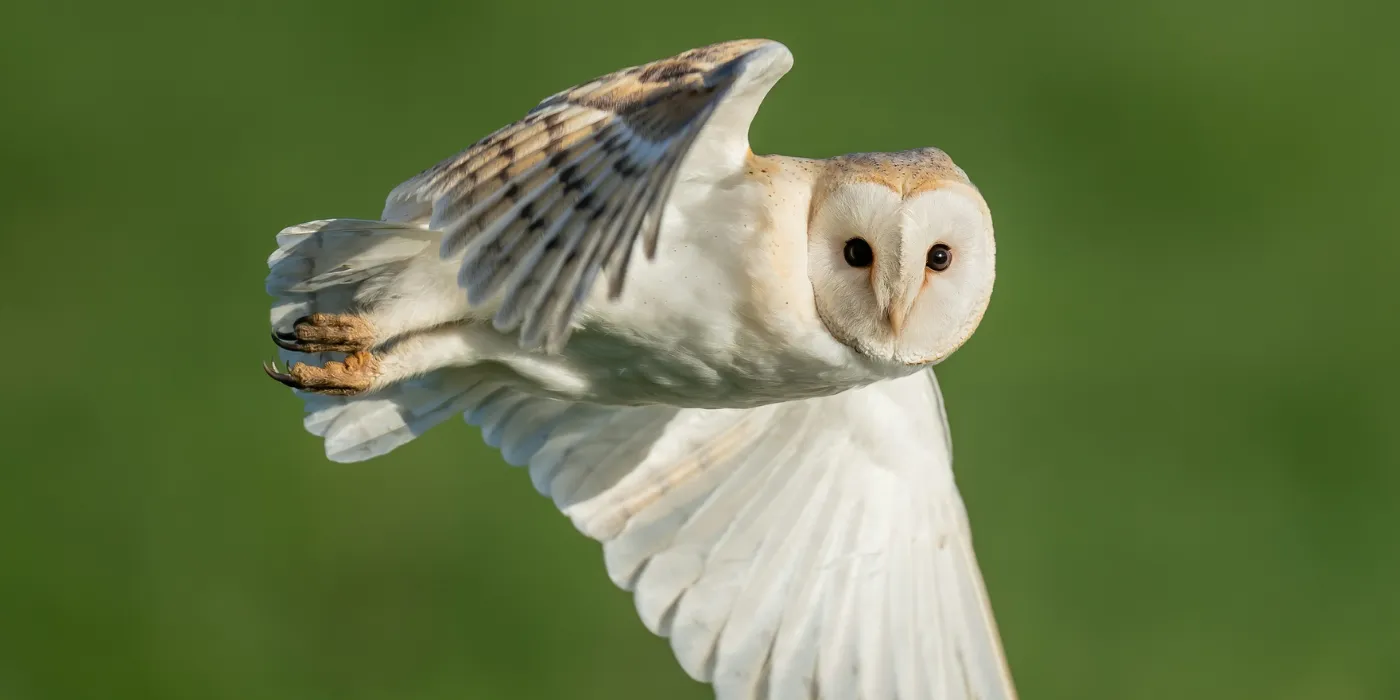
The physical capability is real, though. Great horned owl talons can exert significant gripping force, and a defensive strike from above typically targets the scalp, which is what the owl perceives as the top of an approaching intruder. The result is usually scratches or minor lacerations. Eye injuries have been reported in cases where the person looked up at the moment of the strike.
The Nesting Season Window
The risk window is defined and predictable. Great horned owls nest very early, beginning egg-laying in January and February in much of their range, with young in the nest through late spring. Barred owls are most active in breeding from March through June. This is when defensive behavior peaks, and when simply knowing where active nest sites are in your local parks and trail systems becomes genuinely useful information.
We’ve written about how to attract owls to your yard and why that’s worth doing for the ecological benefits they provide. The flip side of having an active owl nest nearby is being aware of it during the months when the adults are most defensive. Most parks with known owl pairs will post warning signs near active nest sites during nesting season. Pay attention to those.
After nesting season ends and young owls have fledged, defensive aggression drops off sharply. The barred owl making life difficult for Salem joggers in April is likely ignoring them entirely by July.
What to Do If You’re in an Area With Nesting Owls
The behavior that reduces risk is simple. Avoid trails immediately beneath or adjacent to known nest sites from January through June. If you’re in an area where owls have been reported as defensive, carry an umbrella or wear a hat with a wide brim, the visual disruption of something extending above your head is often enough to deter a defensive swoop. Holding something above your head with your arm, like a stick, also works and is the recommendation from several wildlife management sources.
Don’t reach toward a nesting owl. Don’t linger beneath an active nest to watch or photograph. Move through the area steadily and calmly rather than stopping, which increases the sense of intrusion. These are small behavioral adjustments that reduce the chance of triggering a defensive response.
If you do get struck, the Owl Research Institute’ssafety guidance is consistent with what wildlife agencies recommend: protect your head and face, back away calmly, and clean any scratches with soap and water. Seek medical attention if the wounds are deep or if the owl appeared sick.
The Bigger Picture
The appropriate response to learning that great horned owls can cause real injuries in defensive situations is not to fear owls or try to exclude them from your yard. It’s to understand a specific, seasonal, and mostly avoidable behavior pattern and adjust accordingly.
Owls are doing substantial ecological work in suburban and urban landscapes, most of it invisible. They eat the rodents that would otherwise proliferate when predator populations are reduced, and their presence is an indicator of a functional nocturnal food web. We’ve written about the most significant threats to owls: secondary poisoning from rodenticides is a documented population-level threat in a way that defensive owl strikes on humans simply are not.
The risk of a great horned owl scratching someone who walks under its nest tree is real. It’s also significantly smaller than the risk of, say, a dog bite, a car accident, or a significant number of other ordinary hazards people don’t think twice about. Keeping that proportion accurate matters, because the alternative — treating owls as a threat to be managed or removed — would eliminate a predator community that suburban yards genuinely need.
Read More: Do Owls Eat Cats? What’s Documented vs. What’s Myth
FAQ
Which owl species is most likely to attack humans? Great horned owls and barred owls are the most frequently reported in attacks on humans in North America, primarily because they’re large, common, and willing to nest near human activity. Attacks from any species are concentrated in the nesting season.
Can an owl seriously injure a person? It depends on the species and the circumstances. Great horned owl talons can cause significant scratches and lacerations, and eye injuries have occurred when people looked directly upward at the moment of a strike. Attacks are rarely life-threatening in otherwise healthy adults, but they can require medical attention.
Why do owls attack joggers specifically? The movement pattern of a jogger, sustained forward motion, passing repeatedly near the same point, may register as persistent threat behavior to a nesting owl. Low-light conditions common during early morning or evening runs also increase the risk. It’s not that joggers are targeted; it’s that their activity intersects with owl behavior patterns more often than other activities.
Are owls protected if they attack someone? Yes. Owls in the United States are protected under the Migratory Bird Treaty Act regardless of their behavior. Harming, harassing, or relocating an owl requires a federal permit. If an owl is causing repeated safety concerns near a public trail or park, the appropriate response is to contact your state wildlife agency, which can advise on whether the situation warrants professional management.
Should I try to help an injured owl I find? Don’t handle it with bare hands. Put on gloves first. An injured owl may strike defensively even when severely weakened. Contact a licensed wildlife rehabilitator in your area. Handling wild birds without authorization is prohibited under the MBTA for most people.