Maybe you heard an owl last night and now you want it back. Maybe you bought a box and it’s sitting empty.
You can’t call an owl in. No amount of hooting will bring the owls to the yard. But what you can do is make your yard a place an owl would pick on its own, with food to hunt, trees to roost in, and nothing that harms it. Most of that is free, and some of it is just doing less.
And if you can only do one thing today, put the rat poison away.
Start With Safety
Busy high-speed roads, farms that regularly spray agrochemicals, and rodent poison all put an owl at risk. Safety comes first, because drawing owls into that is a bad trade for the bird.
You can’t move a highway, but you can stop using rodenticide today. If your area has a lot of risk you can’t change, watching owls on a nearby trail at dusk is the better plan.
Find Your Owls
Pick your state or province to see the owls listed there. Tap an owl for what you can do.

Box sizes, heights, and habitat differ a lot, and a box built for the wrong owl just sits there. Not sure which owl you have? Open Merlin and let Sound ID listen at dusk for a few evenings, or check your state wildlife agency.
Specs are from Cornell's NestWatch plans, and ranges come from NatureServe's state and province lists.
| Owl | Range | What it uses |
|---|---|---|
| Eastern Screech-Owl | East of the Rockies | Nest box |
| Western Screech-Owl | West | Nest box |
| Barn Owl | Open country, most states | Large nest box |
| Barred Owl | East, and now the Pacific Northwest | Very large box, or a natural cavity |
| Great Horned Owl | Most of North America | Nest cone, not a box |
Box and Cone Specs
Eastern Screech-Owl. 3 in hole, 17 3/8 in deep inside, 9 5/8 by 11 1/4 in floor. Mount it 10 to 30 ft up on a live tree or pole, boxes 100 ft apart.
Western Screech-Owl. 3 in hole, 17 3/8 in deep inside, 9 5/8 by 11 1/4 in floor. Mount it 10 to 30 ft up, on a live tree, facing south or east.
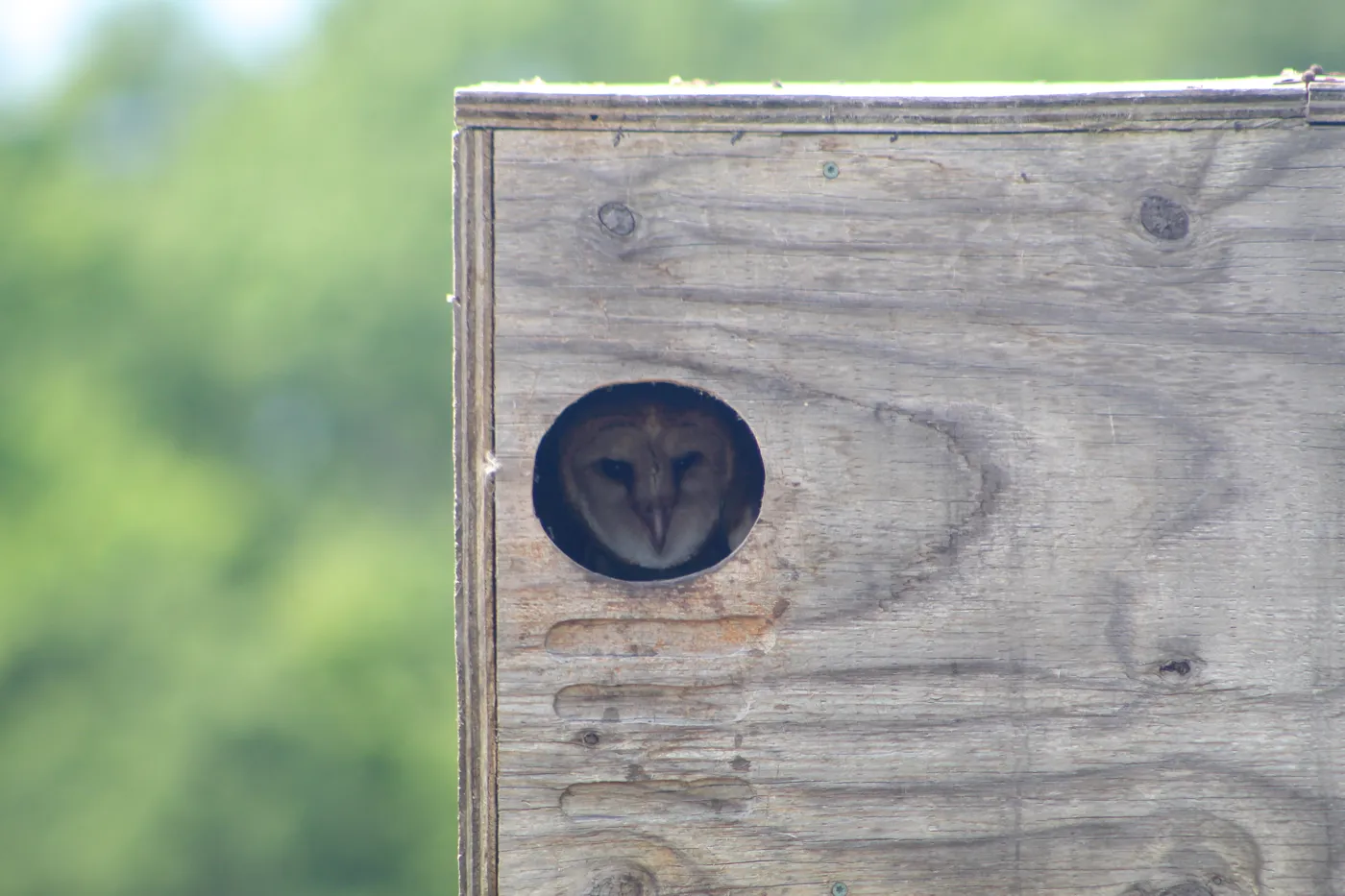
Barn Owl. 4 1/2 in hole, 16 in deep inside, 12 3/8 by 22 3/4 in floor. Mount it 8 to 25 ft up on a building, pole, post, or tree.
Barred Owl. 7 in hole, 23 in deep inside, 13 by 13 in floor. Mount it 12 to 15 ft up on a live tree or post, ideally within 200 ft of water.
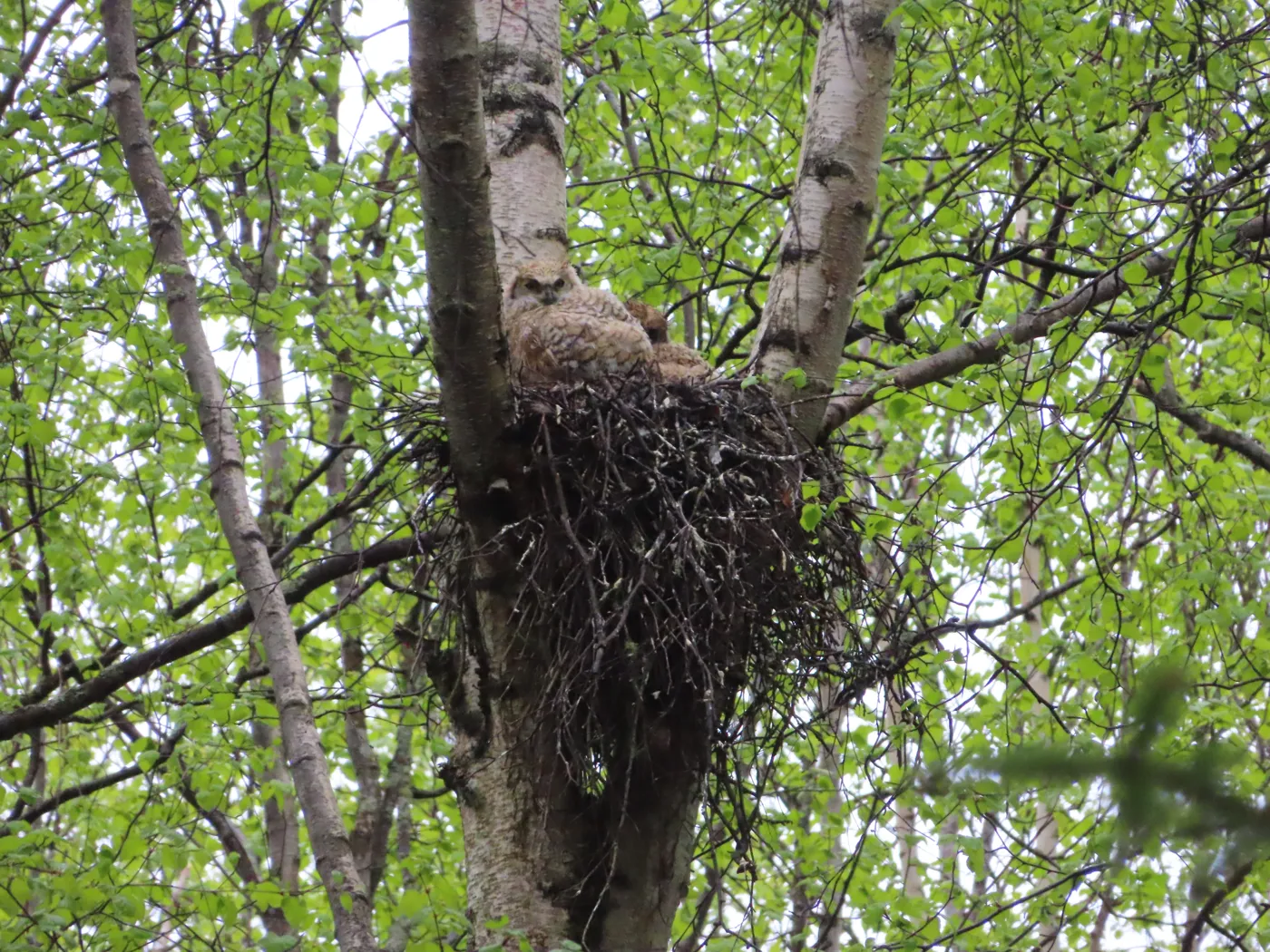
Great Horned Owl. A cone of sticks wired together. Mount it 15 to 45 ft up in a live hardwood at least 12 in across.
Great Horned, Great Gray, and Long-eared owls don't use boxes. They take open nests built by other big birds, or the broken tops of snags. If you live in Washington, Oregon, or California, my advice is to skip the Barred Owl box. Barred Owls, which are native to eastern North America, are one of the two main threats to the northern spotted owl.
Nest Boxes and Cones That Fit the Owl
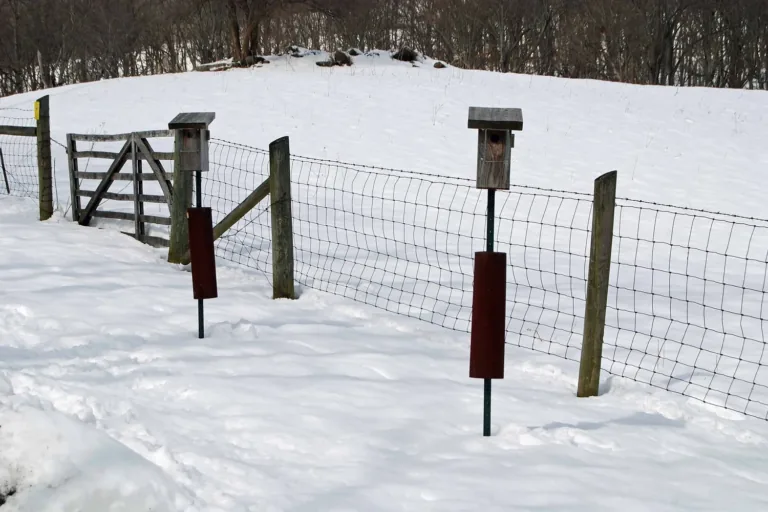
Screech-owls. This is the best bet for most yards, and the box I'd put up first. Put the box under a limb at a woodland edge, on a tree at least as wide as the box, and add 2 to 3 inches of wood shavings. If squirrels are a problem, mount it on a pole with a predator guard, far enough from trees that they can't jump to it.
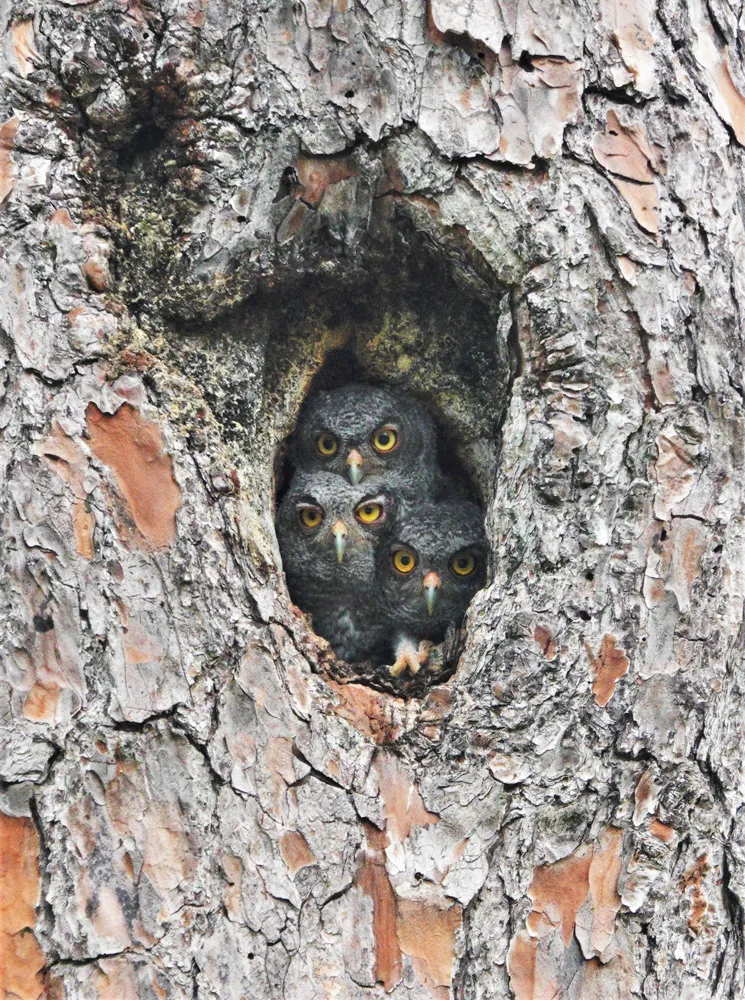
Install new Western Screech-Owl boxes by January and leave them open all winter for roosting. Weathered wood gets accepted more readily than new wood.
Barn Owls. They like open ground, like fields and pastures. Barn Owls abandon a nest if you disturb them in the early weeks, April and May. Keep the box away from your house, because hungry owlets are loud.
Great Horned Owls. A standard box is the wrong tool. Wire sticks into a nest cone and set it in a live hardwood in fall, so owls can find it by January. Have an arborist install it. I wouldn't try this one yourself from a ladder.
No outside perch. Skip the perch under the entrance, even if the box you bought has one. A perch isn't needed and can help predators get into the box.
Don't open a screech-owl box during egg laying. Wait at least a week, and up to two, after you find a nest before checking inside.
Don't Poison the Prey
Owls eat rodents, so a yard with mice and voles is already more interesting to them than a spotless one. The trouble starts when people reach for rodenticide.
A poisoned mouse doesn't drop dead. It wanders out in the open, which is how an owl finds it. In northwestern California forests, 7 of 10 northern spotted owls and 40 percent of Barred Owls tested positive for rat poison, and every positive owl carried a second-generation poison. Those are the worst, because a single dose can be lethal and they stay in the environment longer.
Here's what works instead. Clean up food waste and debris, keep grass short, and repair cracks in buildings. If you have the open habitat, a Barn Owl box is my pick. It pays off: in a Napa Valley vineyard study, nest-box cameras put one Barn Owl family at about 3,466 rodents a year, with estimates from 1,821 to 7,563.
Read more: Rat Poison and Owls: How Rodenticides Harm Owls
Trees, Snags, and Cover
Most owls roost, nest, and hunt in trees. Keep the ones you have, as long as they aren't a danger to your house. A standing dead tree is a nesting site for cavity users, so leave it if it can't fall on anything.
Leaf litter and a brush pile shelter the small mammals owls hunt. Put the pile at the far end of your property, away from the house, so rodents have no reason to move in. If you're planting natives, add some dense evergreens or shrubs for daytime cover.
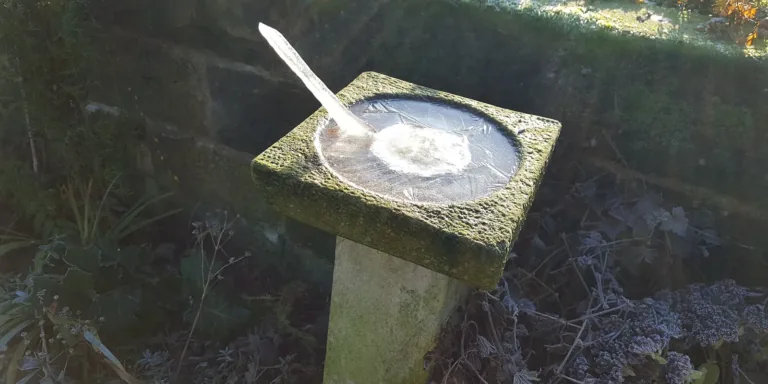
Water. Owls use birdbaths. A Barred Owl in a Florida yard came down to bathe as soon as its bath was cleaned. Add one if you want to, and keep it clean. In my view it's a nice extra, not a draw.
Perches. Barn Owls hunt from perches at night. If your open ground has no trees, mount a wooden cross brace on a pole 10 to 15 feet high and they'll use it.
Cats, Pets, and Lights
Pets. Keep small pets inside at night. Great Horned Owls have killed animals as large as skunks. Our guide to owls and cats covers what's documented and what's myth. Keeping cats indoors protects birds, too.
Lights. Outdoor lights left on all night can deter owls. Turn them off when you don't need them, or put them on a timer or motion sensor.
Predators. A box on a pole with a guard is safer where raccoons or snakes climb. Skip any trick to lure owls close, like bait, because baiting teaches owls to link people with food. Keep camera flash off, too.
What to Expect
I can't promise you an owl, and nobody honestly can. Owls aren't feeder birds, and you may wait a season or longer. The steps above make your yard more likely to get a visitor, not certain to.
If a box stays empty, check it against the specs in the finder above. Is the hole the right size? Is it at the right height, clear of branches, in the right habitat? Fix what doesn't match before you blame the owls.
Once the season ends, clean out the box. Barn Owl boxes are best cleaned in December, when the owls aren't nesting, and you don't need to add anything afterward.
Read next: How to Make Your Yard Safe for Wildlife at Night
FAQ
Do owl decoys attract owls? No. Plastic owl decoys are sold to scare other birds away, not to bring owls in.
Do owls come to bird feeders? Not for the seed. A feeder won't draw owls, and spilled seed isn't a plan for them.
Will owls come to a suburban yard? Yes, if it has mature trees. Screech-owls live in suburbs with open woodlands or yards dominated by mature trees, and Great Horned Owls are fairly common in suburban areas, too.
Can I attract a Great Horned Owl with a box? A box won't work, but a nest cone might. See the cone plan above, and leave large trees and old raptor nests alone.
Can I keep an owl feather I find? Not in the U.S. without a license. The Migratory Bird Treaty Act covers owl feathers, eggs, and nests.
What if I never get an owl? You'll still have a yard with more trees, cover, and prey, and no poison in it. That helps a lot of other wildlife.
Sources
- Owl Research Institute, Attracting Owls to Your Backyard.
- Cornell Lab of Ornithology, NestWatch, All About Birdhouses.
- Cornell Lab of Ornithology, NestWatch, Eastern Screech-Owl.
- Cornell Lab of Ornithology, NestWatch, Western Screech-Owl.
- Cornell Lab of Ornithology, NestWatch, Barn Owl.
- Cornell Lab of Ornithology, NestWatch, Barred Owl.
- Cornell Lab of Ornithology, NestWatch, Great Horned Owl.
- NatureServe, NatureServe Explorer, state and province distribution.
- U.S. Fish and Wildlife Service, Barred Owl Management.
- Gabriel et al., Avian Conservation and Ecology (2018), Exposure to rodenticides in Northern Spotted and Barred Owls on remote forest lands in northwestern California.
- UC Davis School of Veterinary Medicine, Raptors and Rodenticides.
- American Bird Conservancy, Keep Cats Indoors.
- Cornell Lab of Ornithology, Merlin Bird ID.
- Cornell Lab of Ornithology, NestWatch, Flammulated Owl.
- Cornell Lab of Ornithology, NestWatch, Northern Pygmy-Owl.
- Cornell Lab of Ornithology, NestWatch, Ferruginous Pygmy-Owl.
- Cornell Lab of Ornithology, NestWatch, Elf Owl.
- Cornell Lab of Ornithology, NestWatch, Northern Saw-whet Owl.
- Cornell Lab of Ornithology, NestWatch, Boreal Owl.
- Cornell Lab of Ornithology, NestWatch, Great Gray Owl.
- NC State Extension, Owls.
- USDA NRCS, Biology Technical Note 22, Burrowing Owl Nest Box Specifications and Habitat Management.
- Cornell Lab of Ornithology, Barred Owl, All About Birds.
- Ohio Department of Natural Resources, Winter Birding.
- Cornell Lab of Ornithology, NestWatch, Features of a Good Birdhouse.
- Sustainable Agriculture Research and Education (SARE), Quick Guide: Barn Owls.
- Johnson and St. George, Humboldt State University (2020), Estimating the Number of Rodents Removed by Barn Owls Nesting in Boxes on Winegrape Vineyards.
- National Wildlife Federation, Tips on how to attract owls to your yard or neighborhood.
- Georgia Department of Natural Resources, Screech Owls.
- Cornell Lab of Ornithology, All About Birds, Great Horned Owl Life History.
- U.S. Fish and Wildlife Service, photo by Holly Keepers, public domain, Barn owl in nest box.
- U.S. Fish and Wildlife Service, photo by Larry A. Woodward, public domain, Eastern screech-owl chicks.
- U.S. Fish and Wildlife Service, photo by Kinkela Vicich, public domain, Great Horned Owl nestlings are cozy in their nest.