Crows eat eggs, nestlings, and given the opportunity, they’ll eat adult birds too, though that’s considerably rarer. If you’ve watched a crow raid a robin’s nest and felt a spike of alarm about the songbirds in your yard, that reaction makes sense. It’s pretty hard to watch.
What it doesn’t mean is that the crows are the reason your songbird numbers are down, or that getting rid of them would fix anything. The research on this is more nuanced than most people expect — and it points strongly toward a different set of culprits.
Do Crows Eat Birds?
The short version: crow predation on eggs and nestlings is a normal part of how ecosystems function. Crows are omnivores. Every corvid, every jay, every snake, squirrel, raccoon, and outdoor cat in your neighborhood is also taking eggs and nestlings opportunistically.
The question isn’t whether crows do this, they do, but whether their presence is actually driving songbird population declines. And on that question, corvid researcher Kaeli Swift at the Corvid Research blog cites John Marzluff’s research directly: in extensive studies involving artificial nests at multiple height levels, Marzluff found no positive relationship between crow abundance and nest predation rates. More crows in an area didn’t mean more nest failures.
That’s a finding worth sitting with.
What Crows Actually Eat Most of the Time
Crows are opportunists. Their diet is dominated by insects, seeds, fruits, carrion, and human food waste, the kind of calories that are easy to find and don’t fight back. Eggs and nestlings are seasonal protein bonuses, most intensively sought during spring and early summer when crows are feeding their own growing chicks.
They’re also very good at finding nests. Cornell Lab of Ornithology’s crow overview describes them as highly intelligent foragers that observe parent birds to locate nests, watching where the adults fly and using that information to find vulnerable clutches. Once a nest is found, a crow may return repeatedly.
This is real, it happens, but it happens alongside identical behavior by jays, grackles, squirrels, raccoons, snakes, and in suburban yards, cats. Singling out crows as uniquely destructive in this process overstates their role considerably.
The Crow Removal Studies
A 2015 meta-analysis published in the journal Ibis by Madden, Beatriz, and Amar, cited directly by the Corvid Research blog, reviewed studies on corvid impact on prey species productivity and abundance. It found that in 81% of cases, corvid removal made no measurable impact on prey abundance or productivity. That’s a striking finding. Where studies did find an effect, it tended to be in highly managed game bird contexts, not in the kind of mixed songbird habitats most backyard observers are concerned about.
Some other studies have found real impacts, particularly in fragmented urban habitats where crow populations are artificially elevated by human food sources. A Substack research review by a conservation ornithologist cites several studies showing higher nest predation rates in managed urban parks versus wilder suburban parks, and some specific songbird species responding positively to corvid removal in certain contexts. Scandinavian research has found fieldfare populations doubled after carrion crow removal in some areas.
So the full picture is: crow predation can matter in certain high-density urban situations, particularly for open and ground-nesting species. It’s genuinely less likely to be the driver in diverse habitats with varied cover. And across the broader landscape, it’s not the primary factor behind declining songbird numbers anywhere.
What Is Actually Driving Songbird Declines
North America has lost roughly 3 billion birds since 1970, according to a landmark 2019 study published in Science. The causes driving that decline are habitat loss at the top of the list, followed by cats, window collisions, and pesticide use that eliminates the insect base birds depend on. Crows don’t appear in any serious analysis as a primary driver.
Outdoor cats kill between 1.3 and 4 billion birds annually in the U.S. Window collisions account for hundreds of millions more. These are the actual threats to backyard songbird populations, and they’re both addressable in ways that getting rid of crows isn’t, legally or practically.
It’s also worth knowing that crows are federally protected under the Migratory Bird Treaty Act. Killing or harassing them is illegal without a federal permit except in narrow agricultural contexts. “Getting rid of” crows is not a legal option for most homeowners, even if the research supported it as a useful strategy — which it largely doesn’t.
What You Can Do for Nesting Songbirds
If you want to help the nesting birds in your yard, the most effective actions don’t involve crows at all.
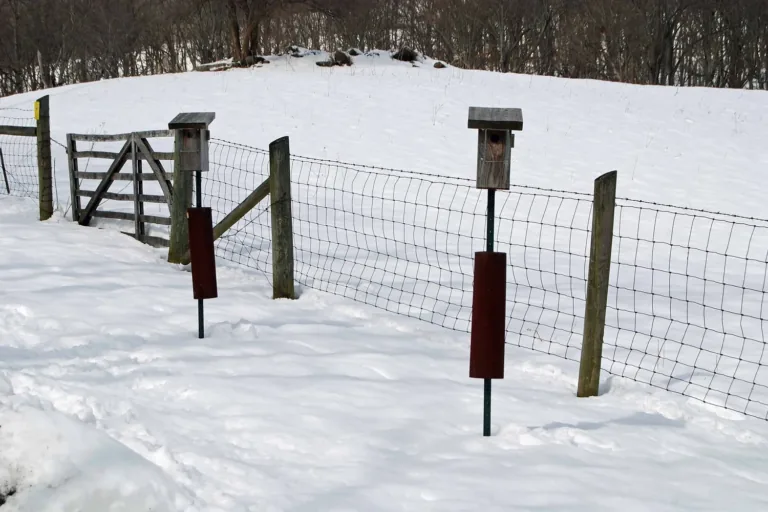
Dense native plantings give nesting birds cover that crows have a harder time penetrating. Native shrubs like viburnum, spicebush, and native roses create the kind of thick, layered cover that ground and shrub nesters use. Bluebird boxes and nest boxes with entrance holes sized for target species protect cavity nesters from corvid predation entirely, since a crow can’t fit its head through a 1.5-inch hole.
Treating windows to prevent bird collisions removes one of the largest sources of bird mortality from your yard. Keeping cats indoors eliminates the highest-impact predator in most suburban yards.
And if crows are specifically concentrated around your yard in unusual numbers, reducing the food sources that draw them helps. Unsecured garbage, exposed compost, and pet food left outside all elevate local crow densities in ways that can increase nest predation pressure for nearby birds. Securing those sources benefits the whole wildlife community in your yard, not just the songbirds.
Read More: Common Backyard Bird Hazards and the Simple Fixes That Actually Help
FAQ
Should I try to get rid of crows to protect other birds? Legally, this isn’t an option for most people — crows are federally protected under the Migratory Bird Treaty Act. Ecologically, the research doesn’t support crow removal as an effective strategy for improving songbird populations in most situations. Addressing habitat, window collisions, and outdoor cats has far more documented impact.
Are crows protected birds? Yes. American crows are protected under the Migratory Bird Treaty Act. Killing, harassing, or capturing them without a federal permit is illegal. Limited exceptions exist for agricultural depredation with permits.
Do crows keep other birds away from feeders? Crows can dominate feeding areas when they’re present, which may reduce smaller birds’ feeder visits temporarily. Placing feeders under cover or using tube feeders with small perches that crows can’t easily use helps. Crows also tend to move on fairly quickly rather than guarding a feeder continuously.
Are blue jays as bad as crows for nest predation? Blue jays engage in similar nest predation behavior and are in the same corvid family. Research findings on blue jays are broadly similar to crows: they take eggs and nestlings opportunistically, but their impact on overall songbird populations appears limited in most contexts compared to habitat loss and other factors.